
I’ll call out the spectacle, explain why it matters to the Democratic coalition, highlight the policy positions shouted in the rant, note the political risks for Democrats, and point out the wider implications for elections and working-class voters.
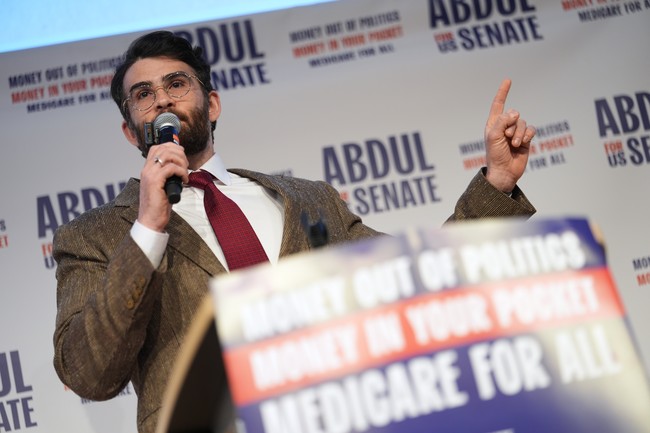
Watching a pundit dress like Chairman Mao and deliver a fiery speech to college Democrats is equal parts theater and warning. The stunt draws attention, and attention can amplify fringe positions into mainstream conversations faster than you might think. From a Republican perspective, these moments show both a vulnerability in the left coalition and an opportunity to point out how extreme rhetoric alienates average voters.
What happened was straightforward: an activist with a sizable online audience pushed a purist, anti-establishment line directly at young activists. The crowd reacted enthusiastically, which tells you more about that venue than about the broader electorate. Enthusiasm among college groups does not mean buy-in from suburban and working-class voters who decide elections in swing states.
https://x.com/shannonrwatts/status/2078644785364033725
In barely over a minute, the speaker made a string of clear, radical demands that will be easy to criticize on the stump. He called for defunding immigration enforcement, slammed support for Israel, and lectured about environmental policy in a way that sounded uncompromising. Each of these positions can be framed as disconnected from day-to-day concerns like jobs, public safety, and reliable energy for families.
Here is the excerpt he delivered:
No more to Trumpism. But no more to the Democrats who compromise, who conciliate, and who betray us. (Applause) No more to the fascist reactionaries, but no more to the Democrats who will collaborate and cooperate with the fascists, who will fund ICE, who will fund Israel, who will help poison the planet, who will stiff workers, and help bosses. We don’t need those Democrats anymore.
The rhetoric aimed to purge moderation from the party and to punish anyone seen as insufficiently radical. That’s the whole point of the speech: to delegitimize the mainstream and to claim a monopoly on purity. For Republicans, pointing out the practical consequences of that kind of factionalism is an effective way to show why such purges are politically dangerous for Democrats.
He followed with an even bolder slogan meant to intimidate the party establishment:
In fact, I know we have a message. We are coming. We are unbossed. We are unbound. And we will become undeniable.
Those words sound impressive in a rally hall, but they also expose a strategy that could fracture the Democratic coalition at the worst possible time. If a vocal faction drives moderate Democrats away, the party risks alienating the very voters who hold swing districts: blue-collar workers, suburban parents worried about school and safety, and independents who prefer pragmatic solutions. That fracture would hand Republicans a major electoral edge.
Far from being an isolated oddity, the figure in the suit represents a broader trend where performative radicalism replaces policy debate. You can see similar strains in elected figures who flirt with revolutionary rhetoric and in cultural spaces that reward outrage. For campaign messaging, the necessary counter is simple: show how extreme demands on immigration, foreign policy, and the economy would produce worse outcomes for ordinary Americans.
It’s worth noting the costume itself because imagery matters in politics. Dressing as a historical communist icon is a calculated provocation that appeals to a narrow audience. Most voters don’t respond to historic cosplay; they respond to whether their kids can find work, whether their streets are safe, and whether energy bills are manageable. The theatrics underline how disconnected some activists are from those concrete priorities.
Putting this into tactical terms, Republicans can use these moments to highlight two things: first, that radical rhetoric risks splitting the Democratic coalition, and second, that it offers a clear contrast with a message focused on jobs, security, and prosperity. Voters in the Rust Belt and suburbs are particularly sensitive to messages that seem to dismiss their values and economic worries.
Finally, the spectacle serves as a reminder about political incentives. Fringe theatrics get clicks, donations, and media attention, but they do not automatically translate into durable electoral power. For now, such performances are symptoms of a broader struggle within the left between uncompromising activists and pragmatic officeholders. For Republicans, the path is to keep pointing out the mismatch between radical demands and the needs of ordinary Americans, and to let the spectacle speak for itself.

Add comment