
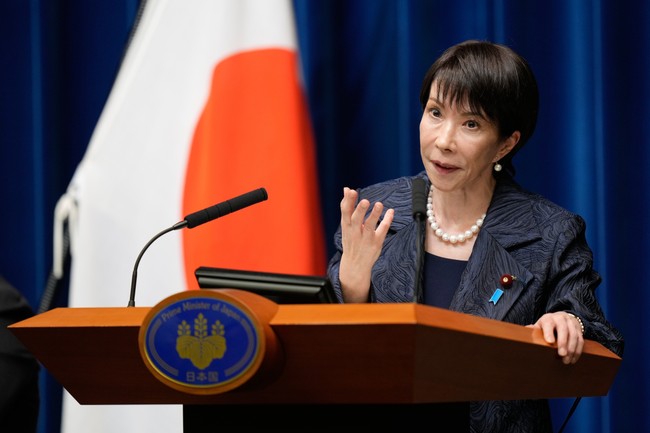
The story: a senior Chinese diplomat in Japan issued a violent online threat after Japan’s new prime minister warned that a Chinese blockade of Taiwan could force Japan’s military to respond, provoking outrage in Tokyo and raising tensions between two regional powers.
History matters here, but not as an excuse. Japan and China have a long, complicated past that still shapes how both countries see power in the region. Japan industrialized earlier and built a formidable military that once dominated parts of the western Pacific, while modern China has been rebuilding its strength and ambition. Those historical layers make every diplomatic flare-up more dangerous than it might otherwise seem.
The immediate spark came when Japan’s new prime minister warned lawmakers that a blockade of Taiwan could create a “survival-threatening situation” for Japan and might force deployment of the Self-Defense Forces. Taiwan sits roughly 60 miles from Japanese territory, and any move by Beijing against the island would have clear, immediate implications for Japan’s security. Those comments struck a nerve in Beijing and among hard-line voices who monitor Japan’s shifting defense posture.
A Chinese consul general in Japan threatened to decapitate the nation’s new prime minister over her comments in defense of Taiwan, prompting outrage in Tokyo and underscoring the rising tension between the two regional powers.
Prime Minister Sanae Takaichi, who took office last month, told a parliamentary committee Friday that a Chinese blockade of Taiwan would likely create a “survival-threatening situation” for Japan — one that could compel Tokyo to deploy its Self-Defense Forces in response. The democratically governed island sits just 60 miles from Japanese territory.
That warning from Tokyo was entirely predictable given the geography and politics. Japan has been modernizing its forces, shifting away from a strictly defensive posture toward more flexible and, at times, offensive capabilities. This is the largest military buildup Japan has undertaken since World War II, a transformation accelerated by doubts during recent U.S. administrations about the speed and scale of American backing in an era of great-power competition. Japan is hedging, and other democracies are watching closely.
Xue Jian, the Chinese consul general in Osaka, fired back in a since-deleted X post on Sunday: “That filthy neck that barged in on its own — I’ve got no choice but to cut it off without a moment’s hesitation. Are you prepared for that?”
Japan’s government condemned the statement, with Chief Cabinet Secretary Minoru Kihara calling it “extremely inappropriate” and confirming that Tokyo had lodged a formal protest with Beijing. Kihara said Xue had made “multiple” inflammatory remarks in the past and urged China to take disciplinary action.
The language used was shocking, and not just because it was crude. Threatening a sitting head of government crosses a clear line for a diplomat and violates basic norms of international conduct. Tokyo issued a formal protest and demanded clarification, and officials publicly called the remark “extremely inappropriate.” Deleting the post doesn’t erase the threat, nor does it address the pattern of provocative public commentary from that mission.
Diplomacy is supposed to restrain violence, not incite it. A consul general’s role includes protecting citizens, building ties, and representing his country’s positions in a measured way. When a senior diplomat resorts to graphic threats on social media, it undermines any pretense of professional restraint and fuels the very tensions diplomats are meant to contain. That’s why Tokyo’s response was firm and immediate.
The episode also highlights a broader strategic reality: democratic partners in the western Pacific are aligning in response to Beijing’s military and political reach. Japan and Taiwan find themselves natural collaborators, at least in concern, because both face the direct implications of Chinese ambitions. These alignments are not conspiratorial; they are practical reactions to geography and capability, and they shape how Tokyo plans and trains its forces.
The deleted post remains a flashpoint. The original message is gone, but the fact it appeared at all is proof that some in Beijing’s diplomatic ranks are willing to escalate publicly. As of this writing, there is no clear confirmation that the consul general has been declared persona non grata, but Tokyo’s protest underscores that such conduct could carry consequences. States have options when envoys cross red lines.
What’s clear is that the western Pacific is entering a period where rhetoric and posture matter as much as hardware. Japan’s military transformation, its treaty relationship with the United States, and Taiwan’s precarious position all intersect in ways that will continue to test diplomatic norms. Responsible statesmanship requires cooler heads and clearer channels, because threats like the one published online risk miscalculation at a time when miscalculation could be catastrophic.


Add comment