
I’ll lay out how California’s leadership repeatedly sues, loses, and quietly drops fights; highlight specific examples like the high-speed rail funding and OppFi case; note the fiscal impact on taxpayers via claims and appeals; show how these actions are handled without fanfare and what that means for accountability.
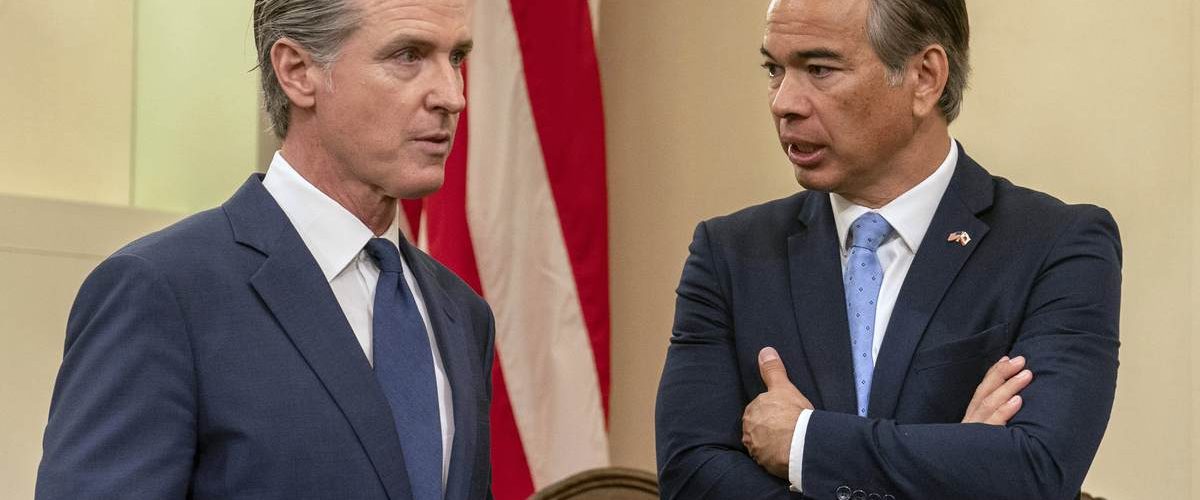
California Attorney General Rob Bonta and Governor Gavin Newsom are fast with lawsuits and photo ops, but they are far less eager to spotlight the cases they lose. The playbook is familiar: announce a big legal challenge, generate headlines, then quietly back away when the legal footing collapses. That pattern wastes taxpayer money and leaves voters without an easy way to track the outcomes.
One clear example centers on the state’s high-speed rail project and its fight over approximately $4 billion in federal funding. Newsom publicly declared war when the funds were cut and vowed litigation, saying, “Trump’s termination of federal grants for California high-speed rail reeks of politics. It’s yet another political stunt to punish California. In reality, this is just a heartless attack on the Central Valley that will put real jobs and livelihoods on the line. We’re suing to stop Trump from derailing America’s only high-speed rail actively under construction.” That statement grabbed headlines, but the days of chest-thumping did not include a replay of defeats.
The federal review that preceded the funding withdrawal raised specific operational concerns and criticized the California High Speed Rail Authority for lacking a viable plan to finish even a partial segment on time. The authority had until December 31, 2024 to sign a train purchase contract and missed the deadline. Once the funding was rescinded and litigation began, promises were made to courts and the public about new deadlines that were also missed.
Bonta’s office and the High Speed Rail Authority later quietly dropped the lawsuit after failing to meet a court-promised timeline, blaming the federal government as “not a reliable partner” and saying the Authority hoped to renew a partnership with future administrations. There was no celebratory follow-up when the initial lawsuit failed or when the withdrawal happened. The visible outrage on day one dissolved into administrative silence on day two, while the legal fees and staff time spent on the failed effort were paid by taxpayers.
Beyond the rail debacle, the legislature is preparing its annual claims bill, which this year totals $7.4 million and covers eight lawsuits. Four of those payouts stem from successful challenges to California gun restrictions and four relate to free speech disputes. These are not small procedural errors; they represent sustained legal exposure created by laws that courts have deemed unconstitutional or overbroad.
Those claims are only the tip of the iceberg because they represent cases where appropriations did not already cover the liability. Other settlements and judgments are handled through existing departmental budgets, and there is no easy, consolidated public accounting that lets citizens see how often the state loses in court. Often, the public only learns about payouts late in the legislative session or when plaintiffs publicize victories.
Another recent example where the state doubled down after a loss involves the Department of Financial Protection and Innovation seeking more than $100 million in penalties against fintech lender Opportunity Financial LLC, alleging it was the true lender rather than a Utah-chartered partner. Los Angeles County Superior Court Judge Gary Roberts granted summary judgment to OppFi, relying on longstanding legal principles. Legal analysts warned that the appeal was an uphill climb even in state court, where the attorney general often expects sympathetic treatment, yet the state pushed forward anyway.
https://x.com/juliewattsTV/status/2084103541443162554
Continuing dubious appeals after decisive losses risks ballooning legal bills for taxpayers and undercuts the credibility of enforcement efforts. Instead of admitting defeat when a court applies established doctrine, the state often opts for protracted appeals that drain resources and deliver little public benefit. That approach raises questions about when the attorney general should advise lawmakers to change or repeal laws rather than mount expensive, doomed defenses.
Across these scenarios we see a consistent dynamic: high-profile legal stances announced with bravado, followed by muted accounts of setbacks and losses. Californians deserve a transparent ledger of the state’s legal wins and failures so voters can weigh whether repeated litigation is serving public interest or simply burning public funds. Until such transparency exists, the pattern of loud filings and silent withdrawals will continue to cost taxpayers and erode trust.
Editor’s Note: The Democrat Party has never been less popular as voters reject its globalist agenda.



Add comment