
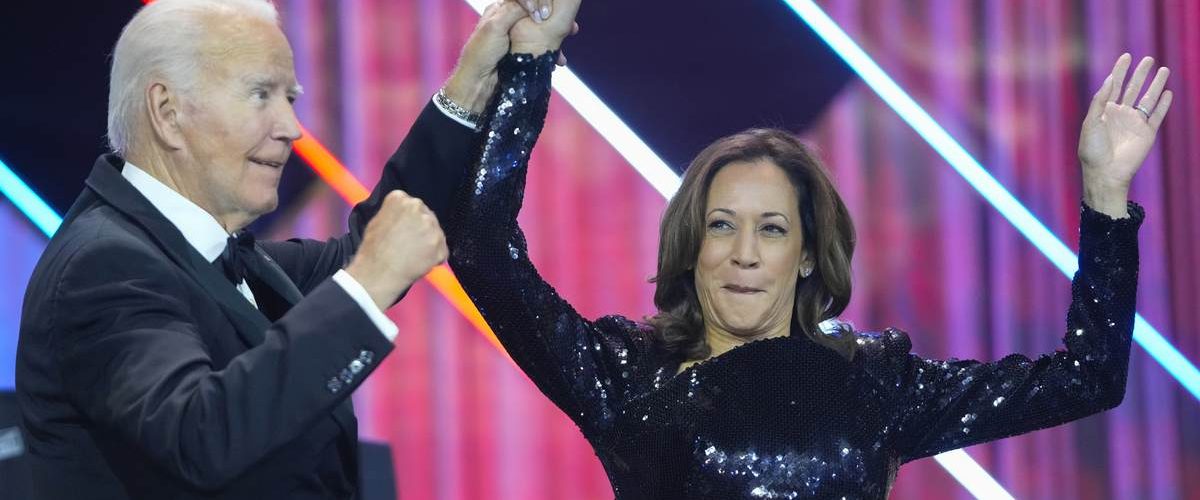
The Iowa State Fair moments described here show two Democratic candidates trying to distance themselves from the Biden-Harris brand, reacting with disbelief and laughter when asked whether they wanted help from Joe Biden or Kamala Harris, and the exchanges highlight a deeper identity struggle within the party.
At the Iowa State Fair, two Democrats campaigning for higher office made their discomfort obvious when asked if they wanted endorsements from Joe Biden or Kamala Harris. Their reactions — stifled laughter, blunt refusals, and pointed comments — weren’t just personal quirks but signals about where some Democrats feel their party is heading. The responses came in public settings where optics matter and where any association with national figures is carefully weighed.
Rob Sand, Iowa’s state auditor running for governor, answered questions plainly and without much flourish when pressed about national leaders. When asked whether he wanted Biden to campaign for him, Sand’s reaction suggested doubt about Biden’s current political value. He then moved on to Kamala Harris, and his answer left no room for ambiguity, signaling a desire for new leadership and a cleaner break from the top of the ticket.
Those reactions were punctuated with a mix of humor and exasperation from the other candidate, Josh Turek, the former Paralympian now running for Senate. Turek’s chuckles when the question was posed were not just about the person being asked but about the perception of political baggage. These moments aren’t accidental; they reflect the practical calculations of candidates trying to appeal to Iowa voters who prize independence and plain talk.
The exchanges felt like more than surface-level jokes because both men seemed to understand that national endorsements can be a liability as often as they are an asset. The party’s leftward drift and the visibility of its more radical elements make some moderate or pragmatic Democrats nervous. Candidates who want to win statewide in places like Iowa often have to distance themselves from polarizing national narratives and present a more focused, locally resonant message.
Sand’s back-and-forth with a political columnist drew direct questions about whether Harris should seek the presidency in 2028. His short, dismissive replies were a clear signal to voters: he does not view the current national leadership as the path forward. That stance will play well with independents and disaffected voters who judge politicians by results and competence rather than party loyalty.
https://x.com/politico/status/2092611690781175967
POLITICO POLITICS COLUMNIST JONATHAN MARTIN: Would you want to have Joe Biden campaign for you?
SAND: Uh, no. Can he even do that right now? [Whoa! Shots fired!]
MARTIN: How about Kamala Harris?
SAND: No thanks. Let’s move on. We need some new leadership.
The follow-up went even further, with Sand flatly rejecting the idea of Harris as a 2028 contender. That exchange underscored a party split: those who cling to established leaders and those who want fresh faces and different ideas. For Republicans watching, these moments look like validation that the Democrats face real struggles with unity and direction heading into future elections.
MARTIN: You don’t think Harris should run in 2028?
SAND: Nope.
Turek’s reaction after the fair showed the same instinct to avoid national baggage. His laughter wasn’t mean-spirited; it was a reflexive response to a question that many Iowa voters would answer with skepticism. Both men clearly understand that local races are won on local ground, not by leaning on national figures who carry controversy or recent electoral losses.
The broader context matters: within the Democratic Party, factions tug in different directions, and candidates in competitive states like Iowa must pick their lane. The Democratic Socialists’ rising influence and a focus on identity politics have pushed some mainstream Democrats to distance themselves from the national brand. That split creates openings but also risks for candidates trying to navigate primary voters and general-election skepticism simultaneously.
For a Republican observer, the scene at the fair reads as a welcome sign that Democrats are fractured and uncertain about their leaders. When potential nominees publicly decline the help of their own party’s most visible figures, it says something about perceived electability and message discipline. Those dynamics are likely to shape campaign strategies and voter conversations as the election cycle progresses.
These exchanges at the fair were small moments with outsized meaning. They show candidates making clear choices about who and what they want to be associated with, and they reveal tensions within a party struggling to define itself. Whether those choices help or hurt these campaigns will depend on how well the candidates translate them into coherent, practical platforms for voters who want real solutions rather than theater.

Add comment