
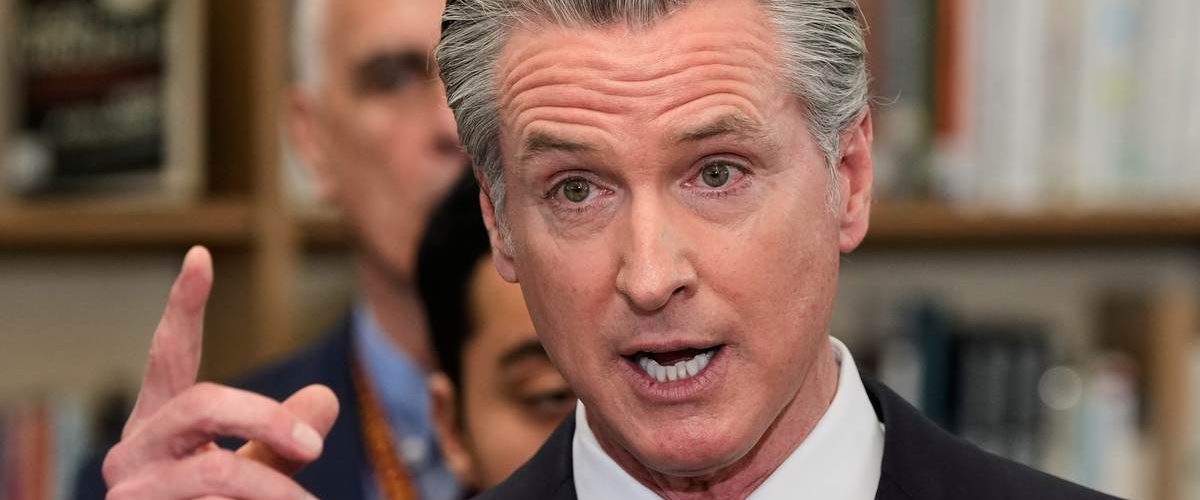
This piece examines Governor Gavin Newsom’s claim that President Trump bought SpaceX stock after its public offering and the problems with that accusation, including how institutional portfolio management, market timing, and Democratic political maneuvering change the story.
Newsom’s social post accused President Trump of buying SpaceX shares and implied wrongdoing because SpaceX holds federal contracts. That claim sounds inflammatory, but it ignores how many modern portfolios are built and how public market moves affect countless investors at once. It also overlooks statements from White House spokespeople and investment features that complicate any rush to judgment.
One key point is that many individual and institutional portfolios simply track broad indexes rather than hand-pick single-company bets. “…President Trump’s stock portfolio is managed by third-party financial institutions. Per White House spokesman Davis Ingle, those institutions “replicate recognized indexes, such as the Schwab 1000.”” That practice can result in exposure to a company without any deliberate decision by the account owner to buy that firm’s shares.
https://x.com/GavinNewsom/status/2092075529688211927
That index-driven exposure means SpaceX could have shown up in hundreds of portfolios at once when it entered certain index baskets after the IPO. Market indexing dilutes the idea of a single investor quietly buying favored securities because index replication passes through many holdings automatically. The larger picture turns a supposed scandal into a technical portfolio mechanics issue more than a deliberate conflict.
Another awkward detail for Newsom’s narrative is timing and price movement. More than that, TechCrunch is reporting that the portfolio added SpaceX shares when they were trading for about $150 around June 23. Those stocks closed down at $135 on Monday, which means the president likely lost money. Buying near a high and watching a modest drop undercuts any claim that the purchase was part of a calculated enrichment scheme tied to insider access.
Public disclosures make it clear that trading in the weeks after a major IPO can be noisy and driven by passive flows, not secret handshakes. When a large company joins more indexes or when funds rebalance, shares can be allocated across many accounts simultaneously. Those mechanical flows confuse narratives that rely on intentional, targeted purchases to prove corruption.
Politically, this allegation looks more like the Democratic playbook than an objective investigation. Congressional Democrats have already been pressing for exhaustive lists of financial managers and trading instructions, aiming to build dossiers that could feed impeachment theater if they retake power. Charging ahead with innuendo while ignoring straightforward technical explanations tends to reveal motive more than malfeasance.
There is also the repeated pattern of hit-piece headlines that shout “insider trading” before a full accounting of facts is available. A previous high-profile example accused Mr. Trump of massive bond purchases and labeled it insider activity without concrete evidence; the episode showed how headlines can sway opinion long before details emerge. That same rush appears alive in this SpaceX claim, where the optics matter more to critics than the underlying mechanics.
Observers close to the story have emphasized legal safeguards and family separation from government duties. “The President’s assets are in a blind trust. His sons are not in the government. They’re adults and they’re allowed to engage in business,” said a White House innovation adviser earlier this year, arguing there are limits on how private investments can be equated with official influence. Those points matter when weighing whether an exposure to SpaceX shares equals a conflict of interest.
At base, the SpaceX allegation is weak on two fronts: the technical reality of index-driven portfolios and the lack of unique evidence tying any trading decision directly to presidential action. Accusations built on inference and timing rarely survive scrutiny when ordinary investment practices explain how shares moved. For anyone interested in accountability, the right move is careful analysis rather than headline-driven political theater.
That said, the political consequences are real. Democrats will keep pushing disclosures and hunting for narratives that can be spun into broader corruption stories, and headlines like Newsom’s feed that cycle. But the mechanics of modern investing, index replication, and market timing complicate the simple storyline that a single purchase equals a scandal.
Given those mechanics, a responsible look at the facts shows that index replication and market movements account for much of what critics call suspicious. If the goal is to expose wrongdoing, facts matter; if the goal is to score political points, optics matter more. Right now, the SpaceX item is far closer to optics than to provable wrongdoing.



Add comment