
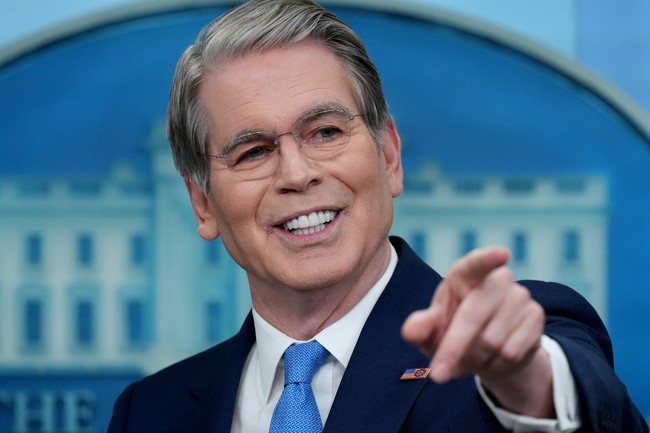
I’ll show what happened during Scott Bessent’s tour of the Treasury with Jesse Watters, summarize the vault and currency details they discussed, report Bessent’s comments on gold reserves and wages, explain his critique of Communism, and note the reaction from left-leaning voices.
Scott Bessent welcomed Fox host Jesse Watters into parts of the Treasury that few outsiders ever see, including a vault dating back to 1863. The visit gave a rare peek at institutional history and the evolution of American currency. Bessent used the tour to walk through the story of the greenback and to outline an upcoming temporary change to U.S. money tied to the nation’s 250th birthday.
During the tour Bessent declined to open the 1863 vault for public view and kept its current contents private, leaving some mystery intact. He did, however, talk through how our paper money has changed over time and why a special commemorative element will appear on currency later this year. Watters joked about how leftists would react to the news that President Donald Trump would be signing that commemorative currency, and that bills would reach the public in the fall.
https://x.com/JesseBWatters/status/2076831683844669444
Bessent used the moment to deliver a plainspoken critique of Communist economic practice, offering a line meant to cut through ideology. He said Communists “make [things] more affordable by making people worse off.” He explained that scarce or cheap goods in places like Cuba and Venezuela are not proof of success but evidence of impoverishment, noting that equality under Communism often translates into everyone being equally poor.
He argued Americans will reject that model because it destroys incentives and living standards rather than raising them, and he framed the contrast as one between thriving private-sector activity and top-down state control. Bessent stressed that real wage gains come from a healthy private economy, not from expanding government payrolls. That point sat at the center of his broader pitch about productivity, opportunity, and post-border security economic gains.
At one stop on the tour Bessent showed Watters the Treasury “cash room,” a space that used to handle transactions much like a private bank. The cash room embodies how currency was once managed day to day inside the Treasury and serves as a living exhibit of institutional function. Bessent walked through old notes and modern designs, connecting physical bills with policy decisions and the symbolic role of currency in national life.
On the question of Fort Knox and America’s bullion, Bessent was direct about what his office knows from staff reports and from the treasurer’s own visits. He said that while he personally had not toured Fort Knox, “people on my staff have,” and that the treasurer Brendan Beach had seen the reserve firsthand. Bessent asserted all the gold was present and accounted for and offered a valuation: “The U.S. has the largest pile of gold in the world,” followed by “Over a $1 trillion, at current market value.”
Those declarations were tied to a larger argument about confidence in American finances, the tangible nature of reserves, and the symbolism of stewardship. For a country that relies on trust to back its money, having a physically verified reserve matters for messaging as well as accounting. Bessent used the example to reinforce a narrative of competence and security in handling national assets.
He also connected recent policy moves to practical economic effects, arguing that securing the border and shifting trade relationships in the hemisphere have real consequences for wages and private employment. Bessent suggested that non-government jobs and wages have risen since the border was tightened under President Trump, and he credited private-sector expansion rather than federal hiring for real wage growth. He said the nation is on the verge of what he called a “big productivity boom,” tying regulatory shifts and trade choices to future gains.
The secretary described a strategy of ensuring oil sales and trade from Venezuela now benefit the people there and align with U.S. interests, rather than funneling advantages to rival global powers. By being a trading partner that favors the hemisphere, the U.S. gains economic leverage and strengthens regional stability. Bessent framed the approach as both humanitarian and strategic, with economic upsides for American workers through better trade dynamics.
Watters and Bessent’s back-and-forth included some cultural barbs directed at political opponents, with Watters mocking the expected reaction from the left. The segment ended on a defiant note aimed at critics, captured in a short, taunting line: “Cry more, leftists.” That zinger echoed the broader tone of the exchange, which mixed policy detail with political theater.
The Treasury visit offered more than photo ops; it served as a platform for Scott Bessent to lay out a conservative case for how to manage money, gold, and economic policy. He emphasized private-sector-driven wage growth, physical verification of national assets, and using trade and diplomacy to shift regional influence. The tour’s visuals and anecdotes were paired with those policy themes to make a compact argument about stewardship and prosperity.



Add comment