
The piece examines a Peruvian shamans’ prediction that Nicolás Maduro will be removed from power in 2026 and the ceremony’s use of Ayahuasca and San Pedro cactus, weighing the claim with skepticism while noting the cultural context and the political angle that links the prediction to former President Donald Trump.
The shamans’ public ritual in Lima and their forecast about Maduro grabbed attention because it mixes spiritual ceremony with a clear political wish: the end of Venezuela’s current leadership. From a Republican-leaning perspective, it’s tempting to see this as vindication of strong pressure on authoritarian regimes and as support for leaders who push for democratic outcomes. Still, the core question is whether a hallucinatory ritual actually predicts events or simply expresses a popular desire for change.
The report includes a multi-paragraph account presented as a quoted record of the ritual and its pronouncements. The quoted passage describes the gathering, the attire of the participants, their topics of concern, and their direct statement about Maduro and international conflicts. It also includes a specific line attributed to one of the shamans: “We have asked for Maduro to leave, to retire, for President Donald Trump of the United States to be able to remove him, and we have visualized that next year this will happen,” said shaman Ana María Simeón.
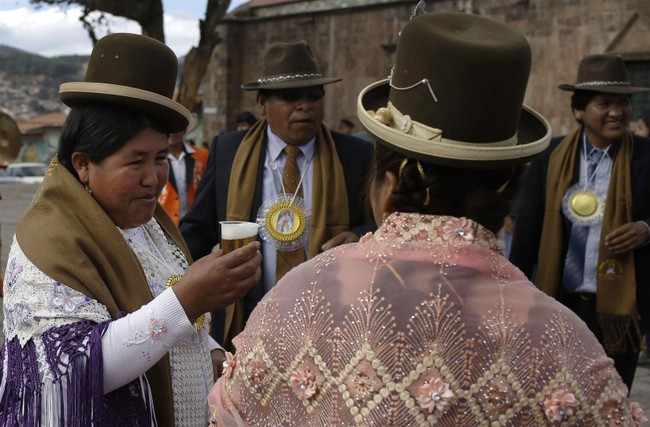
A group of shamans gathered Monday by the sea in the Miraflores district of Peru’s capital, Lima, to carry out an annual ritual in which they make predictions for the upcoming year.
Dressed in traditional Andean ponchos and headdresses, the group performed a ceremony, and made predictions about the course of international relations, ongoing conflicts and the fate of world leaders.
In this year’s event, the shamans said that Venezuelan President Nicolás Maduro will be removed from office, and added that global conflicts, like the war in Ukraine will continue.
“We have asked for Maduro to leave, to retire, for President Donald Trump of the United States to be able to remove him, and we have visualized that next year this will happen,” said shaman Ana María Simeón.
Skepticism is warranted. Predicting the fall of a long-standing authoritarian leader is a safe bet for anyone paying attention to global pressures, sanctions, and internal dissent. From a political reporter’s view that leans Republican, it’s fair to cheer for Maduro’s exit if it means better outcomes for the Venezuelan people and a strategic win for democratic-aligned policies. But cheering and predicting are different things; ritual proclamations do not replace analysis of geopolitics, diplomacy, or the balance of power inside Venezuela.
There’s institutional and popular appetite for a change in Caracas, and external actors have influence, but transitions are messy and rarely tidy. Claiming that a ritual will empower one foreign leader to remove another oversimplifies how change happens in the international system. Republicans who favor strong U.S. leadership can appreciate the sentiment without mistaking spiritual ceremony for a viable foreign policy blueprint.
The shamans’ use of Ayahuasca and San Pedro cactus to reach visions is part of an established Andean practice, and that cultural continuity deserves respect. It’s reasonable to note, however, that altered states make for evocative storytelling and headline-grabbing quotes, not empirical forecasting. Political observers should separate cultural coverage from evidence-based predictions while respecting local traditions.
There’s also irony here: public rituals that demand political outcomes are a reminder that ordinary people worldwide register grievances and hope for decisive leadership to correct injustices. For U.S. conservatives, that can translate into support for firm, principled policy that backs democratic movements and holds corrupt regimes accountable. Still, the mechanics of regime change rarely match the tidy narratives shouted out at a coastal ceremony.
Timing matters. The shamans named 2026 as the year for change, which coincides with major electoral cycles in the United States and shifting global alignments. That overlap gives their prediction political resonance for Americans who think in election cycles, especially those who back a return to assertive American diplomacy. Yet any real removal of Maduro will hinge on internal Venezuelan dynamics and international consensus, not a single visionary moment.
Culture, faith, and politics can mingle in powerful ways, but clarity demands we treat ritual claims as expressions of hope rather than forecasts. The Peruvian ceremony is newsworthy because it reflects regional sentiment and because its language ties into broader debates about leadership and intervention. The lasting takeaway is that people everywhere look for signs and symbols to make sense of political disorder, and those signs often tell us more about the observers than about inevitable outcomes.

Add comment