
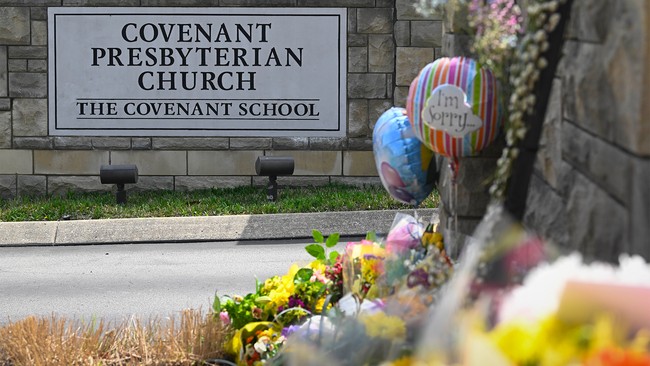
The released FBI notebooks from the Covenant School shooter lay out motives and methods that officials and much of the media downplayed for years, showing explicit anti-religious and anti-white statements, a plan to target a Christian elementary school, and notes that federal student aid was used to buy weapons.
Nearly three years after the Covenant School attack, newly disclosed FBI materials reveal journal entries that point to clear motives focused on hatred of religion and white people. The notebooks list the private Christian school as an “alternate target” and “2nd choice” while weighing “advantages” and “disadvantages” of attacking children there. Those notes make explicit the shooter’s hostility: “Christian school (hate religion).”
The pages do more than sketch a plan; they map selections and perceived benefits, including the author’s familiarity with the school’s layout and student population. In crude, handwritten language the shooter also listed “predominantly white” and “white pple (sic) I hate” as factors. That combination of anti-religious sentiment and racial animus is central to why the Covenant School was singled out.
The notebooks show this act was not a sudden breakdown but a long-running, methodical calculation. Items like an “Account Savings Record” and ledgers sit next to firearms lists, implying financial planning tied directly to the weapons purchased. Those ledgers include references to federal student aid and checks connected to a Nashville school, which raises questions about how federal programs were monitored and used.
One handwritten passage explicitly references Pell Grant funds and the Free Application for Federal Student Aid, with entries such as “FASFA [sic] grant checks started at $2,050.86” and “$2,656.87 (x3 checks from Nossi).” Those accounting notes, placed next to firearm listings, suggest taxpayer-funded money was used toward acquiring weapons. For many conservatives, the idea that federal student grants could be diverted this way will prompt calls for accountability and reform.
The tone in the notebooks alternates between cold calculation and disturbing invocations. Despite the openly hostile language toward religion, the shooter wrote a plea on the day of the attack: “Forgive me, God, this act will be inglorious.” That line underscores a conflicted mindset that fused ideological anger with a warped appeal to spirituality, complicating simple narratives about motive.
Officials and media outlets previously resisted releasing the full contents of these writings, and the delays fed suspicions that authorities were selective about what the public could see. For many on the right, the suppression of these documents looked less like careful investigation and more like an attempt to avoid politically inconvenient truths. Now that the notebooks are public, the previously hidden passages speak plainly to motive in ways earlier accounts did not.
The notebooks also show meticulous planning: timelines, lists, and bookkeeping that point to a premeditated campaign rather than a spontaneous eruption of violence. That level of detail is chilling because it reveals patience and purpose, not merely chaotic desperation. Those facts demand a sober look at institutional failures that let such planning proceed unchecked.
Beyond motive and planning, these documents expose a policy gap. If federal student aid can be catalogued in ways that tie to weapon purchases, then oversight mechanisms need review. Conservatives will argue this is another example of taxpayer dollars being used without sufficient safeguards, and they’ll press for changes to prevent any future misuse.
The story forces hard questions about how cultural and ideological conflicts intersect with security and policy failures. When someone writes “Christian school (hate religion)” and records financial flows from federal grants alongside gun purchases, it is both a motive and a system failure. Lawmakers and law enforcement must reckon with both the ideology that drove the crime and the practical channels that enabled it.
Victims’ families and communities deserve transparency and answers about how this planning went on for years without interception. The notebooks are painful evidence showing why many conservatives insisted the motive was political and religious, not merely mental health. The factual record now available should inform policy changes and oversight reforms to close the gaps the notebooks expose.

Add comment