
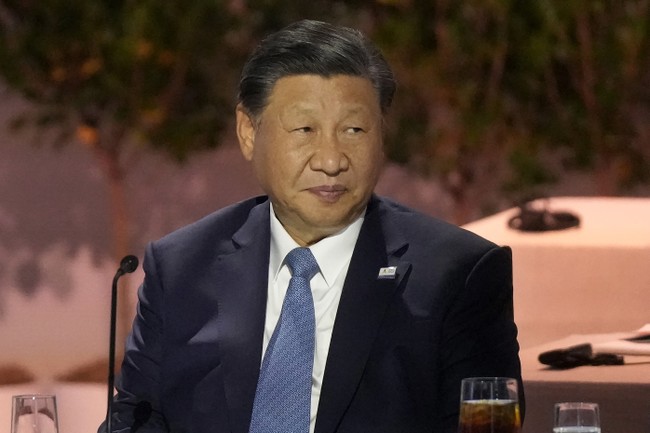
China’s leadership purge of the People’s Liberation Army has reached a new peak with the removal of top generals, renewed questions about combat readiness, and a wider pattern of political consolidation that looks more about power than reform. This piece traces the recent dismissals, the history of Xi’s anti-corruption drive in the military, and why a weakened, politicized PLA matters to U.S. interests in the Pacific.
Beijing recently announced the abrupt removal of two senior officers from the Central Military Commission and the Joint Staff Department, citing corruption and “violations of party discipline.” One of the dismissed figures is General Zhang Youxia, a Politburo member and long-time Xi ally, and the other is General Liu Zhenli, the chief of combat planning and operations. The official line points to graft, but the broader pattern reads like an effort to crush independent command structures and enforce personal loyalty to Xi Jinping.
An editorial in the PLA Daily accused the men of having “undermined Xi’s authority, abetted political and corruption problems that impaired the party’s leadership over the armed forces, and damaged efforts to develop combat effectiveness.” Those words make clear the purge is framed as safeguarding the party, yet the net effect has been to hollow out experienced leadership. When you remove senior commanders on political grounds, the military’s cohesion and readiness suffer in very practical ways.
Zhang’s fall is notable because he comes from the so-called princeling class and should theoretically have protection from such moves. “Zhang, who is also a member of the party’s elite Politburo, has been a close ally of Xi. Both men are “princelings,” as the descendants of revolutionary elders and high-ranking party officials are known.” That background normally insulates officers from rapid downfall, which tells you how extensive Xi’s reach has become. The purge does not spare veteran connections or revolutionary pedigrees when political consolidation is the objective.
Xi’s campaign against corrupt or disloyal officers began in earnest after he took power in 2012 and intensified in waves, most visibly in 2016 and again from 2023 onward. The earlier removals broke up entrenched networks tied to the Jiang and Hu eras, and later actions targeted entire branches like the Rocket Force. High-profile figures tied to procurement, silo construction, and other defense projects were removed amid allegations of corruption that also raised concerns about compromised readiness.
In mid-2023 and into 2024, the purge hit the Rocket Force and the defense ministry itself, with successive defense ministers disappearing from public view and ultimately being expelled for “serious violations of discipline and law.” Those moves stripped institutional memory and leadership at a time when China has also been rapidly modernizing its forces. Purges coupled with ambitious procurement plans create a dangerous mismatch between intention and capability.
The results are predictable: procurement delays, stalled promotions, and disrupted command relationships that slow decision-making. Military units thrive on clear chains of command and predictable career paths; purges inject fear and uncertainty. A senior officer who worries about political tests or loyalty probes will prioritize self-preservation over bold operational planning, and that exact shift reduces effectiveness across the board.
Some observers argue these purges make large-scale aggression less likely, because an army riddled with political fear is unlikely to launch complex operations. That may be true to an extent, but it also makes Chinese strategy unpredictable. A regime that distrusts its generals could hand more authority to political officers or rely on asymmetric tools like missile threats, cyber attacks, and economic coercion instead of conventional operations.
There is no real belief that rooting out corruption is the sole motive here. China’s corruption is systemic across sectors, and the selective nature of the military purges shows a political logic. Xi’s consolidation looks aimed at preventing any center of power that could challenge him, which has direct implications for regional stability and for U.S. planning in the Western Pacific. A politicized military answers first to the party and its leader, not to doctrine or mission effectiveness.
For U.S. policymakers and allies around Taiwan and in the South China Sea, the message is mixed. On one hand, internal chaos and leadership churn could reduce the likelihood of conventional aggression. On the other hand, a nervous, tightly controlled PLA might resort to coercion and episodic confrontations that test responses and create crises without full-scale war. That makes careful, steady deterrence and regional partnerships more important than ever.
The purge shows Xi’s priority is political control, even at the expense of military professionalism. Whether that trade-off makes China safer or more stable is doubtful; it certainly makes the regime less predictable. The United States and its partners should watch how Beijing balances modernization with internal purges, because the answer will shape security choices across the Indo-Pacific for years to come.
No one believes ridding the PLA of corruption is a real cause of action. China’s real estate market, banking system, public works programs, and every other conceivable part of the government is as corrupt as a Somali day care conglomerate.
“Zhang, who is also a member of the party’s elite Politburo, has been a close ally of Xi. Both men are “princelings,” as the descendants of revolutionary elders and high-ranking party officials are known.
Zhang is the son of a Communist revolutionary who fought alongside Xi’s father during the Chinese civil war, which culminated in Mao Zedong’s forces seizing power in 1949. Zhang’s father later became a three-star general, while Xi’s father went on to hold senior roles in the party, government and legislature.”
Add comment