
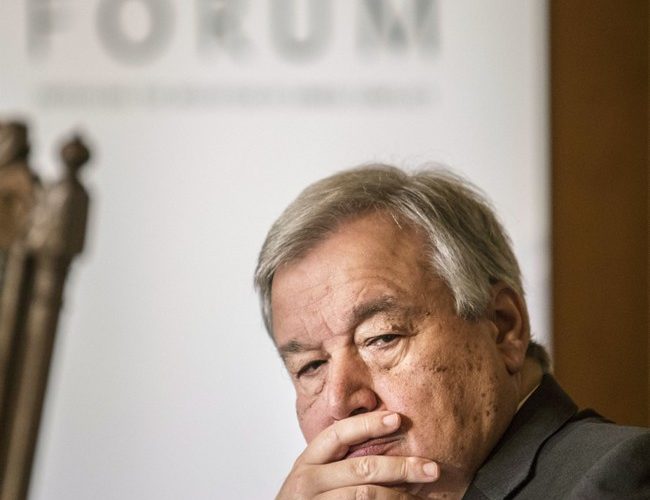
The United Nations Security Council convened an emergency session after coordinated strikes by the United States and Israel against targets in Iran, and UN Secretary General António Guterres issued strong condemnations while urging calm and de-escalation.
The Security Council opened its meeting at 4 p.m. Eastern, labeled “The Situation in the Middle East,” and invited representatives from Iran and Israel to take part despite neither being council members. The session was called to address a rapidly changing crisis that officials say involved strikes across Iran and retaliatory actions reaching several neighboring countries. Delegates faced reports of significant damage and casualties, and the room was focused on immediate diplomatic responses. This was a high-stakes, emergency gathering driven by the scale and speed of the events.
António Guterres, the UN secretary general, spoke first and criticized both the U.S. and Israel, saying “international law and international humanitarian law must always be respected.” He added, “Since this morning, I have condemned the massive military strikes by the United States and Israel against Iran.” Those words framed the UN response as centered on legal norms and the need to check military action through established rules.
At the same time, Guterres did not spare Iran from rebuke, condemning what he called retaliatory attacks that violated neighboring states’ sovereignty. He named Bahrain, Iraq, Jordan, Kuwait, Quatr, Saudi Arabia, and United Arab Emirates as countries affected by the reprisals, and warned the council that “We are witnessing a grave threat to international peace and security.” The secretary general’s balanced public condemnation of both sides was meant to pressure all parties to step back and pursue diplomacy.
Guterres emphasized that lasting peace requires peaceful means, stating, “Lasting peace can only be achieved through peaceful means, including general dialogue and negotiations.” He urged de-escalation and the immediate cessation of hostilities as the path forward. For diplomats watching closely, those remarks were a reminder of the UN’s traditional role as a mediator, even as member states weigh their own security calculations.
The situation on the ground is very fluid. There are many unconfirmed reports – here is what we know. About 20 cities across Iran … have reportedly been attacked. In Tehran, large explosions were reported in the district that includes the presidential palace and the compound of the supreme leader. Several high-ranking officials have reportedly been killed, including, according to Israeli sources, Iran’s supreme leader, Ali Khamenei, that I’m not in a position to confirm. Iran’s airspace has been closed and the country is under a near-total blackout.
Those words capture the chaos described at the council: unconfirmed but alarming reports of strikes in roughly 20 Iranian cities, explosions near key government sites in Tehran, and a near-total communications blackout across the country. The inclusion of unverified claims, such as reports about Iran’s supreme leader, Ali Khamenei, underscores how foggy the situation was during the session. Diplomats were forced to operate in real time with partial information, making measured responses difficult but essential.
From a Republican perspective, the emergency meeting raised familiar questions about deterrence, proportionality, and the preservation of American and allied security interests. Supporters of the strikes argue that decisive action can blunt immediate threats and protect regional partners, while critics within international institutions stress legal boundaries and the need for restraint. The tension between favoring robust defense measures and adhering to international law played out in stark terms at the UN table.
Guterres urged de-escalation once more, saying, “I call for de-escalation and the immediate cessation of all hostilities.” That appeal aligned with the UN’s core mission to prevent broader conflict, but it will now compete with political and military calculations in capitals across the region. How the United States and Israel respond to international criticism while pursuing their security goals will shape the region’s next steps.
You can watch the entire meeting of the UN Security Council here:


Add comment