
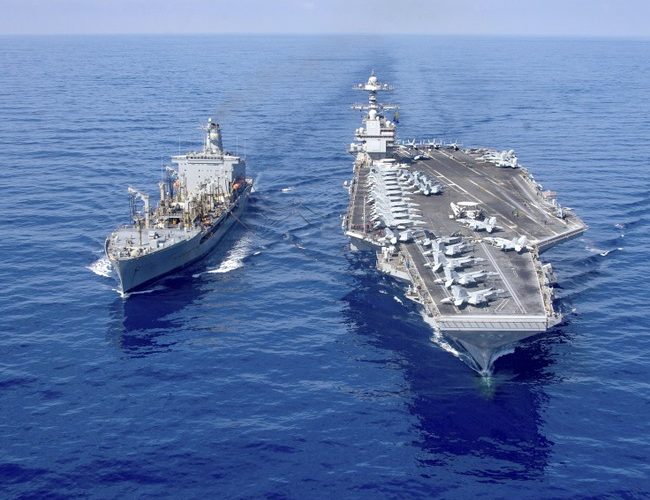
President Trump is considering sending a second aircraft carrier to the Middle East as leverage in talks with Iran, and this article lays out what that show of force means, why it might not fully persuade Tehran, and what options the U.S. really has short of a ground invasion.
Parking a warship off someone’s coast is primitive but effective diplomacy when it works, a clear sign you’re willing to back words with potential action. We used to do it with battleships and big guns; today it’s carrier strike groups that carry the same message. The point is to make an opponent visualize the “or else” without actually firing a shot.
Iran didn’t appear rattled by the first carrier dispatched to the region, so President Trump is weighing adding another to the mix as a stronger signal. The idea is simple: pile on military presence so Tehran knows the United States is serious about preventing a nuclear-armed or missile-ready regime from escalating across the region. In the Republican view, strength and clarity beat ambiguous threats every time.
President Donald Trump is weighing deploying a second aircraft carrier to the Middle East as the U.S. continues talks with Iran over its nuclear program.
Trump commented during an interview with Axios Tuesday, saying he would consider the move if the talks with the Islamic Republic fail.
The president is set to meet with Israeli Prime Minister Benjamin Netanyahu Wednesday at the White House, marking their seventh meeting since Trump took office over a year ago.
One carrier task group already represents a huge concentration of firepower, logistical reach, and intimidation. If that wasn’t enough to bend Tehran, doubling the number of carriers might look like piling on an advantage we already had. The question for policymakers is whether escalation in visible forces actually changes the calculus inside Iran’s leadership, or merely ratchets up regional tension.
Talks between the U.S. and Iran have been ongoing in Oman since late last week, with tensions between the two nations growing.
Israel is reportedly concerned with not only Iran rebuilding its nuclear program, but also ballistic missiles and support for proxy groups, such as Hamas and Hezbollah.
While Trump won’t commit to whether the U.S. will strike Iran for the second time in less than a year, he continues to hurl threats at the Iranian regime, citing a large armada of American naval ships in the region, which has been growing.
Naval deployments are mostly about signaling and deterrence, not direct conquest. The U.S. Navy can control sea lanes, impose blockades, and project power from a distance, but regime change in a nation like Iran is a different challenge. Tehran sits far inland behind rugged terrain and populated areas that make any ground invasion costly and politically fraught, both for American forces and for any nation that cares about the rule of law and avoiding endless occupations.
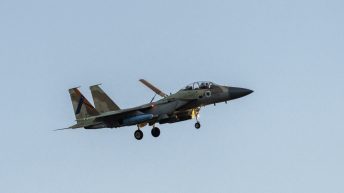
Airpower gives us the ability to achieve near-total supremacy over Iran’s skies, which has real operational value. Back in 1991 one fighter pilot joked that Iraqi jets looked like coffins by the second day of the air campaign. The same kind of dominance today would let us neutralize key regime assets, degrade missile infrastructure, and support dissidents without massing infantry for a long invasion. For conservatives, the point is to use decisive, efficient force that minimizes American casualties and avoids drawn-out occupations.
Still, aviation and carriers alone won’t topple a regime. The real change in Iran, if it comes, is likely to be internal—Iranians acting against an oppressive ruling class, not outsiders doing the heavy lifting. That’s both a moral and pragmatic stance: we can support freedom and put pressure on the regime, but we can’t ethically or practically replace the will of a people with a foreign army.
Sending more carriers is a tool in the toolbox: visible, expensive, and persuasive to some degree. But doubling down on a single type of pressure risks diminishing returns if it’s not coupled with diplomatic, economic, and covert measures that target leadership cohesion and funding for proxies. Republicans prefer clear, layered strategies that combine deterrence with options short of occupation.
A robust naval posture also reassures allies like Israel and Gulf partners that the United States remains committed to regional stability, which matters for deterrence and intelligence sharing. At the same time, the deployment must be calibrated to avoid unnecessary escalation; show of force without a plan for escalation management is just theater with a high risk of miscalculation.
In short, the carriers send a message—one the Trump administration seems prepared to amplify. Whether Tehran will read that message the way Washington intends is the open question, and it’s why policymakers will keep weighing options both at sea and across the diplomatic table.


Add comment