

The Supreme Court will hear oral arguments Wednesday on whether an executive order can limit birthright citizenship, and President Donald Trump has said he plans to attend the session in person to hear the justices. This case challenges long-standing interpretations of the 14th Amendment and raises questions about presidential authority, constitutional history, and the role of the courts in settling contentious policy disputes.
The White House says the president will be present as the Court hears the challenge to his January 2025 executive order titled “Protecting the Meaning and Value of American Citizenship.” The order aims to change the modern application of birthright citizenship so that at least one parent must be a citizen or lawful permanent resident for a child born here to qualify automatically.
Predictably, the order triggered immediate litigation and lower courts struck it down as unconstitutional. From a conservative perspective, this legal fight is about correcting a mismatch between the Founders’ intentions and how the 14th Amendment has been applied in recent decades, not about denying rights to anyone already lawfully entitled to them.
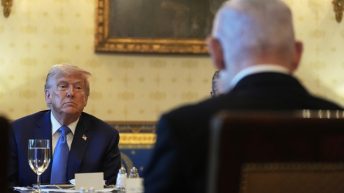
President Trump told reporters plainly, “I’m going,” and explained his reason: “because I have listened to this argument for so long.” His attendance would be unprecedented in modern times and has already sparked debate about precedent, optics, and whether a president should sit in the courtroom as the judiciary weighs a case directly tied to his own action.
Historians note there is no clear record of a sitting president attending oral arguments at the Supreme Court, and that novelty matters. Some critics on the left call the move an attempt to intimidate the judiciary or blur the separation of powers, but many conservatives see it as the president exercising his right to witness a constitutional debate that directly affects national policy and public safety.
At the heart of the legal argument is this: did the framers of the 14th Amendment intend to create an unlimited rule granting citizenship to anyone born on U.S. soil regardless of parental status? The administration argues that the historical record supports a narrower reading, and that the current practice produces perverse incentives and policy problems that Congress has not effectively addressed.
‘…I’m going,’ Trump said when a reporter brought up the case.
The President said he was attending ‘because I have listened to this argument for so long.’
‘And this is not about Chinese billionaires who are billionaires from other countries who all of a sudden have 75 children, or 59 children in one case, or 10 children, becoming American citizens,’ Trump argued. ‘This was about slaves.’
Birthright citizenship was established by the 14th Amendment, which was ratified in 1868 to guarantee citizenship to recently freed slaves – but historically has applied to every person born in the US or its territories.
Legal scholars on both sides will parse precedent, statutory text, and historical sources to make their cases before the justices. Conservatives expect arguments to focus on original meaning and statutory interpretation, while opponents will stress the Amendment’s broad guarantees and settled practices going back over a century.
Republicans who back the move say it is about restoring clarity and protecting American citizens by ensuring immigration laws are enforced in a sustainable way. They argue that executive action was necessary after years of Congressional inaction, and that the judiciary is the proper venue to resolve the constitutional dispute.
Opponents warn about unintended consequences and the political fallout of altering a principle many see as a foundation of equal protection. Still, those who support limiting automatic birthright citizenship point to high-profile cases where foreign nationals allegedly exploited the rule, raising questions about fairness and national sovereignty.
Observers will watch how the justices frame questions, which often reveals their thinking more than the submitted briefs. If the Court rules for the administration, it could permit a narrower, more textual reading of the 14th Amendment; if not, the decision would solidify the modern understanding of birthright citizenship and limit executive flexibility on the issue.
Either way, this hearing is a flashpoint in a broader conservative effort to use the courts to settle major policy disputes when Congress fails to act. The stakes are high: the outcome could reshape immigration law, presidential power, and how Americans interpret constitutional protections tied to birthplace and parentage.
Editor’s Note: Thanks to President Trump, illegal immigration into our great country has virtually stopped. Despite the radical left’s lies, new legislation wasn’t needed to secure our border, just a new president.


My income reached $17,620 last month, thanks to a flexible online job. It’s astonishing how easy it is to get started and see real results. I spend my mornings working and still have the whole day to relax. The extra money has made a big difference in my financial situation. It’s a fantastic way to boost your income without overworking yourself..
Visit This…… PayAtHome1.Com