
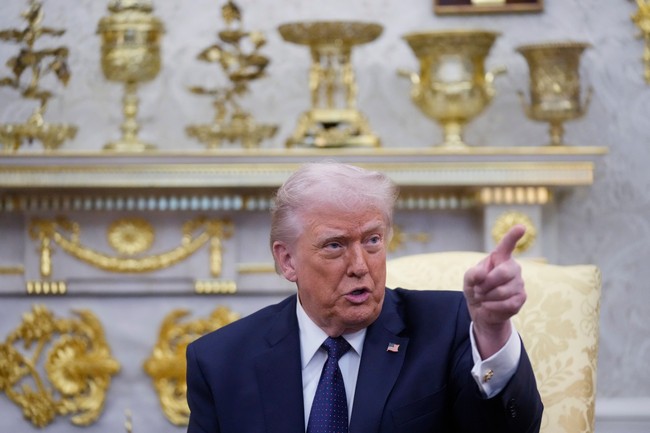
This article covers President Trump’s remarks on the likely timeline for ending Operation Epic Fury, the administration’s approach to degrading Iran’s military capabilities, and a combative Q&A with journalists that highlighted differing interpretations of Iran’s threat. It reports on the executive order addressing mail-in ballot security, outlines Trump’s description of damage inflicted on Iran, and relays exchanges with reporters that questioned perceived risks to U.S. companies. Embedded video segments from the original coverage are preserved in their places.
The White House also moved on election integrity with an executive order aimed at tightening mail-in ballot controls, a measure meant to reduce fraud. Officials will work to build a list of verified U.S. citizens eligible to vote, and the Postal Service will use secure envelopes and unique barcodes for tracking mailed ballots. That part of the day got less attention as questions quickly pivoted to the military campaign labeled Operation Epic Fury.
After a Pentagon briefing from Secretary of War Pete Hegseth, reporters pressed the president about whether an end to the operation was in sight. Trump offered a firm, short timeline and insisted the military pressure has been severe and effective. Here is what he said:
I would say, within two weeks… maybe. Two weeks, maybe three. We’re hitting them very hard. Last time we wiped out a tremendous amounts of missile-making facilties as you probably read, or wrote. We knocked out…
The president confirmed that prediction again when a reporter interrupted for clarification, saying, “I think within two or three weeks.” That projected finish line shapes how the administration frames short-term objectives and what comes next for U.S. forces in the region. Journalists then asked what the U.S. would do after operations wind down.
Trump answered plainly and bluntly about the level of engagement he envisions going forward, arguing the nation had no interest in prolonged policing efforts. His comments included a long-form explanation of tactical threats versus strategic goals and what the administration considers acceptable follow-up actions. He emphasized the core strategic aim has been to eliminate nuclear capability, which he described as achieved.
We’ll leave. Because there’s no reason to do this. Look, a guy can take a mine, drop it in the water, and say, “Oh, it’s unsafe.” It’s not like you’re taking out an army, or you’re taking out a country. Or you can take a machine gun from the shore and shoot a few bullets at a ship. Or maybe, an over-the-shoulder missile, small missiles.
That’s not for us. That’ll be for France. That’ll be for whoever is using the Strait. But I think when we leave, probably that’s all cleared up. Today, I heard tremendous numbers of ships were sailing through. We’re negotiating with them right now. They’ve been.. again, we have had regime change.
Now regime change was not one of the things I had as a goal. I had one goal: they will have no nuclear weapons. And that goal has been attained, they will not have nuclear weapons.
But, we’re finishing the job, and I think within, maybe two weeks, maybe a couple of days longer to do the job. But we want to knock out every, single thing that they have. Now it’s possible we’ll make a deal before that, ’cause we’ll hit bridges, and we’ve hit some, but and we’ll hit some bridges, we have a couple of nice bridges in mind. But if they come to the table, that’ll be good. But, it doesn’t matter whether they’ll come or not, we’ve set them back…. it’ll take 15-20 years to rebuild what we’ve done to them. They have no Navy. They have no military. They have no Air Force. They have no telecommunications, they have no anti-aircraft systems. They have no leaders, their leaders are all gone. That’s why you have regime change.
The bluntness extended into an exchange with Reuters journalist Jeff Mason, who questioned how worried officials should be about Iranian threats to U.S. companies operating in the region. The president pushed back sharply and used plain language to minimize the idea of imminent, catastrophic retaliation. The back-and-forth showed a media tendency to emphasize alarm even when U.S. officials present significant battlefield results.
TRUMP: With what? What did they threaten them with? BB Guns? Or…
MASON: Well… that’s …
TRUMP: They don’t have much left to threaten.
Mason persisted, but the president consistently forced him to be specific about the alleged threats before accepting the premise of danger. That posture shifted the tone of the press exchange from speculative fear to demand for facts. At one point Mason could only insist, “All I know is that they threatened them, sir,” and Trump pressed him to say what the threat actually was.
TRUMP: Did they say they’re going to blow them up, they’re gonna hit ’em — you know what they’re not going to do? They’re not going to hit ’em with a nuclear weapon.
The administration framed the campaign as decisive and designed to reduce long-term risk, not to occupy or remake nations endlessly. When a reporter read the Iran Revolutionary Guard Corps’ list of technology companies it was threatening, Trump’s response was terse and intended to puncture the looming menace journalists implied. He quipped, “Most of those people are dead already.”
The whole exchange illustrated two things: the White House believes its military action has substantially degraded Iran’s capabilities, and there is clear impatience with press attempts to paint a continuing catastrophic threat. The president reiterated a short operational timetable and a preference for limited engagement once immediate objectives are met.
WATCH:
WATCH:

My income reached $17,620 last month, thanks to a flexible online job. It’s astonishing how easy it is to get started and see real results. I spend my mornings working and still have the whole day to relax. The extra money has made a big difference in my financial situation. It’s a fantastic way to boost your income without overworking yourself..
Visit This…… PayAtHome1.Com