
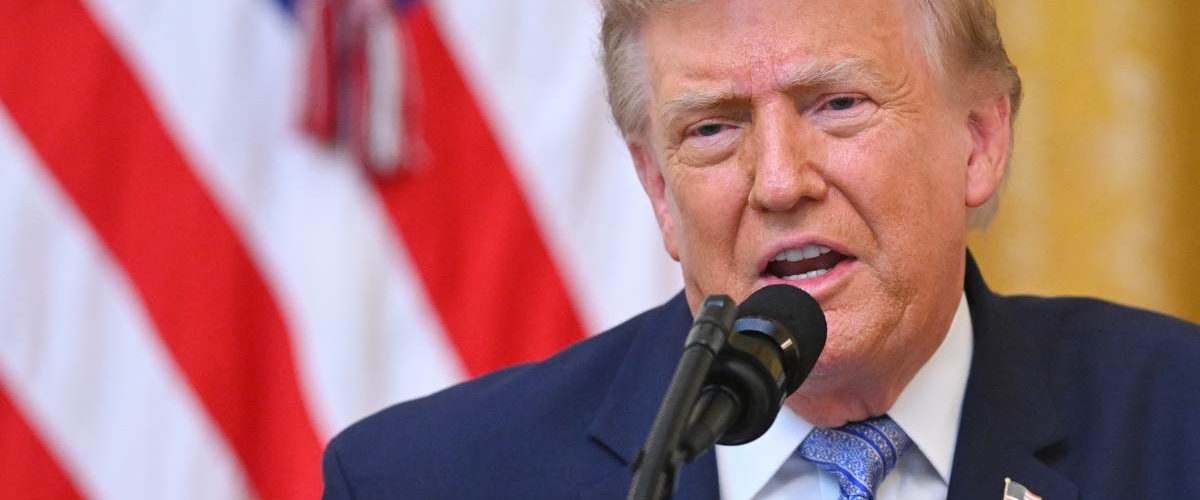
President Trump’s recent Truth Social post about Iran sparked debate, and his later comments to reporters clarified his stance: he sees a weakening Iranian regime, believes economic pressure and limited military moves have shifted leverage to the United States, and suggested that an eventual popular uprising in Iran is increasingly likely. This piece lays out what he said, why it matters, and how a strategy of pressure and patience could produce meaningful change in Tehran.
There are two ways to read the original Truth Social post: as frustration that Iranians have not yet risen up, or as a strategic observation that their collapse is only a matter of time. The president emphasized that our current position — control of the Strait of Hormuz and a collapsing Iranian economy — is preferable to any hollow agreement. That framing is political clarity: leverage matters more than paper promises.
The comment raised legitimate questions about intent and responsibility, so the follow-up matters. When Fox’s Peter Doocy asked whether the administration would actively help Iranians rise up or send in the CIA, Mr. Trump smiled and declined to spell out operational details publicly. His refusal to disclose tactics is consistent with basic national security practice and also signals restraint compared with those who rush to escalate.
Trump later explained the thinking behind his phrasing, acknowledging the brutal reality that people attempting to resist have been killed for doing so. That point underscores the gravity of endorsing any kind of uprising and the prudence in not telegraphing covert actions. From a Republican perspective, it’s sensible to recognize both the human cost and the strategic value of patience.
Then he offered the crucial line that clarifies his posture: “The regime is getting weaker and weaker by the day, and at some point, they’re not going to be able to shoot so easily.” That sentence captures a simple, hard-edged doctrine: a weakening regime loses its instruments of repression over time, and when that happens, the odds shift dramatically in favor of change. This is not wishful thinking; it is an argument about diminishing coercive capacity.
Economic collapse and targeted pressure can erode loyalty within a regime’s security forces, especially if even elite units are deprived of pay or resources. Reports that elements of the Islamic Revolutionary Guard Corps have had problems getting paid feed directly into the president’s logic. When the coercive apparatus frays, defections and internal breakdowns become realistic outcomes rather than theoretical possibilities.
There is also a practical advantage to avoiding premature direct intervention: outside military action risks unifying domestic audiences around the regime and provoking wider conflict. A strategy of squeezing the regime while signaling support for the people, rather than assuming the role of executor, reduces the chance of a costly quagmire. Republicans who favor limited, decisive use of American power will see merit in this calibrated approach.
https://x.com/RapidResponse47/status/2095214057959686522
Domestic resistance requires more than slogans; it needs openings created by pressure that weakens state control. Economic measures, control of key maritime chokepoints, and targeted actions that limit regime capabilities can create the structural stress necessary for movements to gain traction. That combination boosts the chance that Iranian citizens, not foreign powers, will be the agents of their own liberation.
There is an ethical component, too: encouraging popular change without directly instigating it respects the agency of the Iranian people while avoiding accountability for violent outcomes. Saying the regime will eventually lose its grip is different from ordering people to take up arms. That distinction matters when weighing moral and legal responsibility in foreign policy decisions.
Critics accuse the president of blithely cheering for unrest; supporters argue he is articulating a realistic timeline for when repression becomes unsustainable. The Republican view prefers to be clear-eyed: hard power and economic pressure create conditions for durable political change if they degrade a regime’s ability to coerce its population. The aim is a transition driven by locals, supported by U.S. pressure, not manufactured by outside occupation.
Finally, the administration’s posture signals an intent to keep options open while maximizing leverage. Control of strategic waterways, economic strangulation of key regime clients, and targeted operations that avoid open war are tools that, together, make regime survival more costly. That set of tools is what the president was describing, and for those who want results without endless entanglement, it’s a coherent playbook.


Add comment