
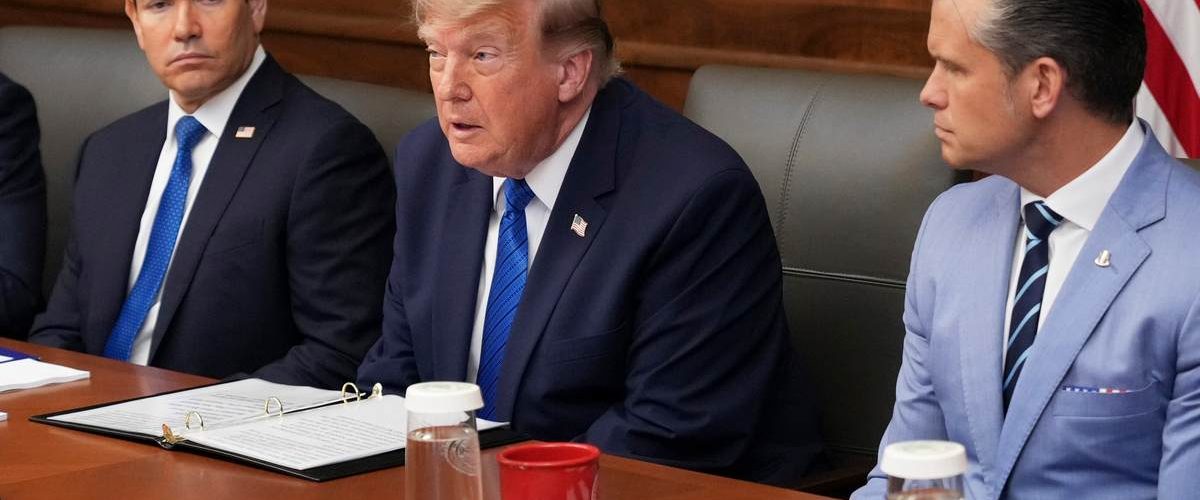
The piece examines recent claims that Secretary of Defense Pete Hegseth might be preparing a 2028 presidential bid, how the media pushed the story, and President Trump’s public response downplaying any immediate endorsement while praising Hegseth’s work for the military.
The mainstream press circulated a story saying Pete Hegseth had privately discussed a possible 2028 run, and conservatives saw it for what it was: an attempt to manufacture drama inside the administration. Reporters leaned on anonymous sources and speculation, the same playbook used whenever the media wants to stir tension among conservative leaders. That noise distracted from policy wins and the administration’s focus on security and the military.
NBC and other outlets floated the idea, prompting swift pushback from Hegseth and allies who called the coverage baseless. Instead of reporting facts, parts of the press offered innuendo and headlines designed to provoke a reaction. The aim looked less like journalism and more like political theater meant to keep the story cycle buzzing.
At a White House moment focused on healthcare affordability, reporters pressed President Trump about the Hegseth chatter and whether he would endorse a hypothetical future campaign. Trump chose not to declare any endorsement, stressing it was premature to discuss 2028 politics before the midterms. That response underscored a practical approach: governing and winning elections come before speculation about succession.
https://x.com/PeteHegseth/status/2093475499242934557
Critics of the media saw the question at that event as deliberately provocative, timed to lure a headline rather than elicit useful information for voters. From the conservative perspective, raising contest talk in the middle of active policy work is irresponsible reporting. It serves no public interest but does plenty to fray unity and generate clicks.
The president’s remarks struck a clear tone: praise for the job Hegseth is doing and a reminder that now is not the time to be talking about future bids. Trump called Hegseth “a very good guy,” highlighting his focus on the military and troop welfare. That kind of public backing—measured and complimentary—does not read as the first step toward a shakeup or imminent personnel move.
Some outlets have suggested friction exists between Trump and his staff, but the administration’s public posture didn’t reflect a boss primed to replace or punish. What politicians and staff actually do inside meetings matters far more than what reporters guess from leaks. Governing requires attention to national security and domestic issues, not feeding rumor mills.
Media attempts to manufacture rivals or cast internal competition as betrayal are a repeat pattern seen across multiple administrations. In this case, the target was a conservative figure with a profile outside Washington who has earned praise for his defense stewardship. Such profiles make convenient headlines for outlets eager to imply instability where there may be none.
Those watching from a conservative viewpoint want leaders to focus on delivering results: strengthening the military, securing borders, and improving everyday life for Americans. Speculative campaign talk distracts from those priorities and plays into opponents’ hands by sowing doubt. The sensible political play is straightforward: get through the midterms, keep governing, and let future campaigns sort themselves out later.
Reporters who pressed for a dramatic moment did not get the controversy they wanted, and the administration’s calm replies defused the story. Conservatives see that as a win: elected officials kept their eye on duty while the press chased ratings. The larger takeaway is that manufactured tension rarely sticks when leadership stays focused on the job at hand.
🚨 President Trump RESPONDS to reports that Secretary Hegseth is eyeing a 2028 presidential run
“He’s done a great job. And right now, all he loves is and all he cares about is the military and taking care of the military.”
“I think he’s doing a fantastic job, but it’s very early to talk about that. We have to get through the midterms first.”
Watching the exchange, some commentators noted repeated interruptions by reporters, which undercut the flow of a direct answer and colored the interaction. That dynamic helped obscure the simple message Trump offered: praise for Hegseth and a decision to defer any talk of endorsements. For conservatives, restraint in such moments signals discipline rather than weakness.
TRUMP: Well, I think he’s doing a fantastic job, but it’s very early to talk about that. We have to get through the midterms first.
REPORTER: [Hard to hear, something like:] And yet he’s talking about it. [Name the person who can confirm that Mr. Reporter Dude.]
TRUMP: And I think he’s a very good guy, but I’ll bet there’s a lot of people considering it that you don’t know about. [Reporter interrupts again, but it’s hard to make out what he’s saying.] You probably have a lot of people, but he’s done a great job, and right now, all he loves is, and all he cares about is the military, and taking care of the military.
And we, we went into Venezuela. We won, we went into Iran, and we’re beating the hell out of them, and doing a good job.
Ultimately, the story as it played out reinforced a basic political truth: the press will try to manufacture conflict for headlines, but disciplined leadership can neutralize the effect. For now, the focus remains on policy and electoral strategy, not early 2028 jockeying. That practical approach keeps attention on the tasks voters care about most and saves the campaign talk for when it actually matters.
Add comment