
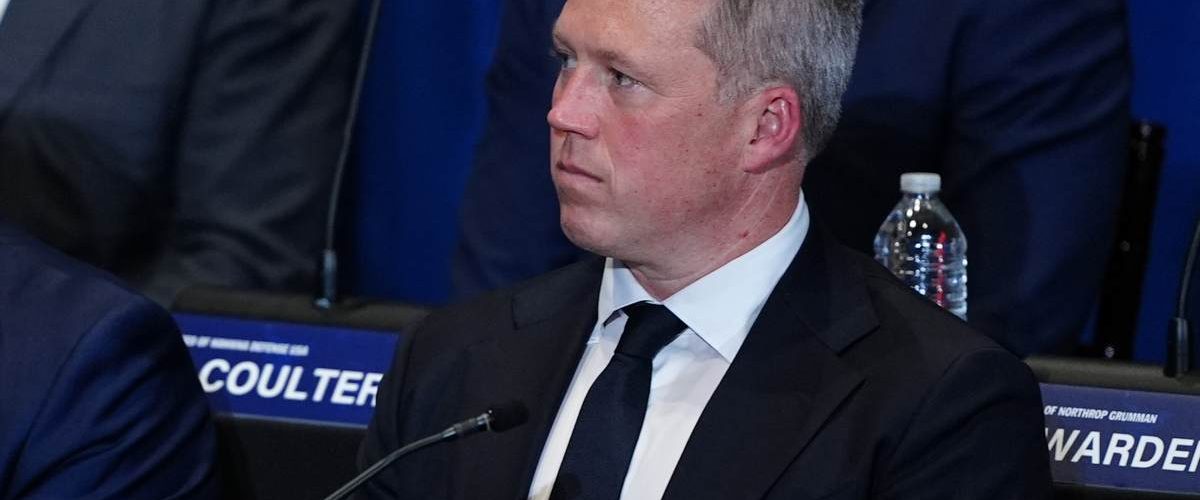
This article reviews the sudden resignation of Army Secretary Dan Driscoll amid reported friction with Secretary of War Pete Hegseth, places the coverage in political context, notes timing around the Abbey Gate anniversary, and preserves public statements and embedded references for readers to evaluate the situation.
Last Thursday, several mainstream outlets published critical pieces about Secretary of War Pete Hegseth at an oddly timed moment, and one prominent report even claimed that “Hegseth’s purge has left the Army essentially rudderless as it struggles to deal with the threat posed by cheap, deadly drones and missiles that have pounded US bases in the Middle East.” Those stories arrived on the five-year anniversary of the Abbey Gate tragedy in Afghanistan, a somber milestone that conservative leaders used to honor the fallen and highlight accountability for past failures.
The timing mattered because it framed Hegseth as controversial right when the administration was publicly commemorating service members lost under previous leadership. That framing felt convenient to critics, especially given the Trump administration’s focus on restoring readiness and a warrior ethos across the military. Conservatives see this as part of a broader fight over priorities like lethality, discipline, and operational focus.
Alongside those pieces, reports surfaced indicating Army Secretary Dan Driscoll had been communicating to close associates that he planned to step down, with tension cited between him and Hegseth over personnel moves and the direction of the service. Those reports tied Driscoll’s decision to internal disputes and to removals of several senior officers earlier in the year, which became a flashpoint between civilian leadership and the military chain of command.
News then broke that Driscoll formally submitted his resignation to President Trump following months of friction with the Defense Secretary over the Army’s path and the ouster of multiple senior officers. A widely circulated summary said he was expected to leave the Pentagon in coming days and noted that Driscoll did not respond to a request for comment. The reported sequence fits a pattern where tough decisions on senior personnel create political and institutional fallout.
Army Secretary Dan Driscoll has submitted his resignation to President Trump following months of tension with Defense Secretary Pete Hegseth over the direction of the service and the ouster of numerous senior Army officers.
He is expected to leave the Pentagon in coming days.
[…]
Driscoll didn’t respond to a request for comment.
Driscoll had been expected to step down this year from his role as the civilian leader of the Army after clashing with Hegseth, The Wall Street Journal previously reported.
White House Principal Deputy Press Secretary Anna Kelly released a statement praising Driscoll’s effectiveness and his role advancing President Trump’s goals for the Army, crediting him with reinforcing readiness and lethality and supporting negotiations involving Russia and Ukraine. That official language framed Driscoll’s tenure as a net positive for national defense and tied his work directly to the administration’s policy agenda.
“Secretary Driscoll has been highly effective in advancing President Trump’s agenda to Make America Strong Again at the Department of the Army by providing outstanding leadership during historic military operations, restoring an emphasis on readiness and lethality, assisting with negotiations between Russia and Ukraine, and more,” White House spokeswoman Anna Kelly said in a statement.
“The United States Army is more powerful than ever thanks to his work alongside the Commander-in-Chief and Secretary of War,” she added.
Adding to the political context, reporting noted contributions made by Driscoll’s wife to a Democrat incumbent, a detail opponents used to question alignment and loyalty amid the personnel controversies. That revelation fed partisan narratives and underscored how private political activity by associates can become relevant in high-stakes administrative shakeups.
Conservatives concerned with military effectiveness argue that this episode exposes a clash between a restoration-minded White House and internal resistance to rapid cultural and leadership change. The debate centers on whether bold removals and a renewed emphasis on combat readiness are necessary corrections or destabilizing moves that risk internal turmoil.
https://x.com/RCMaxw3ll/status/2042637400258826743
For those watching the Pentagon, Driscoll’s exit marks another inflection point in the administration’s effort to reshape defense leadership. It also raises immediate questions about follow-on appointments, the future of recent officer purges, and how the Army will reconcile demands for accountability with the need for stable command relationships.
This remains a developing story with consequences for military policy, personnel decisions, and the broader battle over how best to prepare the force for emerging threats while sustaining unit cohesion and morale.
Add comment