
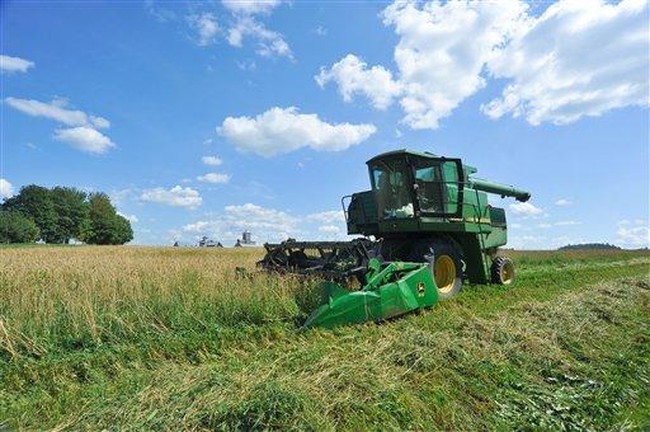
President Trump announced a $12 billion support package for American agriculture at a White House roundtable, outlined how the money will be distributed, and highlighted improving trade dynamics with China that could aid farm exports; farmers and officials attended and expressed gratitude as the administration moves to stabilize the sector while negotiations continue.
Trump Announces Huge Shot in the Arm for US Farmers, Touts Improving China Relations
At a White House roundtable, President Trump unveiled a $12 billion aid package aimed at helping farmers weather recent trade disruptions and market swings. Senior officials joined him to explain the plan and answer questions, while a broad array of producers sat at the table to share their experiences. The session focused on immediate relief and on restoring reliable export markets for key crops and livestock.
The package allocates $11 billion for one-time payments to row crop producers through a new program called Farmer Bridge Assistance, which will be administered by the Agriculture Department. An additional $1 billion is reserved for growers whose commodities do not qualify for the main payment stream. Officials emphasized eligibility will hinge on recent tax filings and acreage reports so payments reflect current farm operations.
Farmers of corn, cotton, sorghum, soybeans, rice, cattle, wheat, and potatoes were present at the event and voiced the practical strain that reduced export demand has put on operations. Many attendees described lost contracts and lower prices after foreign buyers scaled back purchases. The aid is intended to bridge producers through that disruption as trade talks progress.
China’s pullback on agricultural purchases during tariff disputes hit U.S. farmers hard, particularly soybean growers who saw steep price drops. The administration framed the assistance as both relief and leverage while negotiating renewed buying commitments. Payment amounts will be determined by adjusted gross income averages and verified acreage, ensuring assistance targets working farms rather than passive income situations.
Farmers with an adjusted gross income average below $900,000 for the 2022-2024 tax years are eligible and will have until Dec. 19 to submit acreage reporting data to determine their payment amount, according to another official. Rates will be released by month’s end. The administration expects to distribute the assistance no later than the end of February 2026, though it could come earlier, the person said.
Officials stressed the program includes strict timing and reporting steps so funds reach farmers quickly but responsibly. Producers must submit acreage data by the stated deadline to qualify, and county-level staff will verify the reports. Federal managers indicated they aim to finalize rates within weeks so disbursements can begin early in the new year.
There was also upbeat news about trade: recent diplomatic engagement with Chinese leaders appears to be nudging purchases back up, particularly for soybeans. Administration representatives described discussions that led to tariff adjustments and new understandings on cooperation in other areas of mutual concern. That change opened space for renewed shipments that could relieve immediate market pressure.
…Trump and Chinese President Xi Jinping met in South Korea in October, where the two hashed out a series of agreements concerning trade. Specifically, Trump said he agreed to cut tariffs on Chinese imports by 10% — reducing the rate from 57% to 47% — because China said it would cooperate with the U.S. on addressing the U.S. fentanyl crisis.
Since those talks, China has started to boost its purchases of soybeans again. China purchased at least 840,000 metric tons of soybeans for delivery in December and January, Reuters reported in November. That purchase marked the largest shipment since at least January, Reuters reported.
The president and his team framed the farm aid as part of a broader push to stabilize rural America and protect family operations. Several farmers spoke directly about the stakes, describing how tighter margins and unpredictable export flows threatened multi-generational farms. Officials listened and acknowledged the personal and economic pressure facing many communities.
A farmer captured the personal impact when he thanked the president for help that could keep his family farm intact. Those moments underscored why quick, predictable assistance matters to operators balancing debts, inputs, and labor needs. Leaders on hand promised the program would be practical, targeted, and time-limited so it does not become an ongoing entitlement.
Members of Congress representing agricultural states expressed public thanks to the administration for stepping up to protect producers. They noted the package addresses urgent shortfalls while trade negotiations aim to restore larger, sustainable markets. The lawmakers framed the move as consistent with broader efforts to revive American manufacturing and energy production that support domestic jobs and supply chains.
Observers watching the rollout will be looking for how quickly payments hit farm bank accounts and whether renewed export flows continue to strengthen. Implementation details, like payment rates and verification procedures, will determine how effectively the dollars reach working farms. The interplay between emergency relief and long-term trade outcomes will shape the sector’s trajectory through the next planting cycle.
I’ll be able to potentially pass on a farm to my children because of you.



Add comment