
Checklist: I will explain the designation of Nigeria as a Country of Particular Concern, summarize the violence against Christians and who is responsible, outline what the designation can and cannot do under U.S. law, examine practical options for protecting vulnerable communities, and highlight the political contrast in responses from public figures. This article focuses on President Trump’s decision and its implications.
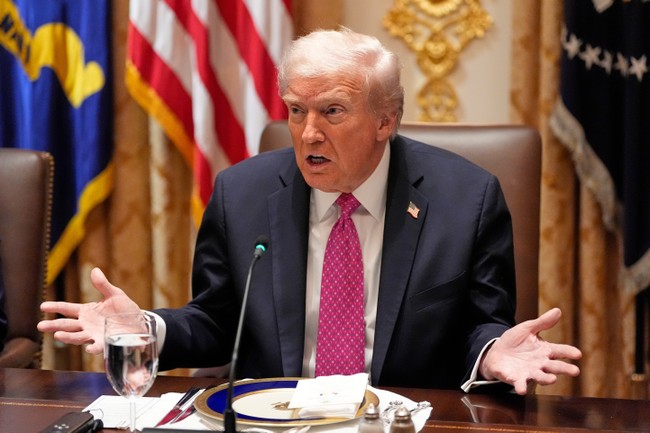
President Trump announced on Truth Social that he is designating Nigeria as a “country of particular concern” because of the ongoing slaughter of Christians and what he described as the government’s unwillingness to stop it. The move was framed as a moral response to a crisis in which thousands of Christians have been killed, and the post called for Congressional attention to the issue. The announcement explicitly named congressional figures to investigate and report back, signaling that the administration wants a formal review rather than only rhetorical condemnation.
“Christianity is facing an existential threat in Nigeria. Thousands of Christians are being killed. Radical Islamists are responsible for this mass slaughter. I am hereby making Nigeria a “COUNTRY OF PARTICULAR CONCERN” — But that is the least of it. When Christians, or any such group, is slaughtered like is happening in Nigeria (3,100 versus 4,476 Worldwide), something must be done! I am asking Congressman Riley Moore, together with Chairman Tom Cole and the House Appropriations Committee, to immediately look into this matter, and report back to me. The United States cannot stand by while such atrocities are happening in Nigeria, and numerous other Countries. We stand ready, willing, and able to save our Great Christian population around the World!”
Unlike Michelle Obama and Jen Psaki, President Trump has chosen to do more than create memes to stop what he calls a slow-moving genocide of Christians in Nigeria. That contrast was emphasized in commentary accompanying the designation, presenting this step as more substantive than symbolic social-media outrage. The political framing is explicit: this is presented as a test of willingness to act for persecuted Christians worldwide.
Nigeria’s religious map matters to this story: roughly 56 percent of the population is Muslim and about 44 percent is Christian, and those demographics shape local politics and security. In regions where Muslims are the majority, Christians face pressure from informal and formal structures, including the imposition of Sharia law and enforcement bodies that can marginalize religious minorities. Violence is concentrated in areas where Islamist militants operate with relative freedom, and those militant groups have committed mass atrocities, kidnappings, and other crimes that disproportionately hit Christian communities.
Available data points are stark: reports indicate thousands of murders and thousands of kidnappings in recent years, with some counts assigning several thousand deaths to the last year alone. Those kidnappings often involve children and sometimes lead to trafficking and slavery, deepening the humanitarian catastrophe. The scale and brutality of these incidents have driven calls for international attention and concrete responses from Western governments.
Designating a country under the International Religious Freedom Act of 1998 as a Country of Particular Concern has certain legal and diplomatic effects, but its power is limited. The label enables the U.S. to pursue diplomatic pressure and consider trade, security, and other targeted measures, but it is not an immediate cause for large-scale economic disruption. Practically, it tends to produce diplomatic consequences—recalls, visa restrictions, and public rebukes—rather than decisive military interventions.
That limited toolkit helps explain why some observers call the move largely symbolic while others see value in naming the problem. The U.S. has about $13 billion in trade with Nigeria, a volume that complicates broad economic pressure without collateral damage. Any sanctions or penalties would need careful calibration so they do not worsen the plight of civilians or push the Nigerian government further from cooperation on security issues.
The hardest questions are operational: what does “ready, willing, and able to save” actually mean in practice when applied to a fragile state with widespread insurgency? Direct military options, like using persistent surveillance or limited strikes, risk inflaming local sentiment and could boost insurgent recruitment if perceived as foreign occupation. Building partner capacity, supporting local security forces, and increasing humanitarian assistance are more likely to protect civilians without destabilizing the state, but those approaches take time and political will.
Real protection also depends on Nigerian politics and local attitudes; a majority that is indifferent or hostile to targeted communities limits what outside powers can do. Effective intervention requires both intelligence and trusted local partners who can act without fueling further sectarian violence. Any American response must weigh the likely tactical effects against the strategic risks of greater instability in a country with significant regional influence.
President Trump’s designation makes a strong political statement and opens formal channels for congressional review and potential sanctions. Whether it changes outcomes on the ground depends on follow-through: diplomatic pressure, targeted assistance, intelligence cooperation, and carefully calibrated security support. The designation signals intent, but lasting protection for endangered communities will require sustained, coordinated action beyond a symbolic label.


Add comment