
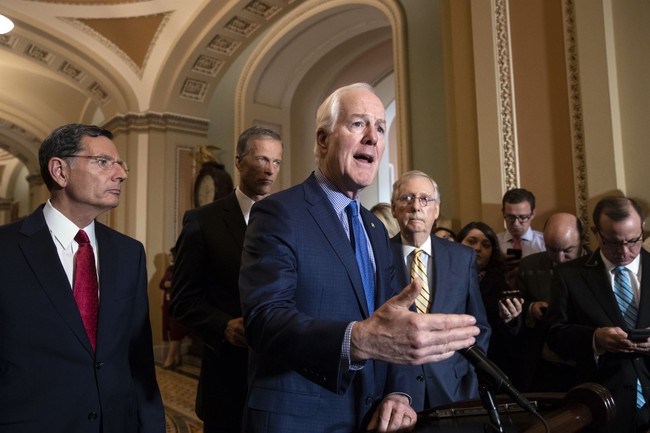
This piece explains how Senate Republicans failed to pass a reconciliation bill to fund key Department of Homeland Security priorities ahead of President Trump’s June 1 deadline, why Majority Leader John Thune recessed the Senate early, and how that choice ties into intra-GOP dynamics, executive action on TSA pay, and competing funding proposals in both chambers.
Congress is scrambling with just days left before a self-imposed June 1 deadline to secure full funding for the Department of Homeland Security. The reconciliation route was supposed to force a clean, Republican-only path to fund ICE, CBP, and other Trump administration priorities, but the effort ran into procedural and political roadblocks. Senate Majority Leader John Thune opted not to pursue another floor vote after the conference failed to reach agreement on the package. That decision sent senators home on an early recess and left the administration’s timeline hanging.
What collapsed was not simply a policy fight, but a failure to close ranks on a high-stakes item that includes operational funding for border security and other department needs. GOP leaders had promised reconciliation would be the mechanism to avoid Democratic obstruction, but internal divisions and a parliamentarian’s ruling requiring changes slowed progress. The result is a missed opportunity to act swiftly and unilaterally through the Senate.
Senate Majority Leader John Thune is quitting on the reconciliation package that would fund most of the Department of Homeland Security, which has been shut down by Democratic Party antics since Presidents’ Day weekend. Senate Republicans hesitated with Democrats, thinking they could negotiate a deal when we all knew that was never going to happen—their base wouldn’t allow it. Now, we’ve tried to get DHS funded for years through reconciliation, but it’s hit a snag, especially because the Senate Parliamentarian ordered some parts to be reworked.
A social media-style block of commentary captured the frustration among conservative grassroots observers, bluntly criticizing Thune’s choice to recess rather than press ahead. That chorus argues the decision guarantees missing President Trump’s deadline and escalates calls for leadership changes. The raw anger reflects a base that expects results: when the Senate sets a target, many voters want lawmakers to meet it, not retreat to long breaks.
IT’S OFFICIAL: Senate Republicans will now MISS President Trump’s June 1 deadline to pass ICE and CBP funding, as John Thune decides to RECESS the Senate until NEXT MONTH
Thune is a FAILURE.
President Trump is NOT going to be happy about this. Time to remove Thune!
Part of what made this reconciliation push volatile were recent moves by President Trump in the political landscape, which some insiders say reshaped alliances inside the conference. Moves like endorsing primary challengers and intervening in key races have unsettled some Senate Republicans and sharpened intra-party tensions. Those fights have bled into legislative strategy, making consensus harder to reach in a body that already requires near-perfect coordination when using reconciliation.
Observers also point to policy choices inside the funding vehicle that complicated unity. The package reportedly bundled several administration priorities, from operational DHS funding to an anti-weaponization settlement fund and even White House project allocations. Those inclusions made it harder for senators to agree on a single bill that could clear procedural scrutiny and maintain support among conservative skeptics.
Meanwhile, President Trump used an executive order to temporarily restore pay for TSA personnel, removing what many saw as leverage for Democrats during the impasse. That move ensured frontline workers continued to receive wages but also changed the bargaining dynamics in Washington. With the payroll question temporarily settled, Republicans theoretically have more flexibility to push hard on funding, yet the early recess removed the immediate pressure to move.
There were alternative paths still in play: the House passed a 60-day continuing resolution, and legislative proposals in the Senate attempted to split operational elements from other contentious components. Senator Lindsey Graham introduced a bill to fund DHS through 2029, aligning with the end of a potential second presidential term and aiming to lock in long-term resources for ICE and CBP. Those competing tracks show lawmakers are still searching for workable routes forward.
There are competing DHS funding bills; the Senate bill passed early Friday morning, which excludes funding for ICE and some CBP operations, and the 60-day continuing resolution to fully fund DHS, which the House passed Friday night. Both bills would who also weren’t being paid during the shutdown and who weren’t covered by President Trump’s executive order to pay TSA workers, would be paid.
The arithmetic and the calendar now force a new reality: missing the June 1 date shifts the immediate political theater into the summer, when attention and urgency can wane. Republicans still have tools to secure the department, but those tools require cohesion and a willingness to use every procedural option available. For now, the early recess is a pause that has critics asking whether leadership used the right playbook at the right time.
Legislative fights over DHS funding often expose broader questions about priorities, strategy, and intra-party management. Funding wins do more than keep agencies running; they signal who controls the agenda and how aggressively a party will defend its policy aims. With clock time lost and factions venting, the next steps will show whether Senate Republicans regroup to deliver what they promised or allow the deadline to pass without consequence.

Add comment