

Jimmy Kimmel hosted Rep. Eric Swalwell to announce a California governor bid, and this piece examines the optics, policy claims, past controversies, campaign dynamics, and how his candidacy reshapes the already crowded 2026 race.
Jimmy Kimmel’s late-night platform gave Eric Swalwell a high-profile launch pad, and conservatives are already pointing out the awkwardness of the appearance. The exchange highlighted how an entertaining TV moment can double as a political litmus test for seriousness. For many voters, campaign launches on entertainment shows raise questions about priorities and preparedness.
Swalwell framed his campaign around economic pain and fear, saying “I’m running for Governor because prices are too high and people are scared” in a quoted statement on his site and during the segment. That message is familiar in California politics, where multiple candidates promise relief but few offer truly fresh solutions. Critics argue repeated talking points do little to distinguish a candidate in a jam-packed field.
His national TV moment also included a factual stumble that went viral: a gaffe about California being the fourth largest “country,” which opponents seized on as evidence of careless messaging. Voters expect precision from someone seeking the state’s highest office, and such mistakes feed a narrative of unseriousness. Opponents have been quick to highlight optics instead of wrestling with policy depth.
The crowded Democratic primary means late entrants like Swalwell face long odds, especially against well-funded rivals. Billionaire-backed candidates and longtime state figures bring money, organization, and name recognition that are tough to overcome. In California’s jungle primary system, splitting the vote among similar candidates can hand an advantage to better-funded campaigns.
Swalwell’s personal record invites scrutiny beyond campaign rhetoric, and skeptics point to moments that have undermined his credibility. Past episodes such as odd television moments, publicized eccentricities, and social media stunts are often cited by critics as evidence he lacks gubernatorial gravitas. That history feeds a narrative that he might be more of a political personality than a practical executive.
There are also financial and attendance questions about his performance as a congressman, which critics say reflect poorly on someone promising to run a large, complex state government. Observers have noted gaps in presence and legislative accomplishments as items voters should weigh. Critics cast those gaps as proof Swalwell hasn’t built a governing resume worthy of Sacramento.
Ethics and investigations are themes opponents will exploit as well, and reports of inquiries into mortgage-related matters have already been raised in public discourse. Those items, regardless of outcome, become campaign fodder and force candidates to defend past behavior rather than sell forward-looking plans. Transparency and accountability become central talking points when investigations surface.
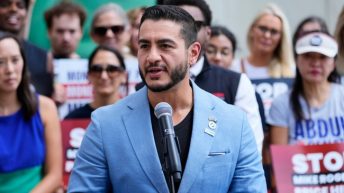
Rep. Eric Swalwell, an outspoken Donald Trump antagonist, is running for California governor, adding one more Democratic hopeful to the jam-packed field.
The seven-term member of Congress, who represents the San Francisco Bay Area, said on his website he “is running for Governor with fresh ideas and tremendous heart” before appearing on Jimmy Kimmel Live! on Thursday night.
“I’m running for Governor because prices are too high and people are scared,” he wrote.
A Swalwell candidacy was on nobody’s radar just a few months ago. His decision to enter the race late in the year — when other candidates have had as much as a year’s head start — is the latest sign of an unsettled Democratic field in the race to succeed Gavin Newsom, with no decisive frontrunner.
Another vulnerability for Swalwell is optics around national security and past personal entanglements that opponents will not hesitate to bring up. The episode involving a relationship with an alleged foreign agent has been amplified in conservative circles as proof of poor judgment. Those headlines stick and shape voter impressions even if they do not produce legal conclusions.
Culture and identity politics also complicate his appeal within his own party, where intersectionality and coalition math matter. Critics on the left sometimes argue he does not check the right identity boxes for certain voter blocs, while conservatives view his candidacy as a convenient foil. The internal dynamics of the Democratic base will determine how much room exists for a candidate like Swalwell.
Campaign spending will be decisive, and Tom Steyer’s deep pockets and willingness to inject cash make the race more expensive and less predictable. Money buys visibility, advertising, and ground game advantages that late starters rarely match. In a state as vast and diverse as California, funding gaps translate into missed opportunities to reach key constituencies.
Given the crowded field and the jungle primary system, reaching even a modest share of the vote will be a challenge for someone launching late and carrying baggage. Political operatives expect intense scrutiny and relentless opposition research, and Swalwell’s resume offers multiple angles for attack. Voters will watch how he shifts from media moments to policy specifics under the stress of sustained criticism.
Conservative commentators predict the campaign will be more of a spectacle than a substantive policy debate, and they plan to highlight past missteps to question Swalwell’s readiness. Whether that strategy persuades a broad slice of Californians depends on turnout, messaging discipline, and the ability of opponents to present credible alternatives. The next months will reveal if the campaign can move beyond late-night headlines to a legitimate governing case.
What can we say about a guy like Democrat Representative Eric Swalwell (CA-14) that hasn’t already been said? As my grandfather would have said, if good sense were sweet corn, Congressman Swalwell would be a few kernels short on the cob. His career has been underwhelming. He has the oratory skills of a grunion and the personal appeal of hay fever. And now, just to add on to all the woes he already suffers from by being him, he’s under investigation by the Department of Justice for mortgage fraud.
Even with opposition digging into past controversies, the campaign trail often rewards discipline and clear policy proposals. For candidates with weak optics, pivoting to a concrete plan on housing affordability, wildfires, and cost of living is the only credible route to relevance. Expect opponents to press differences on those practical issues as the race intensifies.
In short, Swalwell’s entrance reshuffles the Democratic field, gives opponents fresh material, and raises the stakes for how seriously voters view celebrity-style campaign launches. The dynamics of money, media, and past controversies will shape whether his bid is a lasting campaign or a short-lived spectacle. Conservatives watching the race are already cataloging vulnerabilities and preparing to capitalize on them.


Add comment