
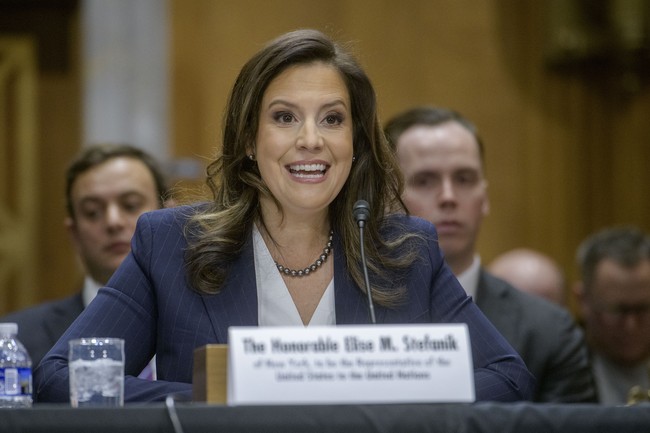
Rep. Elise Stefanik took on CNN’s Jake Tapper over whether President Trump’s comments about Iran amounted to a call for “genocide,” pushing back on media spin and arguing the president targeted a terrorist regime, not the Iranian people. The exchange highlights how context gets stripped in cable news, and how Republicans view Trump’s tough diplomacy as effective pressure to protect Americans and push the regime toward the negotiating table. This piece walks through the exchange, the context of Trump’s remarks, and why conservative voices see a clear distinction between threatening a ruling terrorist class and advocating harm to civilians. It also preserves the exact exchange that sparked the controversy.
Cable anchors love framing sharp rhetoric as moral equivalence, but conservatives see a different picture. When President Trump spoke about Iran, Republican defenders argue he aimed at the regime’s leadership—the architects of violence and oppression—not the nation’s civilians. That distinction matters, because policy that targets hostile governments and their terrorist apparatus is standard in American statecraft and is framed by supporters as defense rather than cruelty.
On CNN’s State of the Union, Jake Tapper insisted the president’s language amounted to a call for “genocide,” but Stefanik pushed back forcefully. She corrected the framing, saying Trump was directing his words at the terrorist regime and using strong rhetoric to shift their calculations. Republicans argue that tough words can produce results when weaker language would not, and they point to concrete reactions from Tehran as evidence the approach worked.
Tapper claimed that Trump’s comment on April 7 about dealing with the Iranian regime, that their “whole civilization will die,” was the same thing as “genocide.”
TAPPER: Call for genocide on a college campus and a call for genocide made by the president of the United States, like, they’re both bad, right?
STEFANIK: President Trump didn’t call for genocide, Jake. You were putting those words in his mouth. He is engaging in diplomatic back and forth!
TAPPER: Your entire civilization will die?
STEFANIK: It’s the terrorist regime, Jake. He’s targeting the terrorist regime. You’re adding genocide. That’s NOT what he’s stated! He wasn’t calling for genocide. It was targeted towards the Iranian terrorist regime. It was targeted towards the Iranian terrorist regime.
TAPPER: Agree to disagree (smirking).
That exchange captured the core disagreement: does fiery rhetoric aimed at a regime equal intent to wipe out a people? Republicans answer no, noting presidential speech often blends deterrence and diplomacy to achieve strategic ends. Stefanik emphasized that Trump’s goal was making the regime feel genuine peril so it would change behavior, and that tactic led to visible signs Tehran felt pressured.
Conservatives also point out the broader context of the president’s message, which included lines about the regime’s record of extortion and abuse and a shout-out to the “Great People of Iran.” Republican commentators say this context matters because it frames the target as a corrupt leadership rather than an entire civilization. In their view, the message combined pressure with support for Iranian citizens who want change.
This is a common frustration for Republicans covering how mainstream outlets handle Trump. Media critics argue networks often strip comments of surrounding context to manufacture controversy. That tactic, from a conservative standpoint, has repeatedly skewed public debate and hardened media narratives against Republican officials, especially when strong language is used against hostile foreign actors.
Stefanik and allies also highlight operational results as evidence the approach can work. She pointed to reports of regime actions—like deploying people to certain infrastructure—that signaled Tehran took the threats seriously and changed behavior. Conservatives see that as a win for deterrence: words combined with credible follow-through can produce safer outcomes without full-scale conflict.
Finally, the dispute over wording reflects a bigger cultural fight about intention and consequence. Republicans argue it’s irresponsible to equate targeting a terrorist leadership with genocidal intent toward civilians, because that conflation chills necessary political debate about national security. They insist preserving precise language is crucial to hold media accountable and to ensure the public can evaluate policy on facts rather than manufactured outrage.
In the end, the Stefanik-Tapper exchange is less about one sentence and more about how intent, context, and outcomes shape judgments. For conservatives, defending the distinction between targeting a regime and targeting a people is essential to allowing leaders to pursue hard-line diplomacy while still protecting noncombatants. The conversation on cable news will continue, but Republican voices will keep stressing context and consequences over sensational framing.



Add comment