
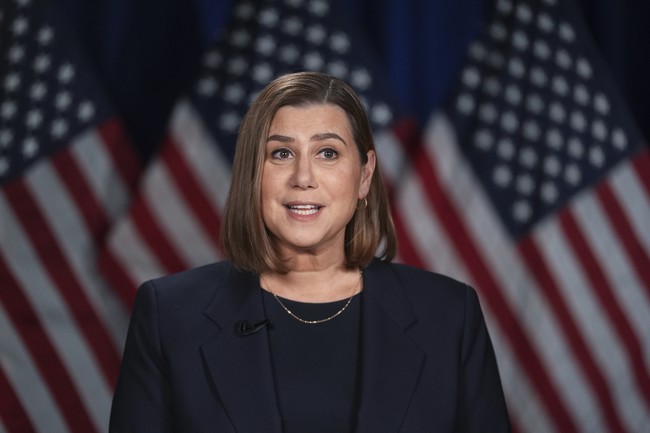
Sen. Elissa Slotkin’s blunt admission at a recent event exposed what many Republicans have long suspected: Democrats view basic election safeguards as a political threat. Her comment that the SAVE America Act would make it “hard for any Democrat in any state to win any election” landed like a confession, and it deserves scrutiny. This piece lays out what Slotkin said, what the SAVE America Act actually does, and why Republicans should respond decisively. The aim here is to cut through the noise and show why election integrity matters to voters of every party.
Slotkin spoke plainly to a friendly audience and dropped a line that confirms a partisan calculation. “The SAVE (America) Act, right? Which would literally allow this administration to rig our democracy,” she said, followed by, “It would be hard for any Democrat in any state to win any election.” Those words are not spin; they are an admission that tighter rules would change electoral outcomes. When a sitting senator describes rules as a threat, voters should pay attention.
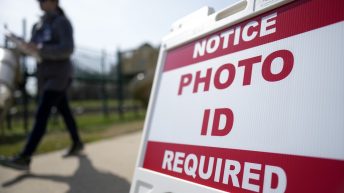
The SAVE America Act focuses on verifying citizenship when people register for federal elections and enforcing valid photo ID at the ballot box. That includes documentary proof such as passports or birth certificates at registration and a photo ID like a driver’s license at the polls. Framing these measures as extreme is dishonest: they are minimal standards of identification used in countless everyday transactions, not radical barriers designed to disenfranchise.
Democrats have consistently opposed these common-sense steps, and Slotkin’s frank line reveals why. If broader verification and ID requirements would reduce their margins, then their resistance is plainly strategic. They prefer looser rules because it helps their coalition, and they are not shy about pushing that position. Voters should judge any party that prioritizes political advantage over basic confidence in the electoral system.
President Trump has pushed hard for these changes and has made no secret of the stakes. “We do that, we’re not gonna lose an election for a hundred years,” he said while urging Republicans to act boldly, even to consider changing Senate rules to get it done. That kind of political muscle reflects the urgency Republicans feel about securing elections. Whether one likes the messenger or not, the goal is clear: make voting secure and transparent so the public trusts outcomes.
https://x.com/realDailyWire/status/2077056954870923390
Polling repeatedly shows that voter ID is broadly popular across the political spectrum, with large majorities supporting photo identification to vote. This is not a niche demand from the right; it is a common expectation among citizens who want assurance that their ballot matters. Republicans can—and should—use that public support to push meaningful, straightforward reforms, not rhetorical stunts or half-measures.
Critics will shriek about barriers and disenfranchisement, but practical safeguards do not equate to suppression. Ensuring registrants are citizens and that ballots are cast under a verifiable identity keeps elections clean and outcomes beyond reasonable dispute. If Democrats genuinely care about inclusion, they should explain why a passport or state ID is an unreasonable ask for federal voting participation.
Slotkin’s remark also highlights a broader truth about political incentives. When one party benefits from lax rules, those rules become sacred. That mindset corrodes public trust and invites cynicism. Republicans have the leverage to frame the debate around accountability and fairness, not advantage, and they should use it to force clarity on where each party stands.
Lawmakers can argue over details and implementation, but the principle is simple: Americans deserve confidence that elections are administered fairly and that illegal voting is not affecting results. The SAVE America Act attempts a baseline of integrity without radical overhaul, and the debate should be about balancing access with verification rather than reflexive partisan defense of the status quo.
Slotkin’s candid assessment functions as a warning and an opening for Republicans. If the other side admits it would be harder for them to win under straightforward rules, then conservatives should press the case that fair, secure elections are worth defending. The conversation should be about rules everyone can understand and trust, not about protecting political advantage behind the scenes.
Democrats’ instinct to oppose verification measures reveals how high the stakes are for them politically, and that stark reality changes how voters should view the debate. Republicans ought to campaign on reform, highlight public support for basic ID and citizenship checks, and make election integrity a top issue where it resonates with everyday concerns about fairness and trust. The moment calls for clarity and commitment to rules that make ours a government of laws, not a system of convenient loopholes.
Embedded tweet continues:
… Communist Party is made up of illegal immigrants, criminals, and everybody that doesn’t want to work.”
Add comment