
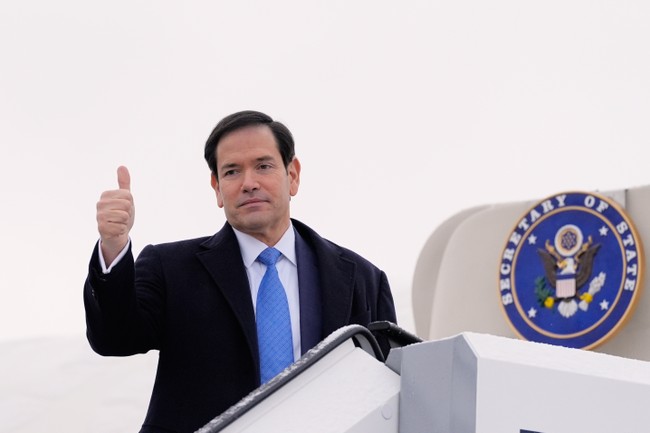
Marco Rubio, acting as the U.S. trade point person with Armenia, sealed a strategic partnership that ties critical minerals cooperation to a trade corridor called the Trump Route for International Peace and Prosperity, or TRIPP, and the deal shifts Armenia closer to the West while frustrating Russia. The agreement links economic opportunity to regional security, aiming to open a 27-mile corridor through southern Armenia to connect Central Asia with Turkey and Europe and bypass Moscow and Tehran. This move combines economic leverage, defense cooperation, and infrastructure to make Armenia a stronger, more prosperous partner of the United States.
Rubio took the lead in Yerevan to finalize a framework that explicitly focuses on critical minerals and the TRIPP corridor, and he framed the move as a major step toward peace and prosperity in the region. The corridor is meant to be more than a road or rail link; it is designed to create trade flows that reduce Armenia’s dependence on hostile neighbors and give local businesses new markets. For Republicans who favor strong, strategic engagement abroad, the deal is attractive because it pairs economic incentives with geopolitical aims.
Prime Minister Nikol Pashinyan has been steering Armenia away from its Soviet-era orientation, and this agreement cements that reorientation by making the U.S. a direct stakeholder in Armenia’s economic and defense future. That’s significant in a region where influence has long been contested and where Russia has relied on historical ties to maintain leverage. By offering markets, investment, and security cooperation, the United States gives Armenia alternatives that actually reward reform and independence.
UNLV Political Science Professor Dr. Nerses Kopalyan called the pact a game-changer and emphasized that the U.S. has moved from rhetoric to implementation, elevating bilateral ties to a comprehensive strategic partnership. The professor highlighted that the U.S. role now includes concrete support for Armenia’s defense capabilities alongside economic integration, which shifts the balance of power in practical ways. That kind of tangible backing matters to a small nation that has suffered through conflict and needs predictable partners.
Extraordinarily important development today in US-Armenia relations, as the government-to-government framework on TRIPP proceeds with the implementation stage, while US and Armenia elevate relations to the level of comprehensive strategic partnership. But just as importantly, US is now a direct stakeholder and supporter of enhancing Armenia’s military and defense capabilities. Special shutout to [State Department official] @JonAskonas and the entire @StateDept team for working intimately and in true partnership with @MFAofArmenia
At the signing ceremony Rubio said plainly that the deal is the biggest step yet toward making the historic route a reality and boosting prosperity across the region. “This agreement marks the biggest step to date on making this historic route a reality, on advancing peace, and on increasing prosperity in Armenia and frankly in the region,” he said, signaling administration commitment. Words matter, but pairing them with infrastructure and market access is what makes diplomacy durable.
Russia reacted predictably with threats and complaints, warning of potential economic retaliation over gas prices as Armenia leans westward, but threats are no substitute for strategy. Moscow’s leverage has eroded where the United States and partners can offer credible alternatives, and that reality is changing calculations in Yerevan. For policymakers who prefer clear, firm engagement to appeasement, that shift is exactly the point of a strategic partnership that ties economics to security.
The deal’s focus on critical minerals is economically pragmatic because those resources are strategic for modern industries, and the framework prioritizes getting minerals out of the ground, processed, and into global supply chains. The Armenian Ministry of Foreign Affairs laid out a plan to use coordinated economic policy and investment to build diversified, liquid, and fair markets for those minerals, and that means jobs and revenue for Armenians and supply reliability for the U.S. and its allies. A stable supply chain for critical inputs is national security, plain and simple.
…the Participants plan to accomplish this through the use of economic policy tools and coordinated investment to accelerate the development of diversified, liquid, and fair markets for critical minerals…
For American interests, backing TRIPP and critical minerals development is a twofer: it boosts economic ties that make countries stronger and less dependent on hostile actors, and it creates the kinds of relationships that deter aggression without direct confrontation. Republicans who believe in leveraging American economic strength will see this as a model for future deals—use market access and infrastructure to create allies, not endless handouts. As Armenia builds trade, processes its resources, and secures its borders, the region becomes more stable and more prosperous.
Meanwhile, Vladimir Putin’s options shrink when nations choose partnership with the United States over reliance on Moscow, and that strategic loss is evident in the tone of Kremlin responses. Armenia’s turn toward the West may ruffle old alliances, but it also offers a clearer path to prosperity and security for Armenian citizens. That outcome—stronger partners, safer borders, and healthier economies—is the whole point of proactive American leadership abroad.


Add comment