
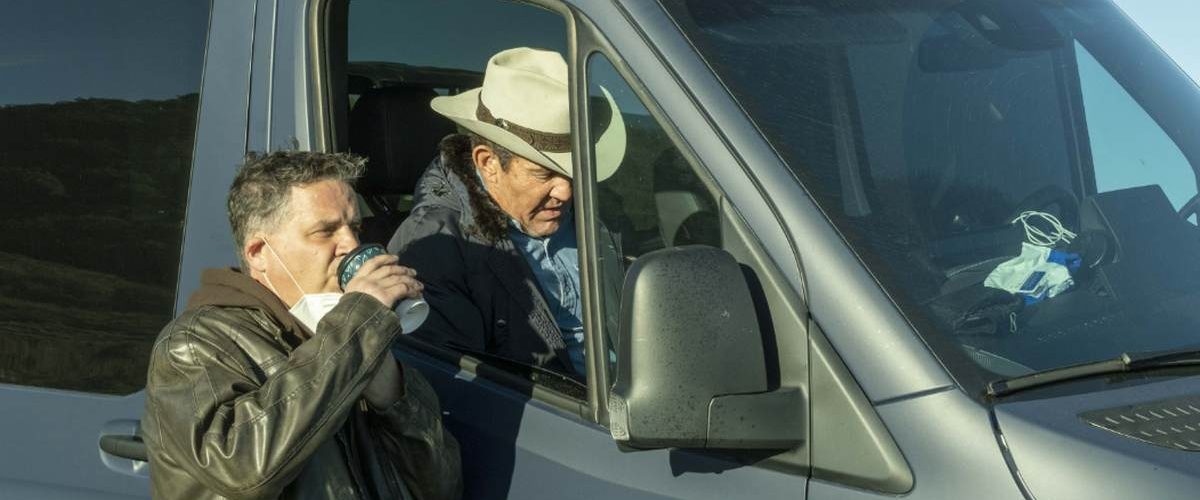
The following article is an edited, conversational three-part interview excerpt with producer Mark Joseph about the 2024 film “Reagan,” focusing on what viewers should take away, how researching that era reshaped his view of today’s politics, the personal connection between Reagan and Tip O’Neill, and why a Reagan biopic mattered now.
What would you most like viewers who do not have first-hand knowledge of Reagan to take away from the movie?
That Ronald Reagan wasn’t born Ronald Reagan. By that I mean the historical figure people know didn’t simply appear one day at age 69 and become president. He was shaped over decades — by Dixon, by his parents, by his faith, by Hollywood, by the Depression, by World War II, by communism and by failure. For younger viewers especially, I hope they come away curious.
“Don’t just take our movie’s word for it. Watch his speeches. Read the people who loved him and the people who disagreed with him. And understand that history isn’t inevitable.” Individuals matter and ideas matter, and the film tries to show how one life can influence a nation’s course. I also hope we can get back to the idea that disagreement doesn’t mean we have to hate each other.
How did researching Reagan’s era affect how you view the modern political world, if in fact it did?
It reminded me that our current political climate isn’t normal and doesn’t have to be permanent. We had a time in our era where our president and Speaker of the House didn’t meet for an entire year, and that’s not the way it should be in my opinion. The 1980s were hardly some wonderful era where everybody agreed, but there remained an understanding that your political opponent didn’t have to be your mortal enemy.
“Reagan could attack an idea without necessarily treating the person holding it as evil. That’s a skill we’ve largely lost.” There are bad actors in the world who would love to destroy us, but if they can get us to destroy each other, that makes their job a lot easier. We have to remember that our domestic enemy is not even close to being as evil as some of our mortal enemies are.
The scenes between Reagan and Tip O’Neill were telling in that while the two were at loggerheads politically, they connected personally; something we see very little of in today’s political world. Why do you believe that is, and are there any signs of the divide narrowing?
Those scenes have become some of the most important parts of the movie because audiences recognize immediately what they’re seeing and what they’re missing. Reagan and O’Neill really disagreed, but they understood politics was the arena they fought in; it wasn’t the entirety of their lives. There’s that episode after Reagan was shot when O’Neill came to see him in the hospital — suddenly the politics disappeared and they were simply two human beings together.
I think we’ve lost some of that because politics has become entertainment, identity and increasingly a 24-hour business model. There’s money and attention in keeping everybody angry, and people are exhausted by being told they have to hate half the country. You don’t have to surrender your principles to be decent to somebody who disagrees with you.
A fellow writer asks: what was your motivation, and why a biopic on Reagan at this time in history?
The funny answer is that when you spend 20 years making a movie, you lose the right to claim you brilliantly timed its release. COVID delayed us, the war in Ukraine delayed us, the actors’ strike complicated things, and the movie took a long and strange road to theaters. My motivation was much simpler: I thought this was one of the great American stories that hadn’t been properly told on film.
Reagan’s life contains everything you want in a movie — an alcoholic father, a small-town childhood, Hollywood, a failed marriage, political reinvention, an assassination attempt, a love story, the presidency, and a confrontation with a nuclear superpower. If you made all of that up, somebody would tell you the script was unbelievable. Perhaps the timing ultimately worked in our favor: we released a movie about optimism at a fairly pessimistic moment and a movie about friendship across political lines when Americans barely speak to one another across political lines.
Reagan used to talk about the “DP” — the divine plan. After twenty years trying to make this movie, I’m probably wise enough not to argue with the timing. The film aims to remind viewers that America’s story is ongoing and that individuals and ideas can still bend history.

Add comment