
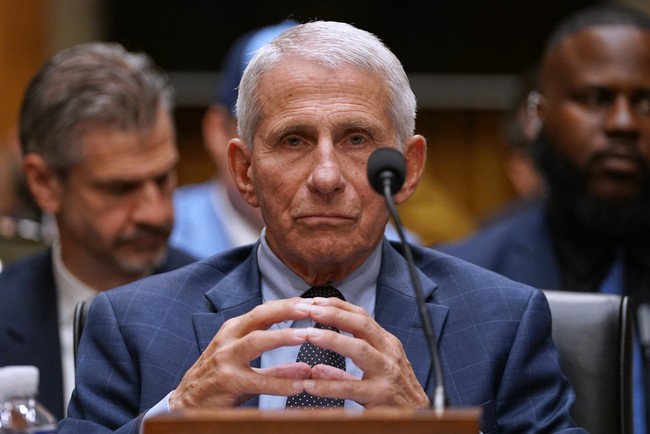
Rand Paul’s move to force a contempt vote after Dr. Anthony Fauci repeatedly invoked the Fifth at a Senate hearing is front and center, with questions about presidential pardons, accountability for pandemic decisions, and whether Congress can compel testimony despite a preemptive pardon.
The hearing featured Dr. Anthony Fauci, the former Chief Medical Advisor to President Joe Biden, who repeatedly refused to answer questions by invoking the Fifth Amendment. Instead of giving straightforward answers about the pandemic response and policy choices, he opted for silence, leaving too many families without explanations. That pattern of avoidance is exactly what conservatives have long warned about when elites dodge accountability.
Observers counted Fauci invoking the Fifth around 111 times, a staggering number for someone who once spoke as the face of pandemic guidance. The spectacle left Republicans furious and energized a push to use contempt of Congress as a tool to force answers. Chairman Rand Paul refused to let the episode pass as routine legal theater and has scheduled a vote to hold Fauci in contempt.
Paul is pressing the central legal question: does a presidential pardon strip the need for Fifth Amendment protections in a congressional interview? He argues the pardon removes the risk of criminal exposure, so the privilege against self-incrimination should not apply. That reasoning sets up a novel constitutional clash that could land in court if Democrats block the contempt resolution.
Here’s the committee’s announcement as it was delivered in the hearing, preserved verbatim:
https://x.com/nicksortor/status/2082489342727970935
🚨 BREAKING: Rand Paul announces the committee will be voting to hold Dr. Fauci in CONTEMPT OF CONGRESS after Fauci invokes the fifth amendment over 80 times
This carries up to a YEAR of prison time.
Paul argues that Fauci does NOT have a fifth amendment right against self-incrimination, as Biden’s autopen pardon protects him. Therefore, Fauci can be COMPELLED to answer questions.
PAUL: “My question was limited to the period of your pardon only. I find your objection UNSUPPORTED and DIRECT YOU to answer the question.”
FAUCI: *pleads fifth*
PAUL: “Because you refuse to answer citing a privilege unsupported because of your pardon and after being denied to do so this committee has scheduled a vote next week on a resolution certifying your contempt”
That excerpt captures why Republicans are framing this as a fight over both law and principle. The pardon’s scope and the role of Congress to compel testimony touch on separation of powers and accountability for officials who shaped national policy. Rand Paul says he’s not only pursuing a procedural vote but testing a legal theory that has never been fully litigated.
The senator outlined the theory during the hearing, arguing that if immunity has been granted, then Fifth Amendment protections should be unnecessary. He pressed Fauci to admit facts without fear of prosecution, suggesting truth-telling would carry no legal penalty. Paul emphasized that this is about establishing whether a pardon nullifies the privilege, not about political point-scoring.
Paul’s argument was direct: with immunity, the need for silence evaporates, and witnesses should answer. He suggested Fauci could have testified without risk, even if his answers acknowledged destruction of records, which Paul says may have occurred. For many who lost loved ones or faced lasting consequences from lockdowns and mandates, the opportunity to hear the truth matters more than theater.
Critics predict Democrats will line up to defend Fauci, framing the contempt push as partisan. That predictable resistance won’t change the underlying demand for answers from a man who influenced major public-health decisions. Conservatives see this as a necessary enforcement of congressional oversight when voluntary cooperation fails.
The contempt vote is the next formal step if the committee follows through, and it could prompt litigation over whether a presidential pardon effectively eliminates the basis for invoking the Fifth in a congressional setting. Courts may ultimately decide that question, but the immediate political effect is to keep pressure on Fauci and those who backed his policies. Republicans are signaling they will not allow evasions of responsibility to stand unchallenged.
Whatever happens next, the episode has already shifted the conversation. It exposed durable frustration with officials who testify selectively, and it elevated a constitutional question that deserves a clear answer. For senators who want firm accountability, a vote on contempt is a way to force the issue into the open and possibly into the courts.
Paul framed the choice plainly during questioning: truth or continued silence. He argued the committee is asking for testimony limited to the period covered by the pardon, a narrow and deliberate line of inquiry. That modest scope was designed to remove claims of entrapment and focus squarely on whether immunity should bar invocation of the Fifth.
There is an argument — this has probably never been tested legally — if you’ve been granted complete immunity (we didn’t grant immunity, [Former] President Biden granted him complete immunity).
With a grant of immunity, do you still need Fifth Amendment protections, or do they apply?
All he had to do today was tell the truth. If he testified and told the truth — even if he admitted to destroying thousands of records, which we think happened — there’s no penalty attached.
It would just be the truth.
Supporters of the contempt move believe it will force a choice: answer questions under oath or face legal consequences that could include a referral and judicial review. Opponents call it political theater, but the legal stakes and constitutional issues are real. The coming days will show whether the committee can translate a moral demand for accountability into enforceable action.


Oh get off it Paul! Stop playing footsies to look like you are a “tough guy who means business” and drop the act along with the contempt nonsense! Charge him with CRIMES AGAINST HUMANITY and MURDER!!! If you and the GOP Senate along with the DOJ don’t do that then you’re all as guilty of those crimes as he is! Complicit in this case for such crimes is SEDITION and TREASON!