
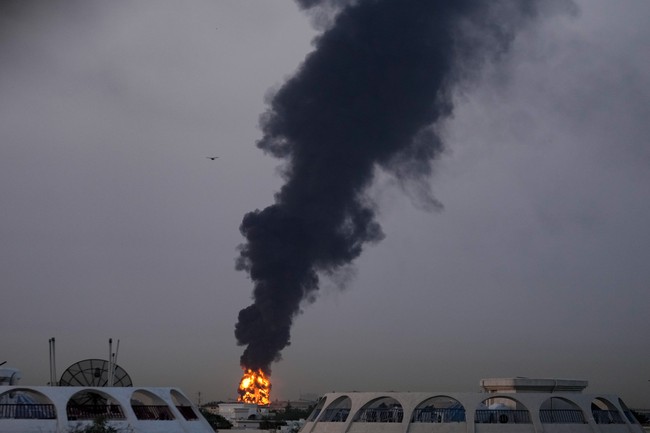
Qatar issued a sharp condemnation after an Iranian missile struck a civilian vehicle in the United Arab Emirates, killing one person, and regional tensions are rising as Iran continues strikes and drone attacks tied to its response to Operation Epic Fury.
The Qatar foreign ministry called the attack a “serious escalation” and a blatant violation of the UAE’s sovereignty after a missile hit a vehicle in the Al Bahia area, killing one civilian. The strike adds to a growing list of incidents where Iranian forces have targeted neighboring states amid an escalating campaign tied to Operation Epic Fury. That campaign is being described by Western and regional officials as a decisive effort that has struck deep into Iran’s leadership and military infrastructure. As the strikes continue, neighboring countries are publicly aligning against what they call a reckless expansion of hostilities.
Iran’s recent pattern of strikes has alarmed Gulf capitals, which see indiscriminate missile and drone attacks as direct threats to regional stability and civilian safety. Qatar’s statement made clear it views Iran’s widening operations as “extremely dangerous” and as opening new fronts across the region. Gulf states are increasingly frustrated by the risk to ordinary people and critical infrastructure from what they call Tehran’s reckless calculations. The death in the UAE is being treated not as an isolated incident but as evidence of a broader and escalating campaign.
Regional leaders are signaling that solidarity with the UAE is firm and that various responses are on the table to protect sovereignty and restore deterrence. Qatar affirmed “solidarity with the UAE and its support for all measures taken to preserve its sovereignty, security, and territorial integrity.” That kind of diplomatic language is intended to make clear that attacks on one Gulf state will not be ignored by its neighbors. At the same time, the international community is watching to see whether these condemnations translate into coordinated defensive steps or stronger punitive measures.
Militarily, Iran appears to be reacting to setbacks it claims were caused by Operation Epic Fury, a mission credited by its backers with eliminating key elements of Iran’s top leadership and degrading military capabilities. Whether Tehran’s leaders believe escalating attacks will reverse those losses or rally domestic support, the tactics are producing the opposite effect regionally. Gulf states are increasingly treating Iranian strikes as a threat to commercial hubs, air travel, and the safety of civilians who have nothing to do with military decisions in Tehran. The consequences are immediate and real for people living and working in those countries.
Qatar on Monday condemned Iran after it said the regime launched a missile that struck a civilian vehicle in the United Arab Emirates (UAE), killing one person in a “serious escalation.”
The missile strike happened in the Al Bahia area in the UAE, Qatar’s Ministry of Foreign Affairs said in a statement.
The ministry described the act “as a serious escalation and a blatant violation of the UAE’s sovereignty, as well as a direct threat to the security and stability of the region.”
“The Ministry of Foreign Affairs affirms that the Islamic Republic of Iran’s continued opening of new fronts and expanding escalation with neighboring countries is extremely dangerous,” the statement said.
The humanitarian toll from the strikes is mounting. Commercial and passenger aviation have been disrupted by drone attacks targeting airports, and civilians are being killed or forced to shelter as missiles and drones cross borders. Disruptions at major airports have knock-on effects for global travel and trade, and Gulf economies are particularly vulnerable to prolonged instability. Protecting noncombatants and critical infrastructure has become a top priority for regional governments.
These developments are testing the resolve of Gulf partners to stand together against aggression. Public statements of solidarity and warnings that “all measures” are options reflect a growing impatience with unchecked Iranian actions. Military planners and diplomats in the region are evaluating their next steps while emphasizing deterrence, intelligence sharing, and coordination with international partners. Any miscalculation by Tehran risks expanding the conflict beyond targeted strikes and into wider confrontation.
Iran’s continued attacks, including multiple drone strikes reported against Dubai International Airport, forced temporary suspension of flights and raised the specter of broader disruption. “The repeated attacks by Iranian drones at Dubai International Airport forced the global travel hub to suspend all flights “until further notice.”” The immediate priority for Gulf leaders is to prevent further loss of life and stabilize transit and trade routes that millions rely on. Leaders in the region will likely keep pushing for unified responses to deter further cross-border strikes.
For now, the diplomatic rhetoric is strong and the public solidarity with the UAE is clear, but the region faces a precarious period where a single mistake could widen the confrontation. Civilian safety, economic stability, and the security of major transit hubs remain at risk while Tehran continues to conduct strikes it frames as retaliation. The international community will be watching how Gulf states respond and whether collective defense measures will be strengthened to stop further attacks on innocent people.



Add comment