
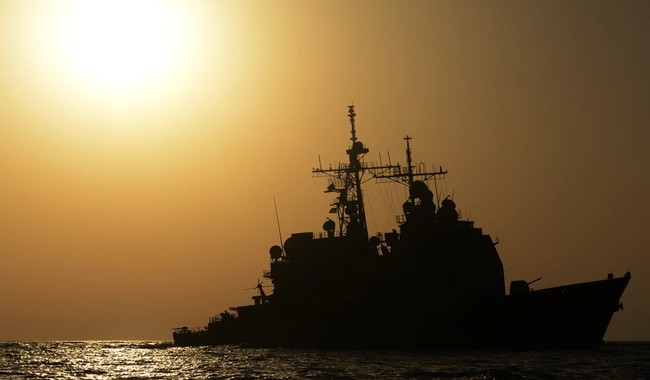
The seizure of a tanker tied to an embargoed shipment highlights a wider, organized system moving sanctioned Iranian, Venezuelan, and Russian oil and shows how old legal tools like prize courts could be repurposed to strip revenue from adversaries while rewarding the forces that intercept illegal shipments.
The U.S. military’s capture of a tanker loaded with embargoed Venezuelan crude signals a significant shift in handling smuggled energy resources. A large network of unregistered and uninsured ships moves sanctioned oil into refineries abroad, keeping hostile regimes funded and complicating enforcement. That network makes targeted interdictions strategically valuable and legally complex.
The government secured authority to take custody of the MT SKIPPER and its cargo under existing U.S. statutes, including 18 U.S. Code § 2339B(a)(1): Materiall support to a foreign terrorist organization, 18 U.S. Code § 981(a)(1)(G)(1): Civil asset forfeiture of foreign and domestic property belonging to persons “planning or perpetrating” terrorism, 18 U.S.C. § 2332b(g)(5): Commission of terrorism, and 18 U.S.C. § 981(b): Asset forfeiture. Those provisions create a legal pathway to forfeit ships and cargo tied to sanction evasion or terror financing. Using them to target the maritime “dark fleet” opens new options for disrupting illicit oil flows.
Prize courts once handled captured enemy and contraband vessels, converting ships and cargo into cash under a legal process that judged the legitimacy of a capture. In that era a single adjudicator commonly decided whether a seizure was lawful and whether owners could contest the taking. The procedure was technically in rem, literally proceeding against the vessel itself, not merely against its owners.
The modern civil-forfeiture analogue often names the object in the case title; a prize case might read U.S. vs. MT Skipper, just as historic cases named captured ships. Prize proceedings had no jury and placed the burden on the claimant to prove the capture illegal; absent a contest the vessel was typically condemned. Condemned ships and their cargoes were then disposed of, usually by public auction.
Historically, proceeds from condemned prizes were divided between the government and the capturing forces, creating a strong incentive for active interdiction at sea. Under later Royal Navy practices, the sale yields were split by a fixed hierarchy that sent large portions to commanding officers and meaningful shares down the chain to enlisted sailors. That distribution both rewarded initiative and tied public spoils to naval effectiveness.
- Two-eighths went to the captain or commander. This often helped them become rich and powerful.
- One-eighth went to the admiral or commander-in-chief who gave the ship its orders. (If orders came directly from London, this eighth also went to the captain). [Editor’s note: The commander-in-chief, in the case of the MV Skipper, would correspond to the USSOUTHCOM commander.]
- One-eighth was shared among the lieutenants, sailing master, and captain of marines.
- One-eighth was shared among the wardroom warrant officers (like the surgeon and purser), standing warrant officers (like the carpenter and boatswain), lieutenant of marines, and master’s mates.
- One-eighth was shared among junior warrant and petty officers, their mates, marine sergeants, the captain’s clerk, surgeon’s mates, and midshipmen.
- The final two-eighths were shared among the rest of the crew. Skilled seamen got more shares than ordinary seamen, landsmen, and boys. For example, an able seaman received two shares, an ordinary seaman one and a half, a landsman one share, and a boy half a share.
A practical modern application would see seized tankers and cargo valued and sold, with statutory rules determining how proceeds are allocated. Estimates put the MT Skipper’s cargo at roughly $100 million and the ship itself at about $80 million. When scaled across the 143 “dark fleet” supertankers, the cumulative value reaches into the tens of billions of dollars, and the full fleet of varied tankers raises that figure even higher.
If prize-like distributions applied, a significant share of sale proceeds would flow to the capturing unit and its personnel, creating tangible rewards for operational success. Historical U.S. practice as updated in 1862 allocated half of sale value as prize money, with the other half reserved for the government; the vessel’s share could then be divided into parts among captain, officers, and crew. That formula made some commanders wealthy and lifted living standards for sailors after a prosperous cruise.
Beyond incentive effects, purchasing or seizing these tankers could deliver strategic benefits for supply chain resilience. Acquiring a fleet of tankers could help assure fuel availability for U.S. forces in a Pacific contingency while denying those assets to adversaries and cutting off a major revenue stream for sanctioned regimes. The operational and fiscal upside of such an approach is straightforward: vessels that once enabled illicit trade could instead bolster national logistics.
Congress eliminated automatic payments of prize money to service members in 1899, but modern legal strategies could revisit how proceeds are used and distributed within current statutory limits. Whether through direct prize-style awards, retention of proceeds for defense needs, or other legally sanctioned allocations, using maritime forfeiture aggressively targets the finances that enable bad actors. That makes interdiction both punitive and practical.
Bringing prize-court concepts into the contemporary toolkit would require careful legal and operational planning, but the basic idea is simple: capture the ships that sustain outlaw economies, convert them into resources for the nation or for the capturing forces, and make interdiction pay. That combination of deterrence, disruption, and potential revenue aligns incentives and turns a centuries-old practice into a modern tool against transnational smuggling and sanction evasion.



Add comment