
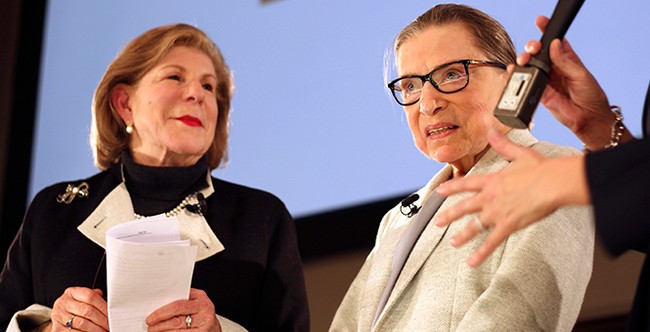
I’ll examine recent reporting problems at NPR focused on senior legal correspondent Nina Totenberg, outline the series of factual errors and corrections that followed a high-profile retraction, consider how editorial processes failed, and weigh plausible explanations circulating about what led to the false report.
Mistakes happen in journalism; spelling slips and date errors are inevitable in fast news cycles. Still, when a veteran correspondent produces a high-profile false report about a Supreme Court justice’s retirement, the error moves beyond ordinary human fallibility into a pattern that demands scrutiny. For those who value reliable reporting, repeated corrections from the same reporter raise real questions about standards and oversight.
Nina Totenberg, a long-standing Supreme Court correspondent, authored a piece that announced Justice Samuel Alito’s retirement and attributed it to an official court announcement that did not exist. NPR removed the story quickly and Totenberg issued a direct apology to Justice Alito, describing the incident as a “rookie error.” That admission was notable given her decades of experience covering the court.
After the Alito retraction, a surprising cascade of additional corrections and fixes emerged from Totenberg’s recent work. One report contained a misspelled name; another mischaracterized a Supreme Court decision on geofencing, prompting the precise correction: “A previous version of this story incorrectly said the Supreme Court’s majority found that the law enforcement technique known as geofencing violated the Fourth Amendment’s prohibition against unreasonable searches. In fact, the justices sent the case back to a lower court to determine whether the search was ‘reasonable’ under the Fourth Amendment.” Those are not minor edits; they alter legal meaning in important ways.
Other pieces required corrections on basic details, like a misspelled Chief Justice Roberts and an incorrect year tied to an administrative firing. Another correction clarified that a campaign finance ruling “incorrectly said the Supreme Court’s ruling on campaign finance limits covered both fundraising and expenditures. In fact, the decision is focused on expenditures only.” On a birthright citizenship case, reporting required multiple adjustments to the recorded vote tally. The accumulation of these fixes in a short span undermines confidence in a single reporter’s output.
Beyond the text errors, the core mystery is process. How did a newsroom with established editorial safeguards publish an unconfirmed report claiming an official announcement existed? NPR later explained that routine editing steps were bypassed, which allowed the false retirement story to go live. Bypassing checks is a procedural breakdown, not a simple misquote, and it invites scrutiny about who authorized the shortcut and why.
NPR publicly explained the retraction and posted an explainer about the sequence that led to the mistake, and Totenberg addressed the audience to detail how the false report was published. The network’s swift removal of the story and her on-air acknowledgment were necessary, but they do not answer deeper concerns about why a reporter with extensive experience ran an unverified claim. Accountability requires more than an apology when institutional safeguards fail.
Speculation has filled the gap left by unanswered questions. Some sources suggest Totenberg may have been baited by false information intended to reveal a leaker within the court. Others point to the possibility that Justice Samuel Alito or a proxy provided misleading comments, or that another justice supplied information indirectly to Totenberg. Those scenarios are serious because they imply manipulation of reporting for strategic ends rather than mere human error.
Whatever the ultimate explanation, the pattern of errors matters because NPR occupies a trusted space in national coverage of the court. Repeated substantive corrections on legal interpretation and case outcomes are not trivial; they affect public understanding of momentous decisions. Conservative readers and observers concerned with media accountability will rightly press for transparent answers about both the initial false report and the subsequent spate of corrections.
At minimum, the situation calls for a review of editorial practices where high-impact reports are concerned, clearer lines of verification for statements attributed to official court sources, and transparent disclosure when standard checks have been bypassed. Without such reforms, a single high-profile mistake risks signaling a tolerance for sloppiness that can erode credibility across the newsroom. The stakes here are institutional, not merely personal, and demand institutional remedies.
Until NPR demonstrates stronger safeguards and a commitment to consistent verification, readers and stakeholders will continue to question how a veteran correspondent produced a cluster of significant misreports in such a short period. The issue is about restoring trust through better process, not simply waiting for the next apology.
https://x.com/ItsAndyMac_/status/2072098326087168184



Add comment