
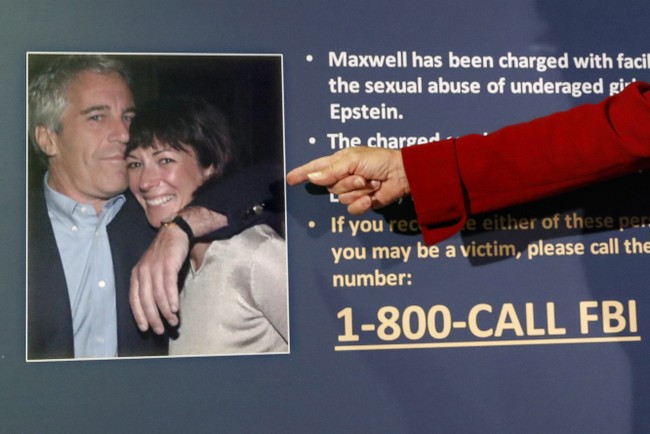
The Justice Department has moved forward to unseal grand jury materials tied to Jeffrey Epstein and Ghislaine Maxwell after Congress passed the Epstein Files Transparency Act, and a New York judge has ruled the statute applies to those materials and signals Congress intended to override grand jury secrecy protections.
The courts have been trading rulings and motions over access to records from the Epstein and Maxwell investigations, and the recent law changed the legal landscape. After Congress passed the Epstein Files Transparency Act in November, the DOJ reasserted its requests for release in both Florida and New York. A Florida judge approved unsealing certain grand jury transcripts, and now a Southern District of New York judge has issued a significant ruling in Maxwell’s case.
On Tuesday, Judge Paul Engelmayer granted the DOJ’s petition to unseal grand jury materials in the Maxwell prosecution where she was convicted and sentenced to 20 years. He also authorized modification of a prior protective order so the DOJ can share discovery provided to Maxwell’s defense team at trial. Those rulings move the DOJ closer to publicly releasing documents Congress required be disclosed under the new statute.
In his opinion, Engelmayer concluded the Act “unambiguously applies to the discovery in this case,” finding that although the statute does not explicitly list grand jury material, it “textually covers” those materials. The judge pointed to the law’s explicit reference to Maxwell by name and its broad language covering “all unclassified records, documents, communications, and investigative materials in the possession of [DOJ], including . . . United States Attorneys’ Offices, that relate to . . . Maxwell,” and he observed that the statute contains no exception excluding grand jury transcripts from disclosure.
Engelmayer confronted the tension between the Act and Federal Rule of Criminal Procedure 6(e), which ordinarily keeps grand jury proceedings secret. He reasoned the new statute implicitly shows Congress intended to overcome that longstanding secrecy rule in this specific context. The judge noted Congress explicitly limited the reputational shield that often justifies withholding grand jury material.
A central purpose for the rule of secrecy, and one that continues to apply after a grand jury’s investigation has concluded, is “to protect . . . unindicted individuals from the anxiety and public castigation that may result from disclosure.” But Section 2(b)(1) of the Act expressly provides that the reputational interests of unindicted persons—including public figures who associated with Epstein and/or Maxwell—will not justify the withholding or redacting of records required to be made public by the Act. See Act § 2(b)(1) (“No record shall be withheld, delayed, or redacted on the basis of embarrassment, reputational harm, or political sensitivity, including to any governmental official, public figure, or foreign dignitary.”). By repudiating that central purpose for grand jury secrecy, Congress signaled its expectation that the Act would overcome grand jury secrecy.
(Citations omitted.)
Judge Engelmayer’s approach treats the statute as a targeted congressional decision to pry open previously protected investigative material tied to a matter of intense public interest. From a Republican viewpoint, the ruling reinforces the idea that Congress can act to force transparency when institutions have failed to produce full accountability. That framing emphasizes the statute’s specific aim at records involving Epstein and Maxwell and the legislated boundary placed around secrecy concerns.
The ruling in New York follows a similar unsealing order in Florida, where a judge allowed release of grand jury transcripts tied to the Epstein prosecutions. There is an outstanding, identical motion before Judge Richard Berman in the separate Epstein case in New York, and observers expect a comparable decision there given the reasoning Engelmayer adopted. Those coordinated outcomes would produce a broader set of materials becoming public.
What becomes clear from these rulings is that the DOJ now has judicial permission to disclose a trove of investigative and discovery material that was previously inaccessible to the public. Whether the newly released documents reveal dramatic new facts, names, or prosecutorial missteps remains unknown, but the legal barrier to release has been substantially lowered. The practical work of redaction, review, and production will determine how much information actually reaches public view.
Critics of the move will argue that stripping secrecy risks unfairly damaging the reputations of unindicted people and could chill cooperation with grand juries going forward, while proponents insist the public interest in full exposure of what federal investigators and prosecutors knew outweighs those concerns. The judge addressed those competing interests directly by noting the statute’s explicit rejection of reputation-based redactions.
As courts in multiple districts parse this new statutory command, the pace at which documents surface will depend on administrative steps within the Justice Department and the courts, including any necessary protective measures or phased disclosures. For now, the recent rulings mark a decisive step toward implementing Congress’s legislative intent to make Epstein- and Maxwell-related materials available for public scrutiny.



Add comment