
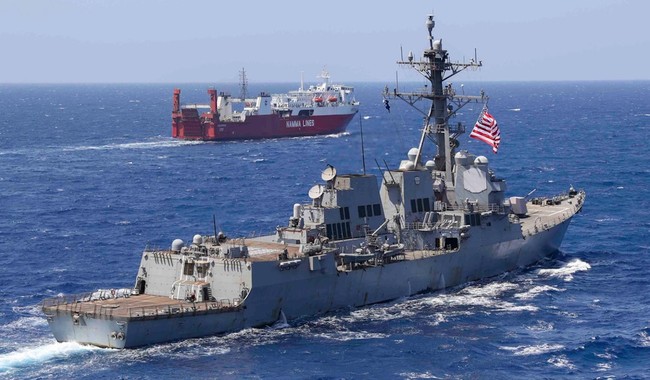
The Navy is testing AI-controlled robot swarms from Gecko Robotics to speed inspections, cut maintenance delays and boost fleet readiness as China expands its fleet; this piece looks at what the robots do, why they matter for readiness, and how they fit into a broader push to restore a strong, capable military.
The U.S. Navy faces a persistent maintenance backlog that sidelines a large share of the fleet at any moment. Nearly half of ships can be unavailable because of repairs, and that reality weakens deterrence and limits operational options for commanders. Technology that helps get ships back to sea faster is worth serious attention given the strategic competition in the Pacific.
Gecko Robotics has built AI-powered climbers that inspect steel surfaces, scanning for corrosion, metal fatigue and weld defects. These machines scale hulls, flight decks and other hard-to-reach areas, collecting millions of data points and feeding them into a digital platform to flag problems early. If the Navy can turn inspections from slow, manual tasks into rapid, data-driven workflows, yards and crews can focus on repairs that matter most.
Swarms of wall-climbing robots will soon be crawling across U.S. Navy warships in a $71 million effort to slash repair delays and boost fleet readiness as China continues expanding its naval power.
Under the five-year contract, Gecko will begin work on 18 ships in the U.S. Pacific Fleet, with the initial award valued at up to $54 million. The contract vehicle is structured to allow other military services to access the technology as well.
The push comes at a critical moment. Only about 60% of U.S. Navy ships are operational at any given time as maintenance backlogs sideline a significant share of the fleet, according to industry estimates.
China is building ships fast, pushing toward a larger blue-water posture even if some supporting capabilities lag behind. They already possess a sizable number of hulls and are expanding their fleet, which makes American availability and readiness a national-security priority. We must assume adversaries will probe U.S. weaknesses, so keeping ships mission-ready is an area where conservatives can and should demand results.
The robots do not appear to perform repairs now; their role is inspection and identification so human technicians can act where needed. That limits risk while providing a high-resolution picture of structural health across surfaces that are tedious or hazardous for sailors to inspect manually. The more accurate and earlier the detection, the less time a ship needs in dry dock and the faster it can return to operations.
The AI-powered machines, developed by Pittsburgh-based Gecko Robotics, scale hulls, flight decks and other hard-to-reach steel surfaces, scanning for corrosion, metal fatigue and weld defects.
Instead of relying on sailors or shipyard workers suspended on ropes or scaffolding to inspect ships point by point, the robots collect millions of data points and feed them into a digital platform designed to flag structural problems early.
“Where value hasn’t improved, that’s where opportunity lives. Cracking the cost equation is just as important as cracking the physics equation,” Justin Fanelli, chief technology officer for the Department of the Navy, said in a statement on the new deal. “We’re now seeing solutions that make innovation adoption easier and in doing so save time, money and risk.”
That endorsement from a Navy technical lead matters because it frames the project as both a technical and fiscal solution, not just a gadget. The department is recognizing that innovation must reduce cost and risk if it is going to scale across a fleet with real operational demands. If these systems can consistently identify hidden flaws, they will change how maintenance priorities are set and how yards schedule work.
There are practical caveats. Sensors and AI models must be calibrated and validated so they do not miss critical problems or generate false alarms that waste time. Human eyes and hands will still be essential to verify findings and execute repairs; the best outcome is a complementary relationship where machines extend human reach and speed. Proper testing and oversight are required to ensure data quality, chain of custody for maintenance records, and trustworthy diagnostics before widespread deployment.
Operationally, the payoff is straightforward: a ship at sea with full fuel and weapons has strategic value that a ship in dry dock does not. Faster, more accurate inspections translate into shorter maintenance cycles and more ships ready to deter aggression or project power when needed. For conservatives concerned about rebuilding and sustaining a credible force, targeted tech like this is the kind of smart investment that deserves priority and careful implementation.
Introducing robotic inspections won’t solve every readiness problem overnight, but it can remove a major choke point that keeps hulls tied up for avoidable reasons. If these systems help commanders regain more ships for operations, that strengthens deterrence and gives policymakers more leverage without dramatically increasing fleet size overnight. The focus should remain on outcomes: more mission-capable ships, lower long-term costs, and a Navy that can meet the challenges ahead.


Add comment