
The piece examines the fallout after President Trump called out several Democrats for urging military and intelligence personnel to disobey orders, highlights Speaker Mike Johnson’s defense of Trump’s framing, and covers White House press remarks criticizing media focus while Democratic members press service members to question commands.
Media reaction to the President’s social posts was immediate and intense, focusing on his language rather than the substance of what a group of Democrats said in a circulated video. The reporting largely ignored the content of the video itself, opting instead to criticize the messenger for describing the conduct in stark terms. That shift in focus drew sharp pushback from Republican leaders who say the real issue is the calls to military and intelligence personnel to evaluate and refuse orders.
A published video showed several Democratic lawmakers urging service members and intelligence professionals to resist orders they deem illegal, and that message touched off the controversy. The lawmakers did not explicitly say which orders they meant, but their language referenced actions that put uniformed personnel at odds with citizens. Critics argue the phrasing is targeted at immigration enforcement and other operations that fall under presidential and departmental authority.
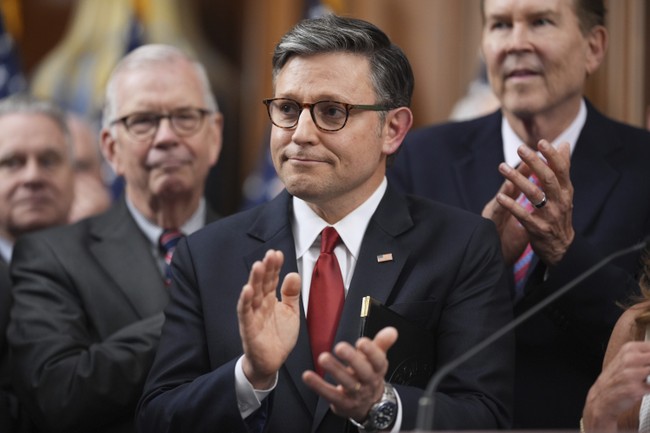
Speaker Mike Johnson defended the President’s characterization by saying Trump was defining the crime of sedition and that lawyers would parse the language later. “That is a factual statement. But obviously, attorneys have to parse the language and determine all that,” Johnson said, signaling he viewed the substance of the Democrats’ appeal as the central concern. He framed the controversy not as a dispute over word choice, but as a matter of public safety and civilian control of the military.
Johnson blasted the Democratic message as “wildly inappropriate” and said urging troops to disobey orders is deeply troubling from members of Congress. He called the remarks from some lawmakers “beyond the pale” and criticized elected officials who would encourage young service members to reject commands. The Speaker made clear that when those in leadership promote such behavior, it undermines the chain of command and risks politicizing the armed forces.
President Trump responded on his platform by labeling the actions of the lawmakers involved as “seditious behavior punishable by death.” That quote has driven much of the backlash and is being debated in legal and media circles. Supporters of the President say his words reflect a legal reality about sedition while opponents say the language is extreme and incendiary.
Defenders of the Democratic lawmakers say they specifically referenced “illegal orders” and framed their comments as encouraging lawful resistance to manifestly unlawful directives. The counterargument is that asking individual service members to judge the legality of orders on their own is dangerous. There is a long-established distinction in military law between manifestly illegal orders that must be disobeyed and discretionary judgments that require legal process.
White House Press Secretary Karoline Leavitt weighed in, questioning why media attention remained on the President rather than the lawmakers who she said were inciting resistance among troops. “Why aren’t you talking about what these members of Congress are doing to encourage and incite violence?” she demanded, challenging reporters to focus on the actions she described. She added, “They’re suggesting, Nancy, that the president has given illegal orders, which he has not.”
Leavitt went further, arguing that every order given through the chain of command is lawful and that courts have supported the administration’s authority. That position frames the debate as one of institutional legitimacy versus partisan agitation. From this viewpoint, telling military personnel to decide which orders to follow risks fragmenting the force and empowering political actors over legal processes.
Republican officials maintain the media’s fixation on a single provocative quote has shielded a more serious question: should members of Congress be encouraging troops to pick and choose which orders to obey? They contend that the proper response to disputed orders is legal challenge and oversight, not public exhortation to resist. The exchange has highlighted deeper tensions over civil-military relations, the role of elected leaders, and how disputes over policy and enforcement are aired in public.
Lawmakers on both sides are now grappling with how to address the rhetoric without escalating the dispute further, and legal experts are parsing the lines between protected speech, political advocacy, and potentially criminal conduct. The debate shows how quickly concerns about military obedience and civilian control can become partisan flashpoints. It also underscores the challenge of holding public discussion on sensitive national security issues without risking damage to institutional trust.


Add comment