
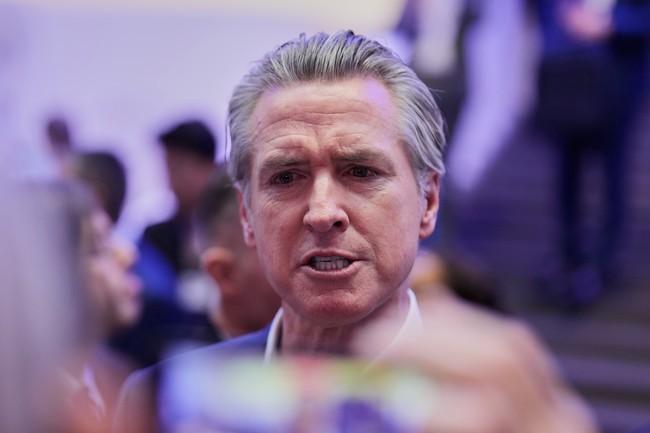
I’ll walk through a sharp critique of a recent Gavin Newsom interview, call out the media’s obvious fawning, include the full, exact exchange between Katie Couric and Newsom, and explain why conservative readers should find the whole scene revealing about liberal media bias and the 2028 landscape.
The media has a habit of papering over failures with fluff pieces when the facts don’t support their preferred candidates. A recent sit-down between Katie Couric and California Gov. Gavin Newsom offered a perfect example, where style questions replaced scrutiny of policy outcomes. That shift matters because voters deserve straight talk about competence, not beauty pageant commentary.
In this interview Couric veered into a territory that was more celebrity magazine than political press. Instead of pressing on homelessness, inflation, or the state of California’s schools and infrastructure, the conversation turned toward Newsom’s appearance and perceived charm. It was an embarrassing display of how comfortable some journalists are when they can switch into cheerleading mode.
The exchange played out almost like a sketch. Couric asked whether Newsom had a so-called “Zoolander problem,” which framed him as a fashion-forward celebrity rather than a governor responsible for real problems. That kind of framing gives the impression that the press is more interested in polishing a candidate’s image than holding them accountable. Conservatives see this as further proof that the mainstream media rarely treats prominent Democrats the way they would treat conservative figures.
Warning: video contains profanity.
“Are you just ridiculously good-looking, as Vogue said? No, seriously, what do you do about that?” Couric asked.
Newsom took the question in earnest, answering that he didn’t want to get a stylist like other politicians to “become someone they’re not.”
“You don’t do anything about it because if you’re gonna do something about it, then you’re bulls–ting people. You know what, I am who I am, and it’s fine,” Newsom said.
“You don’t have to like me, or maybe you like a slick person, I don’t know. Whatever, it’s okay.”
Reading that back, it’s hard to avoid the impression that both question and answer were performative. Couric’s line of questioning treated image as a substantive trait, while Newsom’s reply leaned into a dismissive, almost flippant posture. For Republicans who care about policy and results, the whole thing felt vapid and revealing.
Look at California’s record: rising costs, continued homelessness crises, public safety concerns, and education struggles are real issues voters face every day. Yet in this sit-down, those topics were sidelined for a moment about hair and authenticity. When a prominent Democrat can’t be asked tough questions about governing, it shows the media’s priorities and their role in shaping narratives.
There is also a deeper problem when the press treats authenticity as a performance. Newsom saying “I am who I am” sounds less like self-acceptance and more like a canned line meant to deflect accountability. Conservatives view that as emblematic of a broader pattern: rhetoric that avoids responsibility and refuses to offer concrete solutions while demanding applause for persona.
This episode was widely mocked on social platforms because it exposed a tone-deafness among seasoned journalists. People noticed the contrast instantly; a comparable question would never be asked of a conservative politician without getting called out for bias. That asymmetry isn’t theoretical—it’s visible in moments like this where the press gives one side a pass.
Beyond the mockery, there is a political consequence. If Democrats rely on image over substance because their policies are unpopular, that tells you something about their bench for future elections. Voters who care about results are increasingly skeptical, and scenes like this only deepen the skepticism. The interview read like public relations, not journalism.
At the end of the day, the role of the press should be to interrogate leadership on outcomes and plans, not to flatter. This interview missed that mark, swapping meaningful oversight for theatrics. Conservatives will keep calling for real accountability, and voters deserve journalists who pursue it rather than provide cover.
Couric’s performance here reflects a pattern many conservatives recognize: a media culture that too often prioritizes personality over performance. When questioning is reduced to praise or playful teasing, the public loses out on clarity about who can deliver for the country. That imbalance matters, and it will keep shaping the political conversation as we head toward 2028.


Add comment