
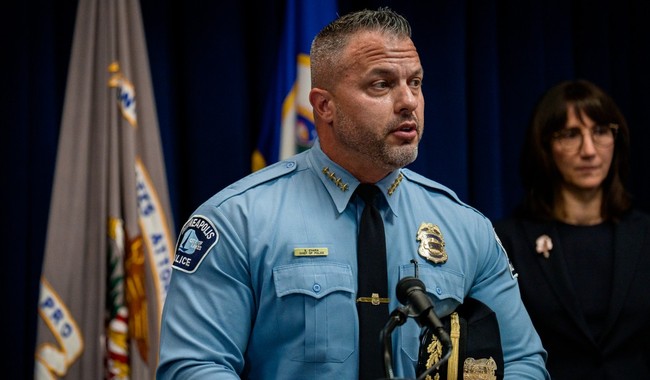
I’ll explain what happened with Minneapolis Police Chief Brian O’Hara’s resignation, how Mayor Jacob Frey framed the interference claim, the background on the misconduct probe, the leadership choices now in place, and why this matters for public safety and trust in the police.
Minneapolis got a headline this week when Chief Brian O’Hara stepped down after the mayor said the chief interfered in an internal probe by deleting a contact from his city phone. The allegation centers on an investigation into alleged intimate relationships between the chief and city employees, and Frey called the deletion an intentional effort to hide a connection. That accusation, and O’Hara’s immediate resignation, have shaken confidence in the department at a time when the city cannot afford more turmoil.
Mayor Jacob Frey released a summary that included a direct finding: “Specifically, investigators found that he intentionally deleted a contact card for an individual from his city-issued cell phone during the original investigation in an attempt to shield that evidence of his connection to the person from investigators.” Those are strong words from the mayor, and they present a picture of deliberate obstruction rather than a bureaucratic mistake. In this political climate, that distinction matters a lot to voters who want accountability.
Frey also said O’Hara violated instructions by discussing the probe, noting, “And even though he was instructed not to discuss the investigation itself with anyone, he told another city employee that his city cell phone had been taken from him for the investigation.” That claim paints a picture of someone who ignored safeguards designed to keep investigations fair. From a Republican perspective, leadership that refuses basic transparency and discipline erodes public trust and emboldens those who want to defund or micromanage police work.
O’Hara had been a visible face next to Frey during contentious debates over immigration enforcement and other hot-button issues, and his public persona often aligned with the mayor’s messaging. Critics now say his loyalty to political optics made him ineffective at protecting officers and public safety. Resignation after misconduct allegations leaves a gap that won’t be filled by mere window dressing; it demands hard decisions on restoring credibility in the department.
Although the initial misconduct claims were labeled unsubstantiated, the additional finding about the deleted contact changed the calculus for Frey and city officials. That shift from unproven misconduct to an alleged cover-up is what triggered the mayor’s public condemnation and the threat of discipline “up to and including discharge.” Faced with that, O’Hara chose to resign rather than stay and contest the findings under a mayor he had closely aligned with.
Leadership change matters because the new acting chief, Assistant Chief Katie Blackwell, carries controversy of her own into the top job. Blackwell previously served as head of training and provided testimony during the Derek Chauvin case that drew accusations of perjury from some officers and commentators. That history will shape how rank-and-file officers and citizens view her stewardship of the department.
Blackwell brought legal fights with her, including a defamation suit that was dismissed and an order to pay $75,000 toward defendants’ fees, a fact that feeds the narrative of turmoil and legal distraction inside the department. Critics argue her rise during the post-2020 reform era prioritized diversity and political signaling over traditional markers of merit and experience. For conservatives and many pragmatic voters, that fuels concern that the city continues to prefer optics over effective policing.
The larger problem is structural: Minneapolis has repeatedly swapped leadership while crime metrics and officer morale have suffered. Replacing one controversial figure with another who carries baggage does not directly address the staffing shortages, response times, or the need to back officers in the field. Voters who want safer streets and accountable policing will push for leaders who put crime reduction and officer support ahead of ideology.
Community trust hinges on consistent standards and fair investigations, not on political theater. When a chief is accused of deleting evidence, the city loses ground in delivering the transparent, impartial accountability residents expect. That loss is not abstract; it affects witness cooperation, recruitment, and the department’s ability to execute public safety missions.
City managers now face decisions that will test whether Minneapolis prioritizes public safety or clings to the same leadership choices that critics say helped create the current crisis. The mayor and city council must act in ways that restore both competence and confidence, or the cycle of controversy will continue to undercut meaningful reform. For people across the city, the calculus is simple: results over rhetoric, and accountability that actually produces safer neighborhoods.
Mayor Frey and the entire leadership are absolute failures.

Add comment