
This piece looks at the fallout from a failed fare-free bus experiment that inspired a similar promise in New York City, tracing how the Kansas City trial ran out of money, what officials said about rising costs, and why critics argue such socialist promises are economically reckless.
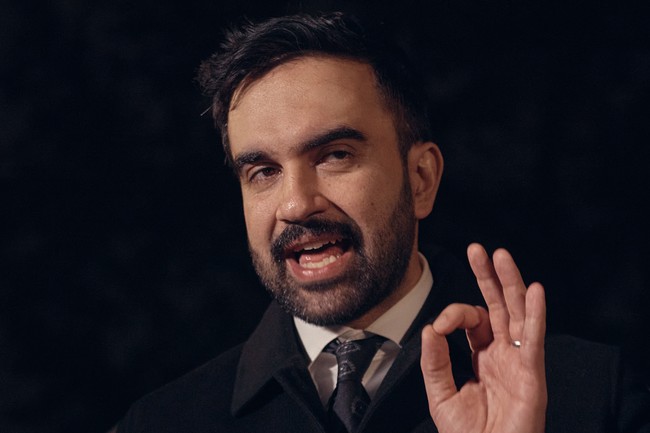
Watching the cascade of well-meaning but impractical policies from self-styled democratic socialists is uncomfortable and, frankly, predictable. Promises like free public transit sound appealing until someone runs the numbers and the taxpayer tab arrives. New York Mayor Zohran Mamdani campaigned on free buses, pointing to another city that tried the same idea as proof it could work.
https://x.com/business/status/2069052793550164146
Kansas City launched a fare-free bus pilot in 2020 with big headlines and bigger ambitions, but the experiment hit a hard reality check when revenues and funding estimates diverged from expectations. What began as a hopeful, roughly $50 million initiative eventually proved unsustainable once operating costs climbed and the money dried up. By June 1, buses there were charging fares again because the program could not stand without external subsidies.
Initial projections from the transit authority underestimated ongoing expenses and ignored how inflation and unanticipated costs would stack up over several years. The KCATA originally estimated revenue impacts closer to $8.8 million annually, but real-world pressures pushed that figure to about $15 million. When officials tried to stretch the budget, services had to be cut or fares reinstated to keep the system running.
Riders and staff described conditions that should make policymakers pause: unreliable schedules, poor cleanliness, and buses becoming informal shelters rather than dependable transit. Those descriptions underline the practical consequences of funding shortfalls and the strain placed on operations when revenue streams are eliminated without a robust replacement plan. When buses fail to meet basic service standards, everyone loses—commuters, workers, and taxpayers who eventually cover the shortfall.
Political reaction to the reversal was blunt. Rich Azzopardi put it this way: “This is my shocked face. The math was never going to work and for the good of New Yorkers, let’s hope this becomes yet another instance where Mamdani breaks his word — and while we’re at it he should ditch the nonsensical Soviet-style grocery stores too.” That quote captures the frustration of skeptics who see ideological commitments outrunning fiscal reality.
Mayor Mamdani has been candid about the scale of his proposal, admitting that the nearly $700 million price tag for New York’s buses would require new revenue sources and suggesting higher corporate taxes as a funding route. Facing a governor unwilling to raise taxes, he responded with: “The most important fact is that we fund it, not the question of how we do it, but that we do it.” That reasoning comforts few who balance budgets for a living.
Kansas City’s experience shows what happens when the funding question is deferred until after a program is promised. Tyler Means, Chief Mobility and Strategy Officer for KCATA, said the agency was forced to choose between cutting services or reinstating fares once the money ran out. Those are not policy wins; they are emergency triage decisions that erode public trust and leave cities with worse outcomes than before the experiment began.
There’s also a political angle: when an idea is copied from one city to another without adapting for scale, complexity, or fiscal context, the results can be embarrassing. What might be manageable in a small pilot can become catastrophic when transposed to a metropolis with orders of magnitude more riders, higher costs, and entrenched service demands. The lesson should be to pilot carefully and to present realistic funding plans before locking in expectations.
For conservative critics, the Kansas City case reinforces a long-standing warning about socialist experiments: they can look generous in the promise stage and disastrous in the execution stage. Margaret Thatcher famously put it bluntly, and the Kansas City example offers a modern illustration—that the problem with socialism is that you run out of other people’s money. That reality checks political rhetoric with practical consequences for voters and city budgets alike.


You voted for this flea infested camel asshole and you keep voting for incompetent democrats that are destroying your state. You assholes never learn in joy your cruise on the Titanic. NY the East Coast Cesspool of the United States. democrats control.
The Marxists controlling the Democrat Party have surpassed the CCP as the greatest enemy of America.
How irresponsible of Mamdani who is inexperience in Governing to campaign on a lying idea free busing that has been tried in other States and failed! What’s worse is the gullible NYC voter believed him!! Stay out of my State!!
Socialism has never worked in all of history, even when socialists are willingly part of it.