
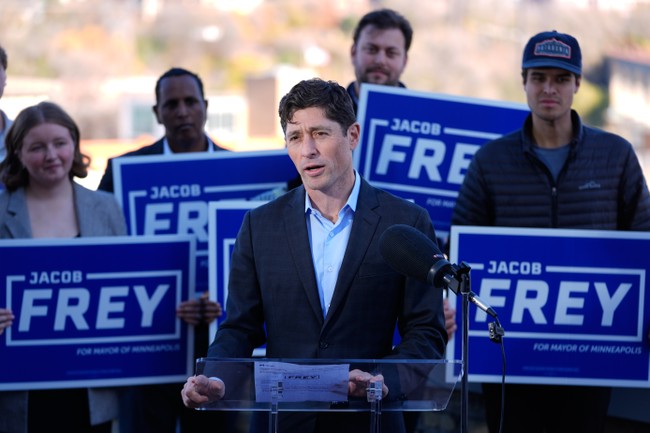
Minneapolis Mayor Jacob Frey keeps staging public displays that look less like leadership and more like calculated pandering, especially to immigrant communities, and those gestures raise serious questions about priorities, loyalty, and the rule of law.
Local taxpayers are rightly furious about allegations of massive fraud in Minnesota, yet much of the outrage is drowned out by politicians more interested in optics than accountability. Frey has repeatedly leaned into performative gestures — speaking in other languages, embracing community leaders on camera, and taking dramatic public stances — that come off as political theater. These actions matter because they shape public trust and signal whose interests are being put first.
This pattern isn’t accidental. Over the years Frey has staged moments that grabbed headlines: dramatic displays at funerals, frequent public apologies, and highly produced videos aimed at specific ethnic groups. Those moments win headlines and social media applause, but they also feed a narrative that the mayor answers first to identity blocs and second to the broader public. For Republicans watching, that’s a problem because it suggests a willingness to prioritize votes and appearances over law and order.
Respecting cultural differences is one thing; surrendering the norms and expectations that bind a city together is another. Officials should welcome newcomers and protect civil rights, but they must also insist on assimilation of core civic values and equal treatment under the law. When a mayor spends more time signaling identity solidarity than enforcing basic civic duties, the center of gravity in governance shifts away from citizens and toward factional loyalty.
Some of Frey’s moments have become viral for good reason: they look staged and emotionally calibrated to win specific constituencies. One such clip circulated widely in December, and critics argued it looked less like empathy and more like a humiliation ritual designed to score cultural points. That viral clip set the stage for a later, even more polished attempt to court a different community, showing this has become a repeated play in his political book.
The newest example is a slick video Frey produced to show solidarity with Minneapolis’s Hispanic community, where he alternates between Spanish and English while clasping hands and offering warm reassurances. The video was clearly designed to be shared widely, and it accomplishes that goal: it humanizes the mayor to a target audience while giving him cover from more substantive questions about governance. But optics do not replace accountability, and warm words do not explain away reported fraud or failures in public safety and fiscal oversight.
“Let me tell you very clearly: I am proud to have you in our city, to call you my neighbor, to call you my family,” Frey told La Raza listeners in the video. “We don’t back down when it comes to helping our family. You all make our city a better place.”
He added the Latino community “can feel safe calling 911, because the [Minneapolis Police Department] (MPD) does not do immigration enforcement work,” noting “their job is to keep people safe.”
[…]
Frey then hugged a man sitting next to him at the table during the video, saying, “You’ve got a lot of people that care about you. You’re brave and you’re tough.”
He also grabbed the man’s hand and put his arm around him during the videotaped discussion. Frey started the video speaking Spanish but then appeared to switch to using his phone to translate the conversation.
Watch:
Critics compare these routines to the notorious moments other national figures staged, quipping that the only thing missing was the infamous “Jill Biden breakfast taco.” That snark highlights a wider frustration: when leaders substitute symbolism for substance, they betray ordinary citizens who expect basic competence. It’s one thing to be inclusive; it’s another to appear to trade sovereignty for applause.
Frey’s defenders will say he’s simply reaching out to communities that feel marginalized, and outreach is certainly a part of governance. But outreach should not involve public gestures that undercut law enforcement or suggest a politician’s primary allegiance is to foreign cultures rather than to American citizens. There’s an obvious line between outreach and political grandstanding, and Frey keeps stepping over it.
If officeholders are regularly pictured another country’s flag within their own jurisdiction, speaking foreign languages more frequently than English, and siding with people who break our laws over citizens who obey them, that sends a clear message. It tells voters that loyalty can be bought with performative shows of solidarity, and that civic duty has been replaced with identity-based politics. That is the real problem here, and it deserves furious public scrutiny.
Every city needs mayors who protect residents, enforce laws fairly, and make tough choices without worrying only about the next viral clip. Frey’s pattern of flattery and spectacle may win him short-term praise from certain constituencies, but it corrodes the trust that keeps a city functioning. Elected leaders should be judged on outcomes, not angles, and Minneapolis deserves better than political theater dressed up as compassion.



Add comment