
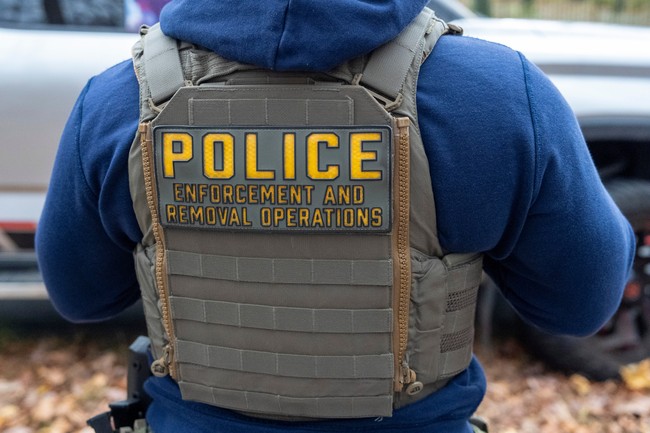
Federal agents reportedly descended on Minneapolis after officials exposed widespread welfare fraud tied to members of the local Somali community, prompting a sharp political response and renewed focus on immigration enforcement in cities with concentrated migrant populations.
ICE Storm Reportedly Hits Minneapolis After Massive Somali Welfare Fraud Schemes Uncovered
The past few weeks have put Minnesota in the national spotlight for reasons no state leader wants. Federal prosecutors say hundreds of millions of dollars were stolen through coordinated fraud schemes, and authorities have pointed to involvement by members of the Somali community. That kind of large-scale theft from taxpayers has stirred anger across party lines and raised questions about state oversight and federal response.
Governor Tim Walz has taken heat for the failures that allowed the fraud to unfold on his watch, and the political fallout has been swift. President Trump publicly promised consequences during a Cabinet meeting, and reports say a major ICE operation followed soon after in Minneapolis. Officials and observers see this as a direct answer to the fraud revelations and a test of federal enforcement priorities in urban immigrant communities.
The Trump administration has opened a new front in its immigration crackdown, targeting illegal Somali immigrants in Minneapolis with a push of more than 100 ICE agents.
Immigration agents are targeting as many as 500 Somalis in the country illegally in the city, which is home to the US’ largest population from the war-torn East African nation, estimated at over 80,000, according to several reports.
The operation follows the stunning revelation that scammers in the Somali migrant community have engaged in massive fraud — costing Minnesota taxpayers some $1 billion — which happened right under the nose of Gov. Tim Walz, according to the state’s Department of Human Services.
As reports circulated, federal agencies were careful to say that they do not target people based on ethnicity, insisting instead that enforcement focuses on immigration status and criminal activity. DHS spokespeople emphasized that ICE carries out operations across the country and does not discuss details of ongoing missions. Still, the timing and scale of the Minneapolis action have made it politically charged.
Department statements and media accounts indicate agents were mobilized to find and remove people who are in the country illegally, and officials framed the raids as necessary to enforce federal law. Many in conservative circles praised decisive action, arguing that immigration enforcement must follow when fraud and criminal behavior reach systemic levels. Critics warned about civil liberties and the potential for community disruption when enforcement sweeps target neighborhoods with large immigrant populations.
DHS also noted that operations were taking place elsewhere simultaneously, including in cities without a large Somali population. The agency said enforcement is not an ethnic targeting program and reiterated that immigration status is the key factor that makes someone a target of ICE. Even so, the connection between the fraud revelations and the Minneapolis operation has made the larger debate about immigration, assimilation, and enforcement more urgent.
“Every day, ICE enforces the laws of the nation across the country. What makes someone a target of ICE is not their race or ethnicity, but the fact that they are in the country illegally. We do not discuss future or potential operations,” said in a statement Wednesday as the operation reportedly got underway.
Former immigration officials and law-and-order advocates argued the raids were predictable and necessary after investigators revealed the scope of the theft. They noted that when criminal networks exploit public benefits and launder proceeds back to organizations or overseas actors, the damage is both financial and social. That argument has framed the political debate: enforcement now, accountability later.
Border enforcement voices suggested the Minnesota fraud investigations elevated the priority of operations in the Twin Cities, especially where investigators uncovered links between theft and organized criminal behavior. Those on the right point to these developments as evidence that a firm federal stance discourages abuse and restores confidence in public systems. The issue has become a rallying point for calls to shore up vetting, oversight, and penalties for those who steal from public coffers.
“We’ve done operations in Twin Cities, but you know what? The uncoverings of criminal activity … just elevated their priority status,” Homan said in an interview on Fox News’s “The Ingraham Angle.”
“I can tell you the focus is there. It’s coming,” he added. “I can’t tell you how many people are on the ground now, how many people are going to be on the ground — I will leave that to the secretary of Homeland Security — but the focus is on those Twin Cities more because of the criminal activity that’s been uncovered by DOJ and DHS.”
The unfolding story has already shifted political arguments in Minnesota and nationally, with opponents of the governor using the scandal to criticize state oversight and supporters of stricter immigration policy citing it as proof enforcement must be consistent and forceful. As agencies continue their work, residents and leaders in affected communities will be watching the balance between enforcement, fairness, and due process.
Coverage of the operations and the fraud probe remains active, and federal prosecutors say more developments could follow as investigations proceed. For conservatives focused on enforcing immigration laws and protecting taxpayer funds, the Minneapolis actions are a clear sign that the federal government intends to respond decisively when fraud of this scale is uncovered.


Add comment