
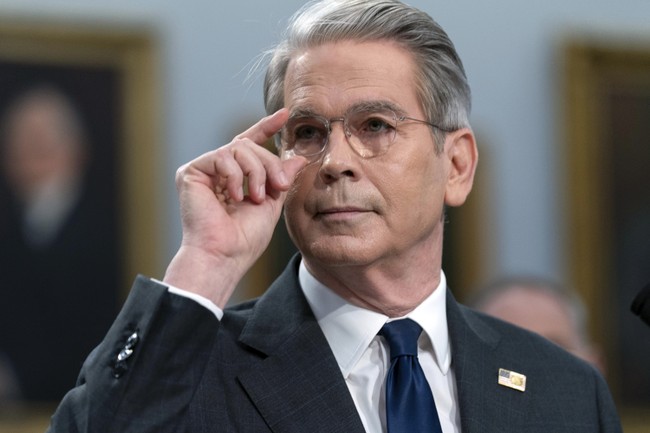
Scott Bessent confronted the press at the New York Times DealBook Summit, calling out their coverage of President Trump and contrasting it with how they handled Joe Biden, and his remarks have quickly become a talking point among conservatives.
At the summit, Bessent made his point clear and unapologetic: he has stopped reading the paper because it has become “just this fever swamp,” and he challenged the media’s narrative about Trump’s health and stamina. His tone was direct and combative, aimed at exposing what he sees as selective standards in political reporting. That bluntness landed well with an audience already skeptical of press fairness.
“You know, in twenty, thirty, forty, fifty years The New York Times is no longer the paper of record,” he predicted. “I read this article, like ‘President Trump is slowing down. President Trump’s mental capacity –’ It is a hundred percent fake. Like he only called me twice at two in the morning last week instead of three times.”
Bessent didn’t stop at the fatigue narrative. He called the coverage of the Biden administration “one of the greatest scandals of all time,” pointing to what he described as a deliberate cover-up of Joe Biden’s diminished capacity. From his seat as Treasury Secretary, he framed the press as having dropped the ball, and he asked a simple, piercing question: where was the same scrutiny applied to Biden?
The DealBook host pushed back that raising questions about Trump was “fair” given their coverage choices, but Bessent turned that line of reasoning on its head. He noted that Trump was actively leading, holding public-facing meetings and engaging directly with his cabinet and the press. That contrast, Bessent argued, exposes a double standard in what the media deems newsworthy.
He made a pointed factual comparison about cabinet engagement to underline his critique. “For 10 MONTHS Biden did not have a cabinet meeting. How are you going to invoke the 25th Amendment if the cabinet secretaries never see the president?” he asked, emphasizing a practical consequence of the alleged absence of oversight. That line reframes concern about presidential fitness as something that requires consistent, visible interaction from the president and his team.
Bessent doubled down by pointing out timing and frequency differences between the administrations. He said Trump held a long, three-hour cabinet meeting the day before, while Biden held only nine cabinet meetings during his presidency and just one in 2024. Those figures are meant to demonstrate a pattern of access and engagement that, from Bessent’s perspective, favors the current president in real, observable ways.
He also highlighted reports suggesting Biden was isolated from his cabinet, claiming some secretaries were boxed out of access in 2023 and 2024. That claim feeds into a broader GOP critique that decision-making in the prior administration was opaque and centralized in a way that sidelined accountable leadership. Framing these anecdotes as systemic problems makes the case that the media should have been more persistent in covering them.
On the flip side, Bessent praised the visibility of Trump’s schedule and interactions, noting the frequency with which the public and officials see him operating as president. “I hear from people in the Treasury building that I see President Trump more in a day than my predecessor saw Joe Biden in half a year!” he declared, using firsthand perspective to underscore his point. That line is meant to be both a rebuke of the previous administration and a defense of Trump’s vigor.
Conservatives welcomed Bessent’s candor because it called attention to what many see as inconsistent standards in political journalism. His performance at the summit was not just a defense of Trump; it was a broader indictment of media institutions that once claimed unimpeachable authority over public discourse. By challenging their credibility on-stage, he forced reporters to answer uncomfortable questions about bias and omission.
The exchange also mattered because it played out on a prominent stage where the paper hosting the event could not easily ignore the critique. Calling out the press at their own forum put the spotlight on the framing choices editors and columnists make. For those who distrust mainstream outlets, seeing a senior administration official confront that narrative publicly felt like a rare accountability moment.
Whether you agree with Bessent’s tone or not, his remarks sharpen the debate about transparency, access, and the role of the press in scrutinizing leaders evenly. He pressed the point that headlines and narratives should rest on consistent standards of evidence, not political preference, and he made that case forcefully in front of a newsroom audience that is unlikely to forget the sting.


Add comment