
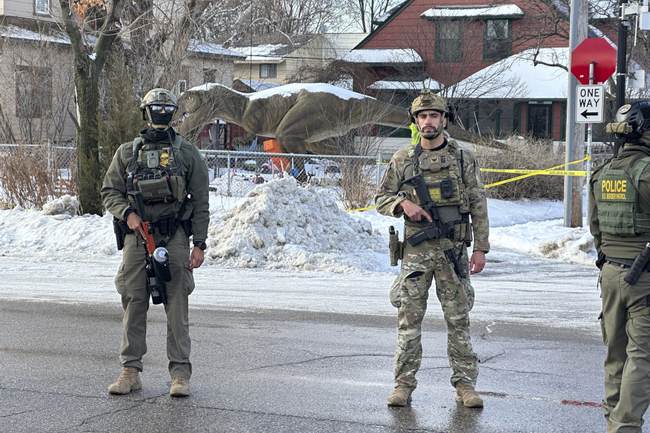
The story below outlines how anti-ICE activists in Minnesota escalated from confrontations to maintaining a public database that misidentifies ordinary vehicles as “confirmed ICE,” and highlights the real dangers of targeting people and property based on suspicion rather than facts.
Over the past week, anti-ICE activists in Minnesota have gone beyond noisy protests and started naming and shaming vehicles they claim are tied to the agency. These actions moved from harassment at public places to invading a church service, creating a climate where ordinary citizens feel at risk simply for being in the wrong place at the wrong time. The behavior shows a disregard for privacy and an appetite for vigilantism that should worry anyone who values order and civility.
A Fox reporter, Matt Finn, discovered that one of his rental car license plates was added to a local anti-ICE database and labeled “confirmed ICE.” That kind of public tagging isn’t just irresponsible, it is dangerous. When activists publish license plates and attach accusations, they shift accountability to the crowd and invite harassment or worse against people with no connection to law enforcement.
So here’s one for ya. One of our rental car license plate numbers has been added to the anti-ICE databases in Minnesota and our car has been deemed “confirmed ICE.” The activists take license plates down and enter them into data bases. It’s not clear which encounter with protestors resulted in our plate being posted. We’ve had people take pictures of our license plate a few times.
That blockquote spells out the core danger: mistaken identity and public shaming. Imagine a family with kids picking up a rental only to find their car flagged online as tied to a government operation. The potential for escalation is obvious—someone could confront them, call them out in public, or worse, attempt to stop them under false pretenses.
This isn’t theoretical. Activists have already been filmed confronting groups they suspect of being ICE, and they stormed a St. Paul church service accusing a pastor of ties to the agency. Those incidents show a pattern where accusation replaces evidence and mob action replaces lawful process. When protests turn into targeted campaigns against individuals, the state has a duty to step in and protect basic rights.
Compounding the problem, media personalities who attended or commented on the church incident made inflammatory remarks. Don Lemon, who was present at the church event, described parishioners as “entitled” with an “entitlement [that] comes from a supremacy, white supremacy.” Language like that only pours gasoline on tensions and further divides communities while excusing the activists’ aggressive tactics.
From a civic standpoint, the activists’ approach is hypocritical. They claim moral high ground against ICE and federal enforcement yet they treat ordinary citizens as collateral damage in their campaign. If you oppose a policy or an agency, you push for legal reform and public debate, not doxxing and harassment that threaten innocent people.
There are practical questions that go unanswered by those running these databases. Who verifies the entries? What recourse does someone have if they are wrongly listed? And who will be held accountable when a misidentified car leads to a dangerous confrontation? These are not minor concerns; they go to the heart of public safety and the rule of law.
Local leaders who publicly support or downplay these tactics must be held to account. When city officials or governors give tacit approval to disruptive tactics, they erode trust and embolden extremists on the political fringes. Lawmakers and law enforcement should not look the other way while vigilantism spreads under the guise of activism.
The rule of law exists to prevent exactly this kind of behavior—where accusations substitute for facts and mobs take enforcement into their own hands. Activists who want to change policy should do so through the ballot box, courts, and lawful protest, not by creating shadow registries that brand ordinary people and put them at risk. Minnesota’s leaders should prioritize protecting residents from harassment and mistaken identity over praise for aggressive activism.
Finally, citizens and journalists alike should be skeptical of unverified public databases that make life-altering claims about people and property. Responsible reporting and responsible activism both demand verification, transparency, and respect for privacy. Until those standards are met, databases that single out cars or individuals are a public safety threat, not a tool of justice.


I just came across this amazing way to earn $6,000-$8,000 a m0nth 0nline! No selling, no struggle—just a simple system that anyone can follow. Kelly Richards did it, and so can you! Don’t miss out on this life-changing 0pportunity. check it out by Limited time only – grab it before it’s gone!” .
Here is I started_______ PayAtHome1.Com