
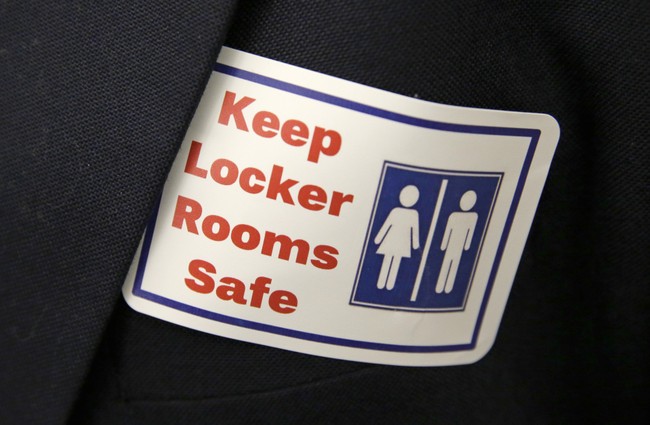
The Department of Justice sued the Loudoun County School Board after the district allowed a biologically female student in the boys’ locker room and then disciplined boys who complained, prompting federal intervention over students’ First Amendment and civil rights protections.
This case in Loudoun County reads like a civics test we failed. Boys were punished for voicing discomfort when a female student used the boys’ locker room, and federal authorities stepped in because the school board’s actions violated basic legal and constitutional norms. The controversy highlights a growing conflict between administrative policies and students’ rights on campuses across the country.
At the heart of the DOJ’s action is a simple legal principle: students retain constitutional protections within schools. The complaint notes that school officials pushed a gender policy that treated certain beliefs as mandatory and penalized students who disagreed. Assistant Attorney General Harmeet Dhillon captured the issue bluntly when she said, “Students do not shed their First Amendment rights at the schoolhouse gate.” That line matters because it reasserts that freedom of speech and conscience cannot be erased by local policy decisions.
The sequence of events matters: after complaints from two male students, the district investigated the female student’s report but reportedly did not investigate the boys’ objections with equal care. The Office for Civil Rights later found that the district discriminated against the male students, yet the school board doubled down and kept the policy in place. That refusal to correct course is what forced federal lawyers to file suit.
This is not merely a local spat. It reflects a larger trend where administrative officials substitute ideology for common sense and then use disciplinary tools to silence dissent. When a school treats a student’s instinctive discomfort about undressing in a mixed-sex setting as something to be punished, it is prioritizing ideology over privacy and safety. Parents and taxpayers should expect schools to defend students, not penalize them.
Virginia’s governor stepped in, asking the state attorney general to investigate, and the state-level scrutiny produced confirmations of what parents had been saying all along. That kind of leadership matters because not every district has state officials who will act. In many places the opposite is true: local boards and administrators run policies with little oversight and fewer consequences.
Federal intervention here contrasts sharply with districts that operate without checks. If a state governor is not paying attention or a state attorney general declines to step up, federal agencies may be the only backstop left. That is an uncomfortable spot for any system that values local control, and it shows why clear legal protections and decisive enforcement are necessary to protect students’ rights.
The broader point is simple: public schools exist to educate children, not to serve as laboratories for social experiments that override privacy and common sense. Policies that force students into situations that make them uncomfortable and then punish them for objecting invite litigation, community anger, and political backlash. Respecting students’ privacy and free expression should be nonnegotiable.
We also need to acknowledge the unevenness of accountability across states. Loudoun County got a lifeline because its executive branch noticed the problem and acted. Many parents in other states do not have that option. When local leaders ignore constituents and federal agencies are slow to respond, families are left to navigate policy decisions that affect their children without reliable recourse.
Enforcement of basic civil and constitutional rights should not require repeated court battles. Restoring ordinary boundaries that protect children is a priority that crosses political lines, but it often falls to officials willing to make tough calls. That means state leaders and federal enforcers must be ready to step in when school boards prioritize ideology over students’ wellbeing.
The Loudoun lawsuit is a reminder that the Constitution still matters and that someone has to defend it when local authorities fail. When students are disciplined for expressing discomfort about privacy violations, that is a red line. This case should be a wake-up call to school boards and administrators everywhere: policies that ignore biology, privacy, and free expression are going to face legal challenges and public pushback.
Parents and communities deserve schools that preserve common-sense protections for children. When officials put ideology ahead of basic rights, litigation follows. The DOJ’s action in Loudoun is the federal system doing what it must when local policies overreach and students’ rights are at stake.


Add comment