
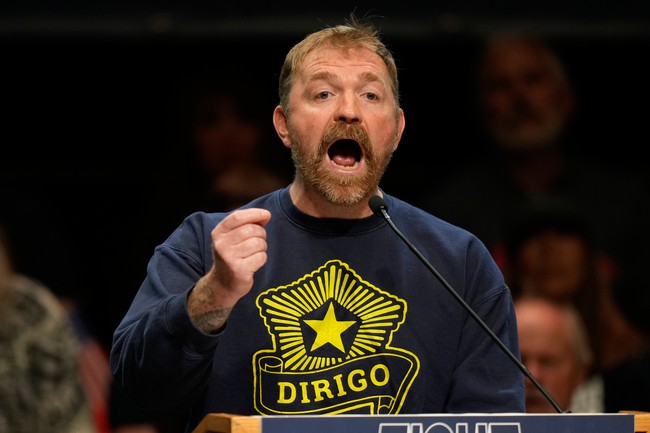
Checklist: present the new allegation against Graham Platner, report the accuser’s account with direct quotes, include Platner’s denial and campaign implications, note political timing and ballot deadlines, preserve the embedded media token .
The race for the Maine Senate just got messier with a fresh allegation against Democratic nominee Graham Platner. A woman has come forward accusing Platner of sexual assault from five years ago, and the claim is now part of the public conversation as his campaign faces mounting pressure. Platner denies the accusation, but the timing and severity of the charge threaten to reshape the contest and the Democratic Party’s path forward in Maine.
The accuser, identified in reporting as Jenny Racicot, says she spoke about the incident multiple times to journalists and shared documents and messages that she says support her account. She alleges an encounter in which Platner arrived at her home intoxicated and forced himself on her. The details, if true, would transform this from a political controversy into a criminal allegation that demands clarity and accountability.
The woman, a 41-year-old Maine resident named Jenny Racicot, detailed the alleged incident to POLITICO in three interviews over the past two weeks. POLITICO also spoke with a man Racicot dated and confided in the years after the alleged incident, and reviewed documents, including emails between Racicot and her therapist and messages between Racicot and an acquaintance whom she warned against getting involved with Platner years before he ran for office.
Racicot’s description of the night includes physical force and a sudden loss of consent. She told reporters she remembers a moment when she realized she no longer had a choice, and that memory is central to the allegation. Those are powerful words, and they have already shifted the tone of coverage and the internal conversations among political operatives tracking the race.
“I remember him grabbing my pelvis and being really forceful of me,” she said. “I remember the specific moment where I thought to myself, like, ‘This is no longer my choice.’”
Racicot also explained why she did not bring this specific charge earlier, saying she did not want to be labeled solely as a rape victim and that she wrestled with supporting Platner’s politics while opposing him as a person. That personal conflict is part of what she says delayed her disclosure of the sexual assault claim. Her account includes mentions of communications with a therapist and warnings she gave others about Platner years before his candidacy.
“One of the reasons I didn’t come forward sooner was, the huge moral conflict that I had between supporting his politics, but not supporting him as a person,” she said. “I just want the truth out there. I just want people to have a whole scope of who he is as a person.”
Platner has publicly denied the allegation in strong terms, calling the claims false and emphasizing their seriousness. His statement insists that any accusation of non-consensual behavior is categorically untrue and framed the reporting as inaccurate. Those denials will be judged against the evidence Racicot says she provided to reporters and against any further reporting or legal developments.
“Any accusation of non-consensual behavior is categorically untrue,” he claimed.
https://x.com/grahamformaine/status/2074214272628916296
“So, regardless of the inaccuracy of the reporting, but mindful the political reality it will inflict, we are taking the time to reflect on the best path forward for the state that I love, the people that I love, the movement I belong to, and the goal of defeating Susan Collins. Those were the goals when we launched this campaign, and they remain my goals today.”
From a Republican perspective, this is a critical moment: allegations of this nature must be taken seriously and investigated, and voters have a right to know if the person seeking high office faces credible accusations of violent misconduct. The political practicalities are stark. The campaign had already been canceling events, and Democrats face a looming deadline to replace a nominee if they choose to move in that direction.
Reports note that Platner postponed town halls and other scheduled appearances at the same time these new allegations hit the news, which raised eyebrows and intensified speculation about his next steps. The calendar matters: parties have a narrow window to respond before ballots are locked, and any delay compounds the pressure on party officials and the candidate himself. That procedural reality will shape how quickly decisions get made.
For voters, the immediate takeaway is that the race is now about more than policy or polling numbers; it includes a serious personal allegation that demands answers. The next days will reveal whether local authorities or political leaders push for further investigation, whether more evidence emerges, and how the campaign chooses to proceed under the strain of this claim and the broader political stakes.


Add comment