
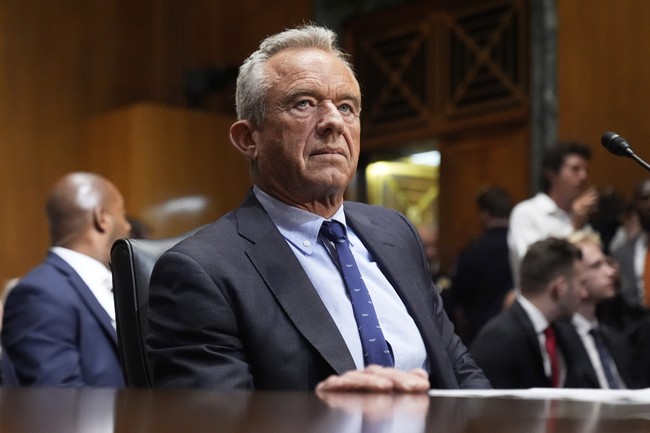
The piece below examines how Democrats, struggling to craft a positive message, are hunting for a 2026 “boogeyman” to rally voters against, how they may be positioning Robert F. Kennedy, Jr. as that foil, and why that strategy could backfire politically given Kennedy’s cross-party appeal and policy focus.
For years Democrats have relied on running against Donald Trump instead of offering a clear, constructive agenda, and that pattern hasn’t changed after the 2025 elections. Their campaigns still default to branding opponents as extensions of Trump, even when the connection is thin or fact-free. That reflex tells you more about the party’s messaging vacuum than it does about the candidates they’re attacking.
In Virginia this cycle the Democrats tried to smear Winsome Earle-Sears as a Trump acolyte, even though she urged Republicans to move past Trump and did not receive his endorsement. Painting every Republican with the same broad brush is a lazy political tactic, and voters notice when campaigns ignore nuances. That overreach often signals desperation rather than strength.
Reports now say Democrats are casting about for a new political villain to replace Trump in their midterm playbook, and they’ve fixated on Health and Human Services Secretary Robert F. Kennedy, Jr. as a convenient target. Make no mistake: they will not stop mentioning Trump, but party strategists apparently want another figure to focus their messaging on for 2026. Democrats hope a different antagonist can carry the same negative energy without the baggage Trump brings.
At its core, the move reveals a central point: Kennedy’s greatest offense to Democrats was leaving the party and working with Trump, which some in the party treat as betrayal above all else. That visceral reaction is rooted in loyalty to an old political machine and a refusal to tolerate deviation from party orthodoxy. Turning Kennedy into a permanent enemy signals how brittle that loyalty can be when someone challenges the status quo within the Democratic coalition.
Democrats plan to make Kennedy’s role at HHS the centerpiece of their attacks, hoping voters will link him to disease scares and higher insurance bills rather than to his well-known critiques of pharmaceutical industry behavior and emphasis on nutrition and wellness. Their pitch aims to convert legitimate policy disputes into fear-based campaign themes, relying on emotional shorthand instead of sober debate. It’s a classic electoral gambit: scare voters and hope they forget the rest of the story.
They’re banking on voters associating Kennedy with disease outbreaks and rising insurance costs rather than his more popular criticisms of pharmaceutical companies and focus on nutrition and wellness. As both parties seek to build coalitions ahead of the midterms, public views of Kennedy — and how candidates position themselves in opposition to him — could make a difference in key races that will decide control of Congress.
That strategy has risks. Kennedy’s MAHA, or Make America Health Again, message has drawn supporters from across the political spectrum, including a vocal group dubbed MAHA moms who have used social media to push for changes like removing artificial dyes and seed oils from processed foods. Alienating those voters for short-term political advantage could cost Democrats in suburbs and swing districts where pragmatic, health-focused messaging lands. Political operatives who dismiss those constituencies do so at their peril.
Some Democrats will gladly make RFK Jr. the face of their campaigns; one early example is his cousin Jack Schlossberg, who announced a run for a New York seat and has signaled he’ll lean on the family name and contrast with Kennedy’s new path. That kind of intra-family political theater plays well to certain voters but risks appearing petty to others who want substantive discussion about policy. Personal attacks can energize a base, but they rarely expand one.
The broader dynamic here is simple: when a major party lacks a forward-looking agenda, it resorts to negative personification—naming a boogeyman to encapsulate everything its worried about. Turning RFK Jr. into that figure lets Democrats reuse the same tactic they applied to Trump, but without Trump’s polarizing brand recognition. It’s a political shortcut that tells you less about governance and more about messaging failure.
Republicans watching this should note the lessons: opposing cheap scare tactics with clear, policy-based contrasts will neutralize attempts to nationalize every race around a single personality. Voters are savvy enough to see when campaigns are trying to weaponize fear rather than advance solutions. In the end, messaging that respects voters’ intelligence and focuses on real issues will outlast any manufactured boogeyman.


Add comment