
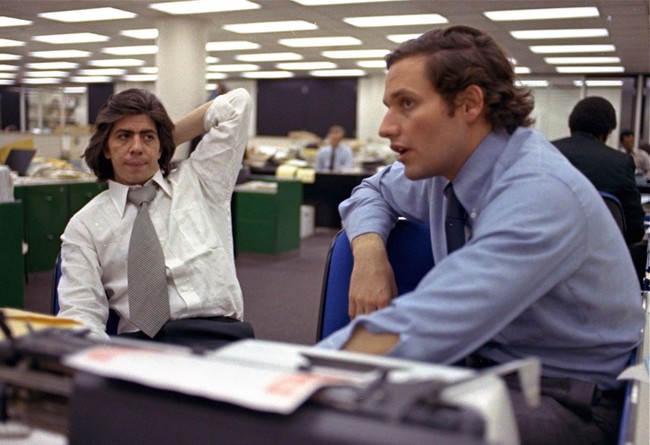
Fifty years on, the film about the Watergate investigation still shapes how Americans think about reporting, newsroom drama, and who gets credit for big scoops; this piece revisits the movie’s craft, the myths it amplified, the real figures pushed aside, and the consequences for journalism and the Washington Post today.
The movie, directed by Alan J. Pakula and starring Dustin Hoffman and Robert Redford, arrived as both a cinematic triumph and a cultural turning point. It polished the grind of reporting into a dramatic arc, convincing audiences that investigative work was heroic and decisive. That portrayal made the profession glamorous in ways that still influence young people signing up for journalism school.
The film’s production values and narrative pacing earned wide recognition, including eight Academy Award nominations and four wins, such as Best Adapted Screenplay and Jason Robards’ Supporting Actor Oscar for his role as Ben Bradlee. Hollywood turned reporters into icons, and the image of the dogged, rumpled reporter became aspirational. What the film sells as pure reportage is, however, a highly mediated story shaped by book authors and studio choices.
TRIVIA: Only one person involved in the real-life Watergate story appeared as themself in the reel-life portrayal in the film — Frank Wills. He was the security guard who discovered the door with its latch taped up and phoned the police, foiling the attempted bugging of the Democratic offices.
The movie opens with a typewriter pounding the date: JUNE 17, 1971, and it follows Bob Woodward, the city desk reporter, to an arraignment that became the first ripple in a much larger story. The Post’s curiosity about odd legal representation and other small anomalies propels the plot toward the executive branch. Those narrative beats give viewers a tidy route from a break-in to presidential scandal, but tidy routes often flatten the messy truth of how stories actually unfold.
The film popularized newsroom techniques that were once obscure to the public: anonymous sourcing, editorial jockeying, and the imperative to “follow the money.” It cemented the nickname “Deep Throat” in the public imagination as a shadowy informant rather than the crude origin of that sobriquet. For many viewers, Watergate became the template for how a free press operates at its most righteous.
That template also created a pipeline of young recruits who wanted to “make a difference” or “hold truth to power,” phrases repeated in classrooms and dorms. Ambition without humility can warp a profession, and too many entrants carried the movie’s aura of certainty into the newsroom. The result: zeal and posture sometimes outran careful, less glamorous reporting.
Scenes in the film still feel familiar because they mirror routine practices that developed into norms: editors fretting over unnamed sources, reporters calling subjects at the last minute, and the drama of chasing one lead after another. One memorable exchange with a foreign editor in the movie questions unnamed sources and suggests skepticism because “the Republicans did not need to execute the conspiracy.” That moment still resonates as a check the film rarely sustains.
Carl Bernstein’s late-night calls to John Mitchell, shown as a tactic of applying pressure at the eleventh hour, capture the aggressive side of the trade as taught by the movie. Those vignettes teach technique, but they also teach self-importance and narrative centrality. The real story behind the reporting, however, is less star-driven than Hollywood lets on.
The most glaring omission in the popular narrative is Barry Sussman, the Post’s city desk editor who organized much of the investigation. He sent Woodward to the arraignment and then coordinated the reporters when the story expanded, yet his role has been minimized in the dominant accounts. Time once lauded the Post’s efforts under the title “The Watergate Three,” and Sussman was given top billing in coverage of the paper’s work, but later retellings shifted credit elsewhere.
When Bob Woodward and Carl Bernstein published their own account and Hollywood adapted that book into film, Sussman’s contributions were diluted or removed entirely. His book, “The Great Cover Up,” published in 1974, was largely overshadowed by the better-known narrative that followed. The effect was to recenter the story on two reporters and to erase an editor who did much of the organizing and strategy behind the scenes.
As a piece of cinema, the film still holds up: period detail, a tactile newsroom, and patient camerawork that sells the tedium and tiny victories of reporting. William Goldman’s screenplay captures the grind, the dead ends, and the small satisfactions that make investigative work compelling on screen. But strong filmmaking does not equal pure history, and the movie’s hero arc reshaped real careers and institutions.
Today, the Washington Post looks very different from the paper of the 1970s, and the ironies are obvious to anyone watching the media ecosystem. The very culture the film popularized helped manufacture successors who now undercut the institutions they once revered. That dynamic offers a blunt way to read the last half century of American news: glamourized origins, uneven credit, and consequences that remain with us.



Add comment