
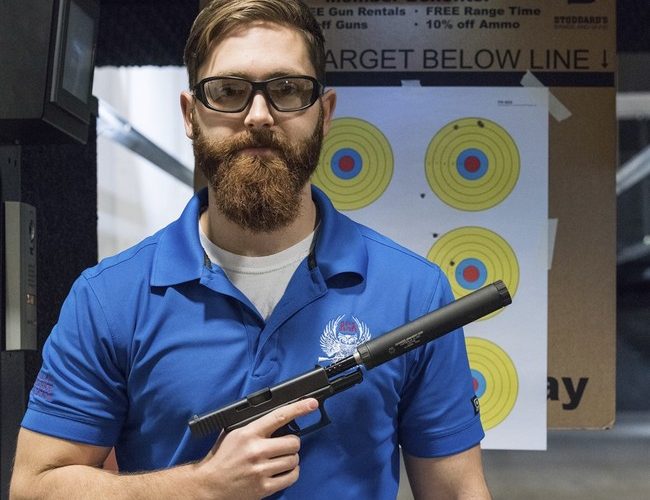
The Fifth Circuit’s recent ruling that firearm suppressors are “arms” under the Second Amendment throws a spotlight on a growing legal fight over gun rights, federal regulation, and personal liberty; this article breaks down the court’s reasoning, the competing Ninth Circuit decision, the practical realities of suppressors, and why this dispute is likely headed to the Supreme Court.
Most people get their impressions of suppressors from movies, where a shooter screws on a tiny device and the gun emits a cartoonish whisper. That image is dead wrong; suppressors reduce muzzle blast and recoil and can improve accuracy, but they do not render gunfire silent. In Europe, suppressors are often treated as sensible hunting gear; in the United States they remain regulated like machine guns under the 1934 National Firearms Act, a mismatch that many conservatives see as government overreach.
The 5th Circuit recently took a clear constitutional stance, ruling that suppressors are not mere accessories but qualify as “arms” protected by the Second Amendment. The court relied on the post-Bruen framework, looking to the text, history, and tradition of the right to “bear arms,” and concluded that suppressors meaningfully assist a person in being “armed and ready” by reducing loudness, lowering recoil, and improving follow-up shots. That reasoning frames suppressors as tools that make lawful self-defense safer and more effective.
A unanimous three-judge panel of the U.S. Fifth Circuit last week ruled that suppressors are protected by the Second Amendment, exactly the opposite of a decision from the California-based Ninth Circuit.
In the 11-page decision in the appeal of U.S. vs. Comeaux (24-30307) published in the Western District of Louisiana on June 18, the court fell back on the “text, history, and tradition” guidelines of Bruen and the meaning of “bear arms” as explained in the Heller ruling (“wear, bear, or carry . . . for the purpose . . . of being armed and ready for offensive or defensive action in case of conflict with another person.”) to explain that “silencers” (suppressors) are bearable arms.
“Silencers fit that definition,” wrote U.S. Circuit Judge Jerry E. Smith, a 1987 Reagan appointment, for the majority in Comeaux. “Silencers lead to ‘reduced loudness (and reduced risk of hearing loss), lower recoil from the firearm, elimination of muzzle blast, increased accuracy, and faster follow-up shots.’ Those are all critical functions that make firearms both safer and more effective for their core lawful purpose of self-defense. Because silencers are used in self-defense “to cast at or strike another,” they are Second Amendment “Arms.'”
The 5th Circuit opinion sits in stark contrast to a recent Ninth Circuit ruling, which labeled suppressors accessories and found them outside the plain-text protection of “arms.” That split matters because when federal appellate courts disagree on fundamental constitutional questions, the Supreme Court routinely gets the call to resolve the conflict. Republicans who prioritize individual rights and limited federal power see a Fifth Circuit decision as a corrective to judicial overreach on gun regulation.
The ruling in Comeaux stands at odds with an appeal recently decided on the West Coast by the Ninth Circuit. Handed down on June 3, U.S. v. DeBorba (24-3304), a unanimous panel rejected the argument that the device possessed by João Ricardo DeBorba was protected by the Second Amendment, holding that suppressors are firearm accessories and do not fall under the plain text definition of being protected “arms.”
With such a clear circuit split in the federal judiciary, the question of whether suppressors are “arms” is now primed for the Supreme Court to answer if further appeal is sought. Moreover, that answer could help bring such devices to the eight states in which consumer ownership of suppressors is currently banned.
At this moment no Supreme Court petition has been filed, but the opposing rulings make an appeal likely. For conservatives, the stakes are both legal and practical: a national ruling that recognizes suppressors as protected arms would curtail decades-old federal regulation and push back against policies that single out particular safety-enhancing devices for special burdens. That aligns with a broader Republican belief that the federal government should not micromanage items that primarily improve safety and self-defense.
The public debate often misses what suppressors actually do. They reduce the peak sound a shooter experiences, which protects hearing and makes training and recreational shooting less punishing on the ears. Claims that suppressors let criminals fire without any audible report are exaggerated and feed policy based on fear, not facts. Courts deciding these cases should weigh the real-world functions of these devices alongside constitutional text and history.
I recently fired several large-caliber rifles with suppressors, and the experience underscored how useful they are for hearing protection and manageable recoil in powerful guns. Practical familiarity like that matters when legal standards turn on whether a device meaningfully contributes to a person’s ability to be “armed and ready.” The Fifth Circuit judges evidently thought it did.
Expect this issue to keep moving through the courts, with Republican-leaning legal thinkers and policymakers pushing back on what they see as arbitrary federal restrictions. If the Supreme Court takes the case, it will have an opportunity to clarify how modern accessories that enhance a firearm’s safety and effectiveness fit within the Second Amendment’s protections.


Add comment