
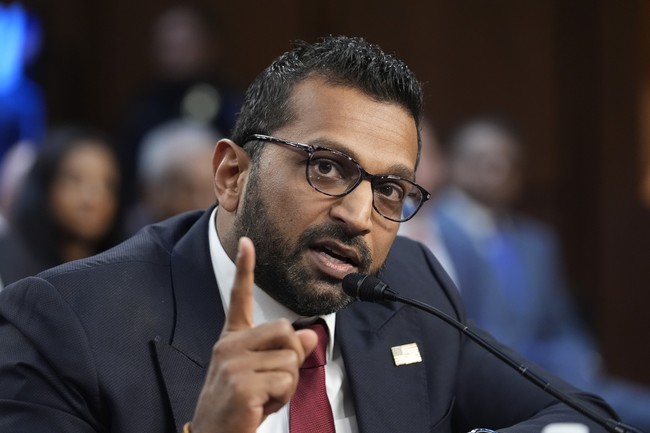
The piece challenges a recent media claim that FBI Director Kash Patel was about to be removed, pointing out factual errors, anonymous sourcing, and official pushback while defending Patel’s role and questioning the reliability of the reporting. It highlights a mistaken description of Patel as a Cabinet secretary, notes the predictable use of anonymous insiders, reproduces the original anonymous assertion and White House pushback, and argues that these missteps undermine trust in those media narratives.
There’s a lot to unpack in the story that circulated saying Kash Patel was on his way out. Reporters leaned on an anonymous “top White House official” to declare Patel “likely the next Cabinet-level official to go,” which should set off skeptics right away. When the core of a report rests on unnamed sourcing, you have to ask how much weight to give the claim.
Beyond the unnamed source problem, the report makes a basic factual error that anyone covering the White House should know. The anonymous line calls Patel a Cabinet secretary, implying that his removal would be a standard Cabinet shakeup. That is incorrect and undercuts the credibility of the whole narrative.
Here is the original anonymous assertion, left intact:
NEW: A top White House official tells me that Kash Patel is likely the next Cabinet-level official to go.
“It’s only a matter of time,” the official, who was granted anonymity to discuss the sensitive matter, told me.
There are several reasons, the official said, but top among them is the number of negative stories centered on Patel is “not a good look for a Cabinet secretary,” and Trump is fed up with the level of distraction.
Journalist Catherine Herridge was quick to flag the error people in the press should have spotted before publishing. The FBI director is not a Cabinet secretary; the FBI director serves an appointed term of up to ten years inside the Department of Justice, and the Attorney General is the Cabinet-level official. That’s not obscure trivia — it’s basic structure.
Put bluntly, if someone claiming to be a “top White House official” gets that wrong, why should readers accept other claims from that same source? A single factual mistake like mislabeling Patel as a Cabinet figure raises doubts about the source’s accuracy on more consequential points. The press routinely expects readers to trust unnamed insiders, but they should earn that trust by getting the fundamentals right.
There’s also the matter of official pushback. The White House Press Secretary responded directly and publicly, denying any imminent change and expressing continued confidence in the FBI director and the law and order team. That official response matters because it conflicts with the anonymous whisper campaign driving the story.
“The president does still have confidence in the FBI director and in our law and order team to do what they’ve been doing so well over the course of the last year and a half,” Leavitt told reporters at the White House on April 24 when asked about Trump’s view of Patel. She pointed to declining crime rates during Patel’s tenure.
That public denial undercuts the anonymous claim, and it should make publishers think twice about amplifying leaks that contradict on-the-record statements. The media’s instinct to chase sensational departures leads to sloppy reporting that becomes the story instead of the facts. Readers deserve accuracy, not drama dressed up as insider revelation.
Beyond the specific case of Patel, this episode underscores a broader problem: outlets push narratives that feed into a preferred storyline and then struggle to correct course when errors surface. When reporters mislabel roles or lean on anonymous scoops that fall apart, it fuels distrust and hands critics of the press a valid talking point. Conservatives who value accountability should be the first to demand better sourcing and clearer reporting standards.
The takeaway is simple: demand precise facts and clear sourcing. News consumers should be skeptical of claims based on anonymous insiders, especially when those claims contradict on-the-record statements and misstate basic facts. That skepticism isn’t partisan cynicism; it’s common sense journalism hygiene.



Add comment