
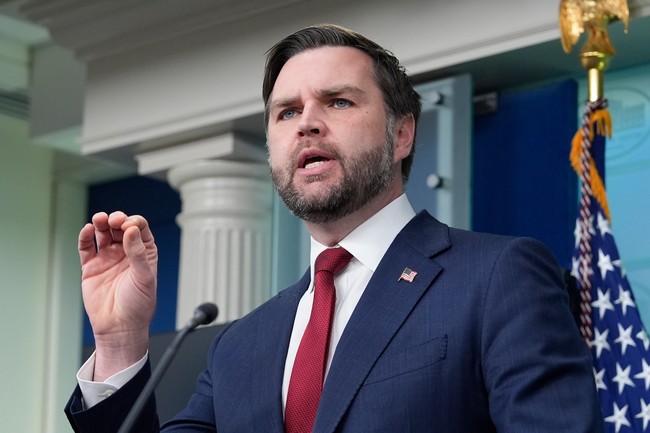
Vice President JD Vance and CMS Administrator Dr. Mehmet Oz announced a targeted federal pause on Medicaid payments to Minnesota amid allegations of widespread fraud, outlining a whole-of-government push to force state reforms and preserve benefits for those who truly need them.
At a press conference following President Trump’s State of the Union, Vance and Dr. Oz laid out a firm timeline and clear demands for Minnesota’s leadership to act. Their message was blunt: the federal government will withhold funds until the state presents and implements a credible corrective plan to stop fraudulent claims.
Vance framed the move as a necessary step to protect taxpayers and legitimate beneficiaries from abuse. He emphasized that stopping the flow of federal payments is not about punishing providers who were already paid by the state, but about pressing the state government to shoulder its responsibility to stop fraud.
He said, “the providers on the ground in Minnesota have already been paid.[by the state]. What we are doing is we are stopping the federal payments that will go to the state government, until the state government takes its obligations seriously to stop the fraud that’s being perpetrated against the American taxpayer.” That line was delivered plainly, underscoring the administration’s readiness to use fiscal leverage.
“That is stopping today. We’re taking a whole-of-government approach in the Trump administration to take this fraud seriously,” Vance continued, tying the action directly to the broader theme of accountability the president outlined at the State of the Union. The approach signals a willingness to hold blue-state officials to the same standards as any other governors when federal funds are at stake.
Dr. Oz highlighted specific patterns of abuse that have emerged, noting fraudulent claims for services tied to vulnerable populations as particularly egregious. He pointed to falsified billing involving services for autistic children, making clear these scams threaten both funding and real care for families who depend on Medicaid.
Officials sent a formal notice to Minnesota’s governor demanding a comprehensive corrective action plan within 60 days as the condition for releasing withheld funds. The administration warned that failure to deliver meaningful reforms would trigger “$1 billion in deferred payments” in 2026, a fiscal consequence meant to force rapid corrective measures.
Oz characterized the campaign as “the largest anti-fraud effort” CMS has ever undertaken, framing it as a necessary modernization of enforcement. That description signals a scaling up of federal oversight and an intention to apply similar pressure where systemic fraud is identified in other states.
Vance discussed verified instances of fraud already documented by federal and state investigators, noting how these schemes divert money meant for care into the pockets of bad actors. He stressed the moral and practical harm: fraud weakens the system and risks leaving genuine patients without services down the line when resources dry up.
The vice president called the exploitation “offensive” and repeatedly stressed the stakes for ordinary Americans who pay taxes and expect programs to function. He warned that if the fraud continues unchecked, the ultimate casualty will be the ability of Medicaid to deliver for those truly in need.
The administration’s move places the ball in Governor Tim Walz’s court, demanding immediate corrective action and transparency on enforcement steps. Minnesota officials now face a choice: implement the federal demands to stop fraud or confront a drawn-out fight that could delay critical funds and invite further federal oversight.
This intervention reflects a broader Republican stance that federal dollars must be matched by strict accountability at the state level. The message is clear: protecting taxpayers and preserving program integrity requires active enforcement, not passivity from state leaders who tolerate or ignore abuse.
Beyond Minnesota, the announcement signals a precedent for how the federal government under this administration intends to handle Medicaid fraud in other states. By using payment pauses and explicit deadlines, officials aim to create leverage that compels state action when systemic problems arise.
The policy mix includes investigation, public naming of failures, and financial consequences designed to be both punitive and corrective. It is intended to recover taxpayer funds and deter future schemes, while preserving essential services for legitimate beneficiaries through better oversight.
The clock is now ticking on Minnesota’s response, and federal authorities have made clear they will monitor compliance closely. For Republican leaders and voters who prioritize fiscal discipline and program integrity, the move will read as decisive action to protect both taxpayers and vulnerable Americans.
Editor’s Note: With President Trump back in the White House, the state of our Union is strong once again.



Add comment