
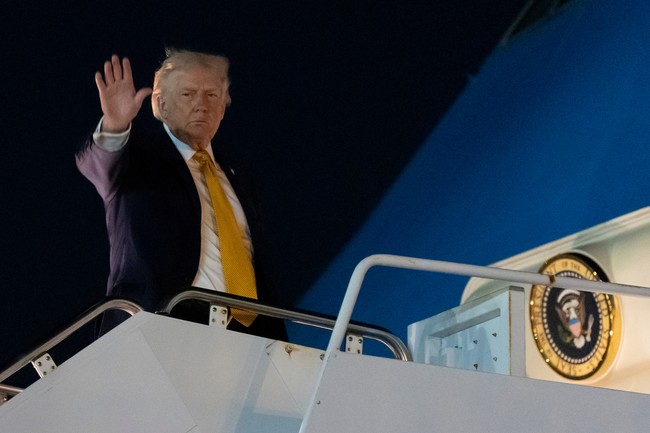
The United States has a new presidential transport on-site at Joint Base Andrews: the VC-25B Bridge has arrived to begin commissioning flights, undergo testing of its security and communications systems, and join the fleet that supports presidential travel and continuity of government operations.
The VC-25B Bridge touched down to start a careful series of test flights and checks to verify safety, secure communications, and mission systems. This aircraft received a fresh red, white, and blue livery and the final government modifications before coming into the Presidential Airlift Group. The arrival is meant to relieve pressure on the older VC-25A fleet while long-term replacements complete their development and deployment.
https://x.com/usairforce/status/2068038435114262809
The Air Force will run commissioning flights to validate the Bridge’s systems under operational conditions and to make sure it meets the performance, reliability, and security standards required for presidential missions. These trials are routine for major platforms that carry unique mission loads, especially those tasked with continuity of government duties. Once validated, the aircraft will provide a secure, mobile headquarters that can support the commander in chief anywhere in the world.
The program leadership made clear the delivery is intended as a bridge—both in name and function—between an aging fleet and future platforms. Those managing the program emphasized speed without sacrificing quality, and they framed the work as a mission to keep presidential airlift reliable during heavy maintenance cycles on legacy aircraft. The goal is straightforward: preserve capability while new systems come online.
The Air Force’s VC-25B Bridge aircraft has officially arrived at the Presidential Airlift Group and will commence its initial commissioning flights, marking the successful delivery of a secure, modified executive platform. Fresh from receiving its new red, white, and blue livery and the final government modifications, the aircraft has entered service to provide critical, secure continuity for the commander in chief.
The delivery of the Bridge aircraft fulfills an imperative to relieve pressure on the aging VC-25A fleet as heavy maintenance cycles extend, safeguarding the continuity of presidential airlift operations until the long-term Boeing VC-25B enters service.
“The safety and security of the commander in chief is our highest priority,” said Secretary of the Air Force Troy Meink. “From the beginning, we meticulously evaluated every requirement to accelerate delivery while maintaining the high standards expected of the presidential mission. This effort proves that the U.S. Air Force can move fast without sacrificing quality, security, or reliability.”
The public reaction mixes pride and practical questions, but the mission behind the rollout is not about vanity. This aircraft delivers secure communications, defensive systems, and the logistics backbone needed when the president travels and when continuity of government is required. Those capabilities are expensive and complex for a reason: they ensure leadership can operate under any circumstances.
Some foreign leaders travel commercial or on small executive jets, and that suits many countries fine. The United States, however, operates at a different scale and with different responsibilities, so the presidential airlift is built to match that reality. The VC-25B Bridge represents not just transport but a secure, hardened node of command, complete with the tools to respond to crises anywhere in the world.
There is an element of symbolism at work, too. When the presidential aircraft arrives in a foreign capital, it signals American presence and capability in a clear, unmistakable way. That visibility matters for diplomacy and deterrence; the aircraft is both functional and unmistakably iconic. The livery and the ceremony around it underscore the message that the United States projects strength and continuity.
Operational support moves with the aircraft as well, including a logistical train that carries essential assets such as the armored presidential limousine and support personnel. That convoy is part of a larger concept: ensure the president can move, communicate, and govern without interruption. Those layers of capability are tested and timed carefully during commissioning flights and subsequent missions.
Technically, the Bridge fills a gap created by heavier maintenance demands on older airframes while the full production VC-25B fleet phase-in proceeds. That phased approach reduces risk to presidential mobility and provides a tested platform to shoulder responsibilities in the near term. It’s a pragmatic move to maintain mission continuity and reduce scheduling strain on legacy aircraft.
Read More:
Red, White, and Blue: Air Force One to Get First New Paint Design Since Kennedy Era
President Trump Refuses to Eat Crow, Faces the Press on AF-1 Following the ‘Racist’ Video
There will always be debate over spending or style, but the core issue here is capability and preparedness. The VC-25B Bridge is an investment in secure leadership transport and the survival of command and control under stress. When that aircraft is airborne, it carries more than passengers; it carries an entire mission set designed to protect the nation’s highest office.
Commissioning flights will continue until the system-of-systems meets all operational criteria, and crews will train to integrate the new platform into normal presidential movement plans. Once fully certified, the Bridge will assume operational roles that allow maintenance cycles and upgrades on older aircraft to proceed without interrupting presidential travel. That redundancy and planning are central to how the Air Force sustains this unique mission.
The arrival at Joint Base Andrews is the opening chapter of a deliberate, carefully managed rollout that balances speed and reliability. This aircraft will be watched closely as it moves into service, but its purpose is clear: keep the commander in chief safe, mobile, and able to lead, wherever the mission calls.


Add comment