
I’ll explain what’s happening with the housing bill and the SAVE America Act, outline where Speaker Mike Johnson and President Trump stand, show why voter ID has become the flashpoint, note the Senate’s role and options, and point out the timing pressure ahead of the midterms.
Things got messy fast after the White House pulled a scheduled signing for a bipartisan housing affordability bill. Speaker Mike Johnson said he’d deliver the measure to the president’s desk, but President Trump delayed the ceremony to press for a separate, much more consequential voting bill. The housing bill can become law without a signature if the president simply takes no action, yet the drama is centered on how Republicans leverage it to force movement on voter ID reform.
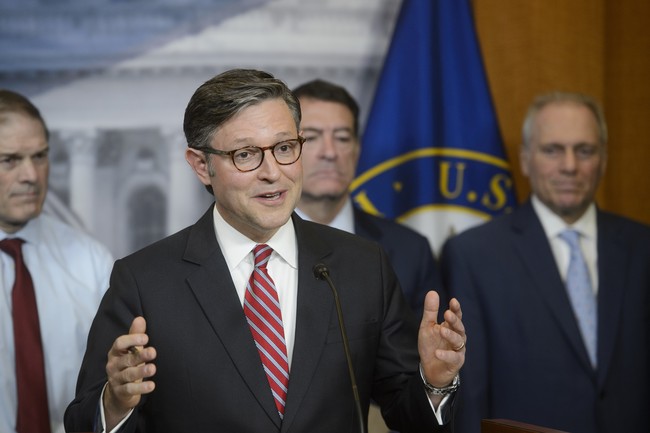
House Speaker Mike Johnson said on Sunday he would send a bipartisan housing affordability bill to President Donald Trump on Monday, days after the Republican president refused to sign the bill until a divisive voting rights measure was passed.
“It’s passed by both chambers. I’m sending it to him on Monday, and it will become law,” Johnson, a Republican from Louisiana, said in a televised interview.
The president’s cancellation of the signing ceremony was tactical, not accidental. He wants the Senate to take up the SAVE America Act, a package of voting reforms centered on voter ID and citizenship verification for registration. That effort aims to tie a clear, popular policy to the leverage Republicans now hold in the House and possibly the Senate if they use reconciliation tools and party unity.
Trump on Wednesday abruptly canceled a signing ceremony for the housing legislation in an effort to pressure Republicans into passing a controversial voter ID bill, known as the “SAVE America Act.”
The voting act would require a photo ID to vote in federal elections and proof of U.S. citizenship to register, while compelling states to turn over their voter registration rolls to the federal government.
There is no mystery about public opinion here: requiring a photo ID to vote is wildly popular across party lines. Critics try to paint it as disenfranchising, but that argument ignores how integral government IDs are to everyday life. If you can buy alcohol, open a bank account, or board a plane, you can get a state ID; the claim that large swaths of Americans lack access to ID strains credibility.
Republicans want to include the SAVE America Act in a reconciliation or special budget maneuver so it can pass with a simple majority in the Senate. That strategy would bypass potential obstruction and the parliamentarian’s strictures if the provision is deemed eligible. Opponents in Congress, mainly Democrats, argue the bill would suppress turnout in their strongholds, but their objections are predictable and political rather than practical.
Trump supporters want to include the SAVE America Act in a special budget reconciliation bill that can pass the Senate with 51 Republican votes and overrule the parliamentarian — the official charged with upholding chamber rules — if the voter ID measure is ruled ineligible, as it was earlier this year.
Democrats say the voter ID law is designed to make it more difficult to vote for thousands of Americans, particularly those in heavily Democrat districts.
Speaker Johnson has pressed Senate leadership directly, urging action to move the voter ID measure forward. He met with Senate Majority Leader John Thune and encouraged him to do “everything possible” to advance the bill. That public nudging signals the House will keep up pressure until the Senate either responds or gives a clear reason it can’t.
Johnson said he had met with Senate Majority Leader John Thune, R-S.D., and implored him to pass the voter ID measure.
“He’s got a big challenge on his hands, of course, and I’ve encouraged him to do everything possible within his power to move it. I believe he will,” Johnson said. “We’ll send them over a provision that fits.”
The legislative clock matters. If the housing bill becomes law without the president’s signature, the leverage shifts. But if Republicans can tie the housing measure to a commitment on voter ID, they can press the Senate into action — or at least force a clear record on who stands for election integrity and who stands against it. Timing is critical because any change needs to be settled before election administration for the midterms proceeds.
Senators like Thune still have procedural tools to shape the outcome, and Republican unity in the Senate will be decisive. The House has done its part by passing both the housing bill and pressing the SAVE America Act. Now it’s on the Senate to decide whether to respond to the demand for voter ID and citizenship verification, or to let the matter stall indefinitely.
Editor’s Note: Republicans are fighting for election integrity by requiring proper identification to vote.


Add comment