
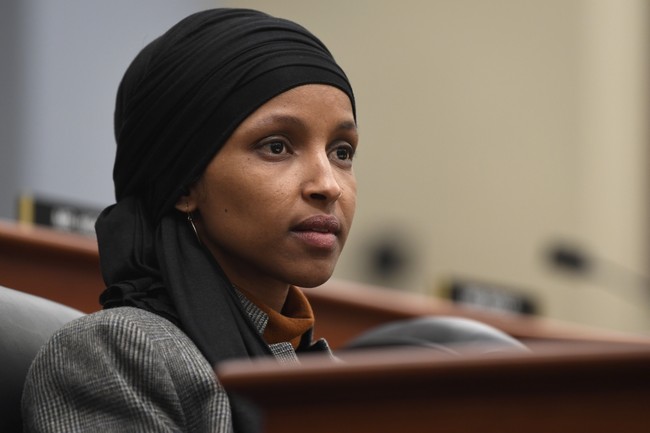
The piece critiques how the modern Left manufactures victims and elevates them into symbols, using recent events around Rep. Ilhan Omar as a case study. It argues the media and progressive movement amplify incidents into martyrdoms while sidelining facts, and it connects that behavior to a broader cultural problem of moral untethering. The article includes President Trump’s quoted response to the incident and examines how narratives get weaponized for political gain.
The Left has shifted from debating policy to creating narratives that demand attention and outrage. When meaning runs short, the movement seeks martyrs to recharge its moral energy. That pattern shows up again in the recent episode involving Rep. Ilhan Omar.
At a town hall, Omar reported being sprayed with a liquid from a syringe and the story quickly became national news. The substance was later described as vinegar, a commonplace household item, but that detail did little to curb the spectacle. The media response illustrated how small incidents escalate into symbolic events overnight.
Omar posted about the incident on X and the moment was seized as proof of targeted hostility toward progressive figures. The amplification was immediate, with narratives forming before full facts were available. This is the cycle: an incident, a headline, and then a ready-made martyr.
President Trump was blunt in his reaction when asked about the episode during an interview, saying, “I don’t think about her. I think she’s a fraud,” and adding, “She probably had herself sprayed, knowing her.” That quote landed like a grenade, prompting predictable outrage and serving as proof for both sides. His words highlighted how partisan instincts shape responses faster than the facts do.
Whether the incident was staged or genuine matters less to the machinery that benefits from outrage than the story’s symbolic value. The key point is the hunger for drama: a political culture that needs victims to justify perpetual grievance. Once a narrative takes hold, inconvenient evidence becomes a footnote.
This pattern is familiar from bigger, more consequential cases. Tragedies become mythologized into animating stories that justify protests, legislation, and cultural warfare. In that process, complexity is flattened and nuance is dismissed as betrayal of the cause.
A movement defined primarily by grievance must constantly replenish that grievance to sustain momentum. New villains and victims are needed to fuel anger, fundraising, and activism. When reality resists neat narratives, stories get bent to fit the need for moral clarity.
The press plays a pivotal role in this dynamic, often moving from reporting to advocacy. Instead of serving as impartial referees, many outlets act as accelerants, framing incidents as systemic proof of broader injustice before investigations conclude. That shift transforms ordinary events into signals in a cultural war rather than subjects of sober inquiry.
The result is fragile iconography. Once a person becomes the face of a movement, any contradictory detail threatens the whole edifice. Body camera footage, court transcripts, or simple context can puncture the constructed narrative, and the response is typically to pivot to the next symbol rather than reckon with the mistake.
Beyond politics, this trend points to a deeper cultural exhaustion: losing shared moral standards and substituting symbols for substance. Heroes are no longer discovered through long, quiet sacrifices; they are assigned because the movement needs them. That makes those figures vulnerable to rapid demotion when the facts misalign with the story.
Manufactured martyrdom also has human costs. People radicalized by polished narratives get labeled brave for dangerous acts, while accountability is reframed as persecution. That rhetoric can encourage lawlessness and violence under the banner of righteous protest, and it corrodes civic norms that depend on shared commitments to truth and responsibility.
Real heroism looks different: it’s built over time through sacrifice, integrity, and service without daily press conferences to validate it. Those kinds of virtues are less marketable in an attention economy, which favors immediacy and spectacle over steady character. Until cultural incentives change, expect more headlines designed to inflame rather than inform.
A politics driven by symbolism rather than substance weakens public life and trust. When truth becomes secondary to theatricality, the electorate loses its ability to judge policies and people on durable criteria. The antidote begins with demanding accountability from both leaders and the media, and with refusing to let every controversy be turned into a permanent moral theater.

Add comment