
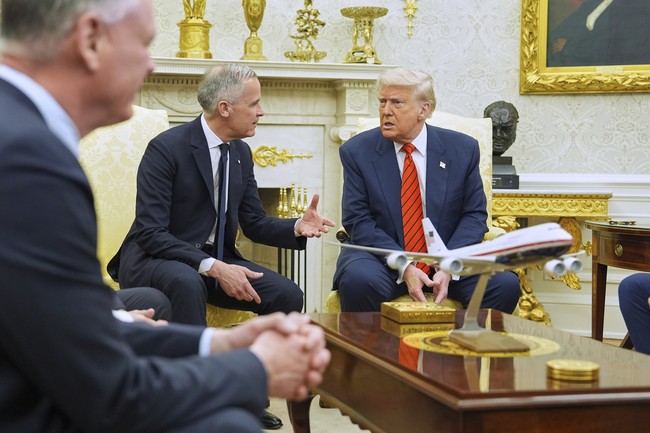
Checklist: summarize the tariff showdown, outline the stalled negotiations, reproduce key official statements, report Canada’s retaliation plans, and include the U.S. response and embed exactly where it appeared.
This article covers the sudden collapse of U.S.-Canada trade talks that led President Trump to impose 50 percent tariffs on nearly $20 billion of Canadian goods, how Ottawa reacted, and what U.S. officials said in response. It traces the brief extension and pause in tariffs, the Canadian decision to walk away from talks late Friday, and the retaliatory measures Canada announced. The piece reproduces official statements and outlines the zones of dispute, including liquor, dairy, and autos, while preserving quoted material exactly as released.
Talks between Washington and Ottawa appeared to be progressing earlier in the week, with the White House briefly delaying a tariff increase to give negotiators more time. The pause moved the effective date from the earlier deadline to a new target while both sides worked out three sticking points that had been flagged. Those sticking points centered on market access for American liquor, U.S. dairy exports, and vehicle and auto parts tariffs.
A White House proclamation issued Tuesday night formally moved the tariffs’ effective date from August 19 to 12:01 AM ET on August 22.
The delay applies to three sets of duties Trump ordered July 20. They grew out of fights over American liquor, dairy products, automobiles, and auto parts.
Canada pulled American liquor from store shelves last year in retaliation for Trump’s tariffs, but continued selling products from other countries without restriction. Trump also targeted Canada’s dairy quotas for U.S. cheese and its vehicle tariffs.
Tuesday’s proclamation says Canada has promised to address all three disputes. That was enough for Trump to move the deadline to Saturday.
The White House publicly linked the temporary suspension to promises from Canada to resolve those disputes, and also hinted that pipeline and infrastructure projects could be part of a broader deal. The administration framed its offer as giving Canada favorable treatment on multiple fronts in exchange for concrete fixes to the trade barriers. Officials described the pause as conditional and time-limited, aimed at producing quick, verifiable results.
Late Friday night the situation shifted when Canada’s prime minister ordered negotiators to step away from the table, triggering the U.S. tariff increase. That decision came after what Ottawa described as unexpected shifts in U.S. demands and terms at the last minute. Canada announced it would respond with retaliatory measures, promising to protect its workers and businesses.
Carney vowed to “match those tariffs dollar for dollar” in a statement released Friday evening on social media. He added that Canada’s government will present “additional measures” to support workers and business owners in the country in the coming days.
While the prime minister noted Canadian negotiators made “significant progress” in recent weeks, he said this had “not been enough to meet our objectives for Canadians.”
“As a result, this evening, I have decided to suspend trade negotiations with the U.S. and have directed Canada’s negotiators to return to Ottawa,” he said in his statement.
“They have worked hard, in good faith, to defend the interests of Canadians throughout these negotiations up until the very last minute,” Carney continued. “However, last-minute changes in the U.S. proposed terms were unfair, uneconomic, and called into question the reliability of any deal.”
On Saturday morning Ottawa clarified when its retaliatory duties would begin and what sectors might be targeted in response to the U.S. move. The list included goods like steel, dairy, appliances, agricultural equipment, pulp and paper, and electronics. Canada said it would release full details in the coming days and set a start date for retaliation in early September.
Canadian Prime Minister Mark Carney said Saturday morning that the country will enact retaliatory tariffs on the U.S. beginning on Sept. 8 in response to the Trump administration’s new 50 percent tariffs.
…
Carney said his government will release more details about these retaliatory policies in the “coming days” and that the tariffs would apply to goods like steel, dairy, appliances, agricultural equipment, pulp and paper and electronics.
The U.S. Trade Representative criticized Canada’s decision to walk away, calling it a missed chance to lock in favorable terms for Canadian exporters. That reaction emphasized that the U.S. offer included deep tariff reductions and broader cooperation on enforcement and critical industries. U.S. officials said their proposal was forward-looking and tied to national security and supply-chain coordination.
https://x.com/USTradeRep/status/2091015298929332326?ref_src=twsrc%5Etfw
“Tonight, Canada declined to finalize the trade deal under the terms agreed earlier this week,” Greer wrote.
“Despite the U.S. offer to Canada to receive the best treatment of any major exporter to our market, new demands and walk backs of other commitments by Canada have upended the careful balance reached in the past days,” he said. “In addition, Canada is continuing to maintain its prolonged retaliation against the United States, including, among other things, flat-out prohibitions on certain American goods and services.”
U.S. officials highlighted that past policy had already given Canada exceptional access to the American market, and that the latest package would have gone further across industries like steel, aluminum, autos, and lumber. They framed the now-failed agreement as one that would have enhanced cooperation on export controls, digital trade, critical minerals, and enforcement actions. The administration argued the move to impose tariffs was a calibrated step to extract concessions and defend U.S. industries and workers.
The dispute raises immediate questions about cross-border supply chains and how affected companies will adapt to abrupt tariff shifts. Businesses on both sides will be watching for the specific lists from Ottawa and Washington, and for any diplomatic signals that could reopen talks. For now, the tariffs are in place and both governments are preparing for the economic and political consequences of the impasse.



Add comment