
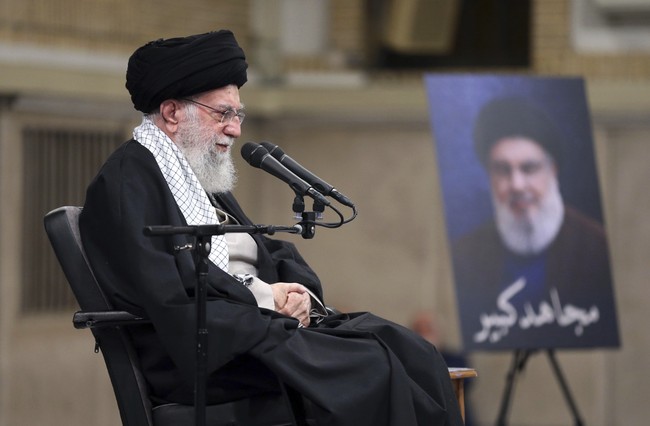
President Trump responded to fresh taunts from Iran’s leadership with a clear, direct critique of the mullahs, calling out the brutal repression inside Iran and contrasting it with what he calls proper leadership. He framed the unrest and the regime’s violent response as the predictable outcome of a ruling class that relies on fear instead of respect, and he warned that the United States would act to protect innocent civilians if necessary. His remarks came after renewed online insults from Iran’s official channels and amid reports of mass detentions and executions. The president used the moment to expose Iranian hypocrisy and to underscore a tough stance that he says contrasts with the current administration’s approach.
Across Tehran and other cities, protesters have faced a harsh crackdown that has continued for weeks, with estimates of casualties that are deeply troubling. That reality, Trump argues, is evidence of a regime that governs through brutality rather than earning consent from its people. He framed the violence not as the product of vague “groups” or outside agitators, but as a direct result of state policy and the leadership’s decision to maintain power by force.
The president answered taunts aimed at him from Iran’s official social accounts without trading insults. When asked about those barbed posts, he pointed back to the facts on the ground — mass arrests, reported executions, and a campaign of intimidation designed to silence dissent. Instead of escalating the rhetoric in kind, he used the platform to call out the moral bankruptcy of a regime that kills its own citizens to stay in control.
Trump said plainly, “Leadership is about respect, not fear and death,” and he doubled down by calling the Iranian ruler a sick man who “should run his country properly and stop killing people.” He also declared, “His country is the worst place to live anywhere in the world because of poor leadership.” Those lines were delivered to highlight the contrast he sees between governing through competence and governing through terror.
The administration view he projects is that strong language matters, but it must be paired with readiness to act on behalf of those suffering under tyranny. He told interviewers that the United States would come to the aid of peaceful demonstrators if the regime carried out mass executions, arguing that failing to respond would be a moral and strategic mistake. For Trump, showing resolve is not saber-rattling; it is a way to protect American interests and innocent lives abroad.
He criticized those who try to reframe state-sponsored violence as the work of undefined groups, insisting the pattern of killings and repression points back to the regime’s calculus. In his view, obfuscation and propaganda are standard tools for authoritarian rulers who fear losing control. Rather than being seduced by spin, the president urged observers to judge the regime by its actions: prisons, public executions, and a culture of fear.
Speaking directly about Iran’s supreme leader, he argued that the man has presided over the “complete destruction of the country and the use of violence at levels never seen before.” That exact phrase was part of a longer critique that accused the leadership of running the nation down and using mass violence to sustain a bare-bones level of governance. Trump contrasted that with how he says the United States is run, claiming a practical approach to leadership focused on national strength and prosperity instead of repression.
“What he is guilty of, as the leader of a country, is the complete destruction of the country and the use of violence at levels never seen before. In order to keep the country functioning — even though that function is a very low level — the leadership should focus on running his country properly, like I do with the United States, and not killing people by the thousands in order to keep control.”
From his perspective, this kind of bluntness is the proper response when a foreign government crosses certain lines, including threats against American leaders and mass human rights abuses. He contrasted his posture with what he called the weak approaches of others who pursued deals that left Iran richer and more emboldened without stopping its internal repression. For those who care about both realpolitik and basic human dignity, he argues that clarity and preparedness are essential.
The message was intended for multiple audiences: the Iranian people, who deserve to live without fear; Western allies, who should not forget what authoritarianism looks like; and domestic voters, who want a president willing to speak plainly about global threats. Whether or not one agrees with every policy prescription, the rhetorical posture was unmistakable — expose the brutality, refuse to be cowed by taunts, and prepare to act to defend innocent lives when called for.


Add comment